Attachment Therapy and Attachment Styles: Understanding Patterns
Attachment is not a personality quiz result. It is the living pattern in how we seek safety, proximity, and stability with the people who matter most. Most of us learned early what to expect from closeness and how much of ourselves it was safe to bring forward. Those expectations became habits in our nervous systems, in our voices and bodies, and in our story about who we are to others. When life gets bumpy, those habits get louder.
Working directly with attachment patterns can steady relationships, reduce chronic anxiety, and open space for deeper joy. It also brings up old pain. That is why thoughtful pacing, good information, and a grounded therapeutic relationship make such a difference.
Why this matters
The stakes are concrete. Attachment patterns shape how partners repair after arguments, how colleagues handle missteps, and how parents interpret a crying toddler or a sullen teen. I have watched talented leaders derail teams because they avoided hard conversations that felt too intimate, and I have seen couples spend years in a cycle of protest and withdrawal because each person mistook the other’s strategy for lack of love.
These patterns are not moral failings. They are survival strategies learned from real conditions. If early caretaking was reliable, you likely learned that closeness brings comfort. If it was inconsistent or frightening, you adapted to stay connected enough to survive. Therapy becomes the lab where new, sturdier adaptations can form.
How attachment forms in the body and mind
Attachment theory began with careful observations of infants and caregivers. What we have now adds brain science and lived experience. Babies come wired with a need to orient toward faces, voices, and touch. When a caregiver responds warmly most of the time, the baby’s nervous system settles after distress. This repetition builds an internal template: when I reach, someone likely comes, and I can feel my feelings without being overwhelmed.
The opposite is also true. If reaching often goes unanswered, or if comfort comes with unpredictability, the body learns to either shout louder for help or to shut down contact to avoid disappointment. These are not decisions a child makes with language. They are procedural habits that show up in muscle tone, breath patterns, and the arc of attention. Years later, the habit can reappear as a barely conscious flinch from eye contact when a partner asks a tender question, or as a quickening heart and a push for immediate reassurance the moment a text goes unanswered.
Memory plays a role. We tend to recall facts and narratives, yet so much attachment learning is implicit. A person may swear they trust their spouse, then still find their shoulders lifting toward their ears when plans change. The story and the body are out of sync. Trauma therapy and somatic therapy often meet people precisely at this gap, helping sensation and narrative integrate.
The spectrum of attachment styles, not boxes
Psychology popularized four broad styles: secure, anxious, avoidant, and disorganized. Real people rarely fit cleanly into one quadrant. Context matters. You can be steady with friends, guarded in romance, and differently patterned with a boss. That said, naming tendencies helps.
Secure attachment is not perfect harmony. It is the resilient expectation that relationships can bend without breaking. These individuals seek help when distressed, offer comfort without resentment, and recover from conflict at a workable pace. They are not immune to fear, they just have a map that includes return routes.
Anxious attachment leans toward vigilance. The body registers distance quickly and tries to close the gap. This can sound like rapid questioning, look like constant checking, or feel like a wave of panic when someone grows quiet. Strengths often include expressiveness, warmth, and sensitivity to others’ moods. The cost is chronic arousal and sometimes protest behaviors that push people further away, the opposite of what is wanted.
Avoidant attachment values autonomy because closeness once felt costly. These individuals downshift emotion to stay steady. They may excel under pressure and keep clear boundaries. The price can be a thin relational diet. Partners may complain that they feel alone in a room with them. Inside, avoidant folks are not heartless, they are managing a nervous system that equates vulnerability with danger. When asked to share more, they can experience it as intrusive rather than loving.
Disorganized attachment, sometimes called unresolved or fearful avoidant, carries a deeper conflict. The person’s main source of comfort was also a source of fear. The nervous system gets stuck between approach and avoidance. In adulthood, this can look like intense connection followed by abrupt withdrawal, sudden anger, or dissociation under stress. This pattern is common with histories of abuse, neglect, or significant early losses, and it benefits from trauma therapy that is careful and well paced.
Patterns show up everywhere
Attachment does not confine itself to romance. The anxious engineer who floods their manager with updates is seeking reassurance. The avoidant creative who works late to dodge a difficult conversation is managing fear of engulfment. The securely attached nurse who debriefs after a tough shift and returns the next day with steady presence leans on a nervous system that knows repair.
In parenting, an anxious style may lead to over-accommodation. A child’s tears bring a parent into swift action, sometimes too swift to let the child notice their own coping. An avoidant pattern may tilt toward premature independence, with praise for toughness and discomfort with emotional mess. A secure parent tolerates more noise. They can say, I see you are upset, here is a hug, and we can solve this after dinner.
Sexual intimacy often mirrors attachment. Anxious partners may seek frequent contact as proof of closeness. Avoidant partners may enjoy sex but struggle with post-coital cuddling, when tenderness feels most exposed. Couples can renegotiate these edges with clear language and a shared plan, but it helps to name that the nervous system has a vote.
What attachment therapy actually looks like
Attachment therapy is less a single technique and more a stance: the relationship between client and therapist is part of the medicine. The therapist offers attuned attention, consistent boundaries, and carefully graded invitations to new relational experiences. Over time, the client internalizes a steadier map.
The tempo matters. If you move too fast, defenses clamp down. Too slow, and nothing changes. In practice, I track verbal content and the body. A client recounts a fight, but their jaw is rigid and their breath is shallow. I might pause the story and ask them to feel their feet or notice my face as a friendly anchor. These micro-adjustments help turn a telling into a new experience. Somatic therapy tools fit naturally here: orienting to the room to reduce threat signals, pendulation to move between resource and activation, and titration to work with small, digestible doses of emotion.
Corrective experiences are not orchestrated drama. They are specific moments where the client risks a slightly different move and discovers the world does not end. An anxious client practices asking for reassurance clearly, then waits and feels their body as reassurance arrives. An avoidant client tries staying present for 30 more seconds of eye contact and tracks the urge to look away, then learns that the urge peaks and falls. The point is not perfection. It is updating the nervous system with live data.
We also use movement therapy when words get stuck. Attachment is physical. Practicing boundary setting by literally placing a hand forward with a soft, firm wrist can retrain patterns faster than a paragraph about assertiveness. Simple drills like shifting weight from heels to toes during hard conversations can counter the freeze response. Small movements signal safety to the body, and safety opens curiosity.
Trauma therapy and attachment when history is heavy
When attachment injury is compounded by trauma, the work deepens. Disorganized patterns, for instance, grow from relational environments that were both necessary and frightening. People with this history often carry shame, along with symptoms like dissociation or explosive anger. Trauma therapy techniques, including EMDR, sensorimotor psychotherapy, or somatic experiencing, can help process the stuck survival energy that fuels these swings. The therapist must keep one foot in attachment, one in arousal management. Without enough stabilization, trauma processing can flood the system. Without processing, the attachment pattern can feel cemented.
I tend to front-load resource building. This can be as practical as establishing a reliable session time so the body learns predictability, or as subtle as developing a shared hand signal to pause when activation spikes. Grief counseling may be essential too. Many people discover that beneath anger sits a long, complicated grief for the love they did not get. Naming and honoring that grief reduces the compulsion to replay the old story with new characters.
Grief reshapes attachment, and attachment shapes grief
Loss is an attachment event. When a spouse dies, when a friend moves away, when a parent develops dementia, the body reacts as if a piece of the safety net has torn. How you grieve reflects your style. Anxious grievers may need frequent contact and narrative retelling. Avoidant grievers may compartmentalize and return to work quickly, then feel ambushed months later by sudden waves of emotion. In grief counseling, I assess not only the loss but also the attachment strategies around it. We might build rituals that allow proximity without overwhelm, such as a weekly letter to the deceased read aloud with a trusted person, or a structured time to share memories followed by a planned walk to downshift the body.
Grief work often involves reattaching to the living world. For someone who learned early that closeness can vanish, new bonds are both needed and terrifying. Gentle exposure helps. Attend a small group, join a movement class, hold eye contact a few seconds longer with a friend. The nervous system writes new pages in these quiet acts.
Cultural context, class, and family stories
Attachment theory grew from Western research settings. People do not live in labs. Cultural norms shape what secure looks like. In some communities, group reliance is the survival bedrock. In others, stoicism is prized. A teenager who avoids sharing feelings with parents may not be avoidant if the family rule for safety is modesty. Clinicians need curiosity about the client’s context. Poverty, racism, migration, war, and chronic illness all leave their marks on attachment strategies. What looks like numbness may be expertise in staying safe under constant stress.
Family stories also matter. If your grandparents survived famine or your parents rebuilt life after displacement, you likely absorbed messages about trust, scarcity, and interdependence. None of this is pathology. It is history in your bones. Good therapy honors this while expanding choice.
Vignettes from practice
A 34-year-old teacher, Elena, sought help for constant relationship anxiety. She checked her partner’s location, reread texts, and felt nauseated when he was late. In session, she could name that he was reliable, but her chest still buzzed. We began with somatic anchors. She practiced lengthening her exhale while tracking her hands on a warm mug. Next, we built a clear ask: When you get delayed, please text me a quick update so I can stay with myself. He agreed. The first few weeks, her body still surged with worry. We did micro-experiments. She waited two minutes before texting him again, staying with her breath. The urge peaked at 90 seconds, then softened. After two months, her check-ins dropped from 20 a day to 3, and fights decreased. The attachment work was not magic. It was repeated, graded exposure to safety.
Marcus, a 41-year-old software lead, came for burnout. He downplayed conflict, avoided feedback, and kept late hours to dodge meetings. His marriage was polite and lonely. In therapy, his shoulders sat high and his voice went flat whenever I asked what he felt. We started with movement therapy. He practiced pressing his feet into the floor during hard topics, then experimented with a simple phrase at home: I need five minutes, then I can talk. His wife agreed to the boundary. Once his body trusted that he would not be swallowed in conversations, he could name sadness and anger. At work, he asked for a regular one-on-one with his manager rather than hiding. Six months later, he was still cautious, but he had options other than retreat.
Sana, 29, carried a disorganized pattern from early violence. She alternated between clinging to friends and cutting them off after small slights. Dissociation hit during stress. We prioritized stabilization. Sessions began with orienting and ended with a ritual of noting three present-tense details in the room. We used trauma therapy to process specific memories that spiked her system. She built a grief practice for the childhood she did not get, lighting a candle each Sunday and writing for ten minutes. Over a year, the spikes shortened. She started texting trusted friends before severing ties, and most friendships survived those storms.
How change actually starts
Sustainable change works best with small, repeatable actions. If you are ready to experiment, consider this short plan.
- Name your early tells. Do you hold your breath, speak faster, stare at your phone, or scan the room when you feel distance?
- Pick one somatic anchor. Exhale slowly, feel your feet, or place a hand on your chest and another on your belly. Practice when calm first.
- Script one clear request. For example, When we disagree, can you tell me you are here and we will get through this, then take a five minute break?
- Schedule relational reps. Choose two low-stakes interactions each week to practice your new move, such as asking for a hug or holding eye contact for a count of five.
- Debrief gently. After each rep, notice what worked and what wobbled. Adjust by a few percent, not 100.
Expect backlash from your old habits. The nervous system treats novelty as risk. If you feel worse before you feel better, that does not mean you failed. It means the system is noticing change. Keep the doses small and the practices frequent.
Measuring progress without perfectionism
People often ask for timelines. With steady therapy and weekly practice, noticeable shifts can show up in 8 to 12 weeks. Deep patterns, especially with complex trauma, can take many months or a few years to feel truly different. Progress does not look like never getting triggered. It looks like recovering faster, choosing more skillful responses, and trusting connection enough to repair when you miss.
Watch for quieter signs. Your sleep improves. You apologize without crumpling. You can say no and stay in the room. You argue and later remember the other person’s point, not only your own. These matter more than any quiz label.
Pitfalls and edge cases
Couples in high conflict sometimes try to fix attachment while still using weapons. That does not work. You first need a ceasefire agreement. No yelling over 80 decibels, no name calling, clear timeouts, and planned repairs. Only then does attachment work have space to land.
Neurodivergence intersects with attachment in complex ways. An autistic person may avoid eye contact because it overloads their system, not because they fear intimacy. Someone with ADHD may miss texts due to time blindness, not disinterest. Tailor interventions. Instead of extended eye contact, try shoulder-to-shoulder walks. Instead of spontaneous check-ins, use calendar reminders for connection time.
Chronic https://cruzuywu198.image-perth.org/somatic-therapy-for-sleep-easing-the-restless-body illness adds layers. Fatigue and pain reduce tolerance for activation. Somatic therapy here focuses on micro-practices that do not drain reserves, like two-minute breath work or gentle rocking. Attachment therapy still applies, but pacing becomes the ethical center.
Faith communities and chosen families play powerful roles. If your secure base is a mentor, a coach, or a spiritual leader, build there. Attachment does not require romance to heal.
Where different therapies meet
Attachment therapy is a frame. Trauma therapy provides tools for processing threat responses that attachment alone cannot reach. Somatic therapy offers a bridge from talk to body. Movement therapy translates insight into muscle memory. Grief counseling makes space for mourning the losses that keep patterns stuck. Often the best course blends these.
For instance, in a session working with an anxious protest cycle, I might use breath tracking and orienting to lower arousal, guide a relational experiment where the client asks for reassurance with a clean request, process the shame that follows using trauma techniques, then assign a body-based practice to repeat at home, like slow walking while rehearsing the new line. The next week, we debrief, grieve anything that surfaced, and adjust the plan.
Choosing a therapist and starting wisely
A good fit beats a famous method. You want someone who can track your words and your physiology, who welcomes feedback, and who can explain their thinking without jargon. Ask concrete questions in your consultation.
- How do you work with attachment patterns at both the relational and nervous system levels?
- What is your plan for pacing if I feel flooded or numb?
- How do you integrate trauma therapy, somatic therapy, or movement therapy when needed?
- What does progress look like in your experience, and how will we measure it together?
Notice your body during the call. Do you feel seen, or subtly judged? Do you sense room to set boundaries? Your nervous system is a good evaluator.
What partners and loved ones can do
Attachment changes faster in a supportive environment. Share what you are working on and ask for specific support. Partners often want to help but do not know how. Make it concrete. If I freeze, please say you are here and give me a minute to gather myself. If I start rapid-fire questions, please remind me to breathe and offer a hug. Loved ones can hold both accountability and compassion. Encouragement works better than analysis.
Caregivers of children can model repairs. Say, I snapped earlier, that was my stress, not your fault. Then reconnect with play. Repetition heals.
The long view
Attachment work asks for patience and courage. The payoff is not just fewer arguments or calmer meetings. It is the felt sense that you can be yourself with others and stay intact, that need does not equal weakness, and that distance does not equal doom. I have sat with hundreds of people at the moment they risked a new move, breath held, eyes searching. The discovery is universal and always moving: when I reach with clarity, and when the other responds with steadiness, something in me rewrites its story.
If your patterns were born from chaos or neglect, you did not choose them, but you can choose what comes next. With thoughtful attachment therapy, supported by trauma therapy when needed, informed by somatic therapy and movement therapy, and steadied by honest grief counseling, you can teach your nervous system a different rhythm. The work is real. So are the gains.
Spirals & Heartspace
Name: Spirals & Heartspace
Address: 534 W Gentile St, Layton, UT 84041
Phone: (385) 301-5252
Website: https://spiralsandheartspacehealing.com/
Hours:
Sunday: Closed
Monday: 9:30 AM – 7:00 PM
Tuesday: 9:30 AM – 7:00 PM
Wednesday: 9:30 AM – 7:00 PM
Thursday: 9:30 AM – 7:00 PM
Friday: 9:30 AM – 7:00 PM
Saturday: Closed
Open-location code / plus code: 326F+5G Layton, Utah, USA
Coordinates: 41.0604503, -111.9762128
Map/listing URL: https://www.google.com/maps/place/Spirals+%26+Heartspace/@41.0604503,-111.9762128,766m/data=!3m2!1e3!4b1!4m6!3m5!1s0x875303311f1d4d1b:0xc6859e5e3fceafe2!8m2!3d41.0604503!4d-111.9762128!16s%2Fg%2F11x781dbvb
Embed iframe:
Socials:
Instagram: https://www.instagram.com/spiralsheartspace/
LinkedIn: https://www.linkedin.com/company/spirals-and-heartspace-pllc
TikTok: https://www.tiktok.com/@spiralsheartspace
X: https://x.com/SpiralsHea61786
YouTube: https://www.youtube.com/@SpiralsHeartspace
The practice is led by Ande Welling, a licensed clinical mental health counselor with training in dance/movement therapy, somatic work, EMDR, trauma care, relational neuroscience, and embodied attachment.
Listed services include therapy, coaching, consultation, authentic movement, trauma therapy, somatic therapy, grief counseling, movement therapy, and attachment therapy.
The practice serves adults who want a deeper body-aware approach to trauma, anxiety, depression, grief, burnout, self-abandonment, family patterns, and relationship wounds.
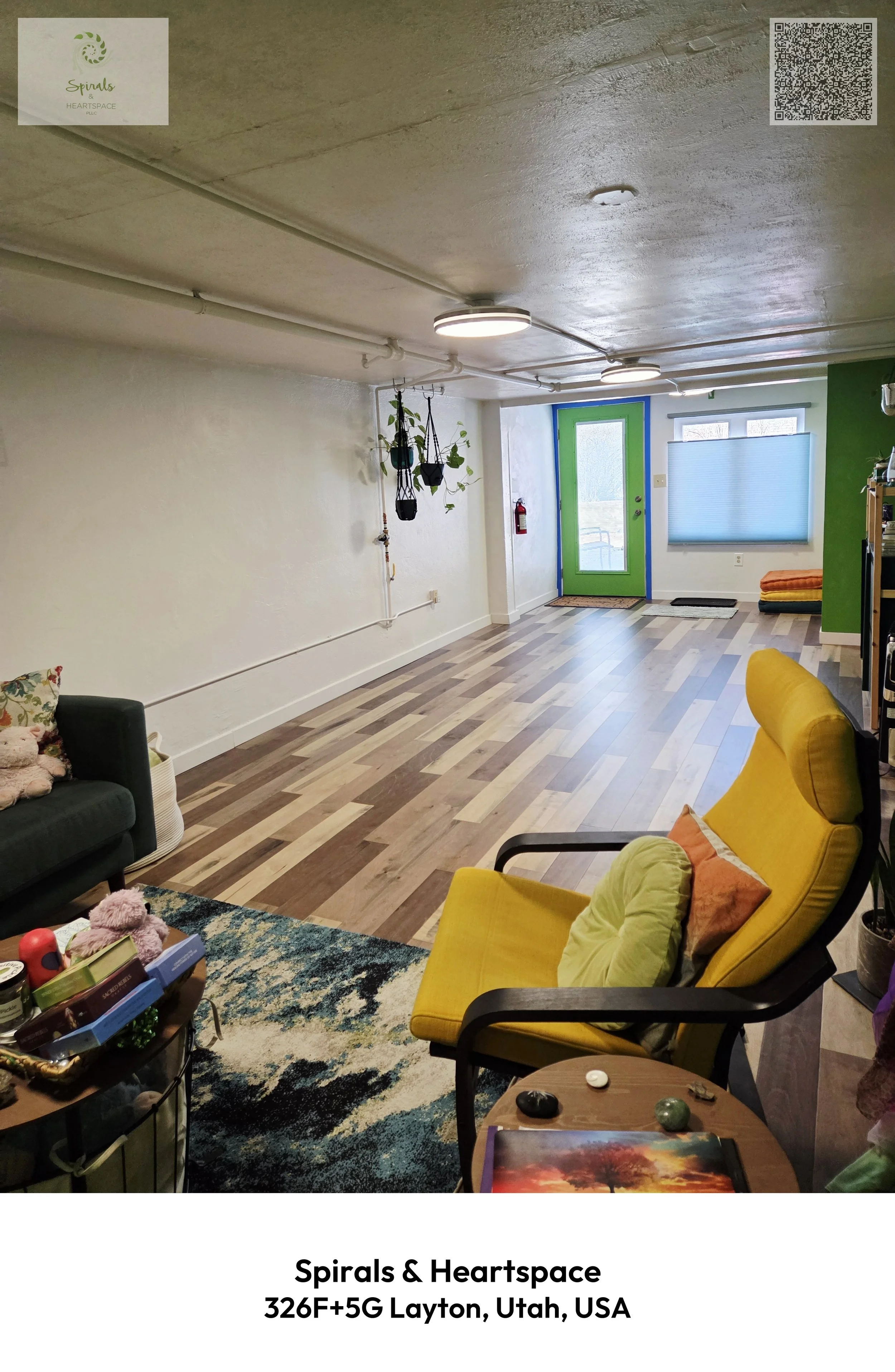
Spirals & Heartspace offers both in-person sessions in Layton and online therapy for clients in Utah.
The practice is locally positioned for clients in Layton, Kaysville, Farmington, Syracuse, Clearfield, Clinton, Roy, Ogden, Bountiful, Davis County, and nearby northern Utah communities.
The office is listed at 534 W Gentile St in Layton, with public listing hours Monday through Friday from 9:30 AM to 7:00 PM.
Prospective clients can call (385) 301-5252 or visit https://spiralsandheartspacehealing.com/ to ask about consultation options, session fit, and scheduling.
The public map listing for Spirals & Heartspace can help clients verify the Gentile Street office before planning an in-person appointment.
Popular Questions About Spirals & Heartspace
What is Spirals & Heartspace?
Spirals & Heartspace is a Layton, Utah psychotherapy and coaching practice offering somatic, trauma-focused, expressive arts, movement-based, and attachment-informed support for adults.
Who is the therapist at Spirals & Heartspace?
The official site identifies Ande Welling as the therapist, coach, movement facilitator, and guide behind Spirals & Heartspace. Listed credentials include LCMHC, BC-DMT, NCC, GL-CMA, BSE, EMDR Trained, and CCTP-II.
Where is Spirals & Heartspace located?
The matching public listing and LinkedIn profile list the address as 534 W Gentile St, Layton, UT 84041.
Does Spirals & Heartspace offer online therapy?
Yes. The official FAQ states that therapy is available in person or through a HIPAA-compliant telehealth platform for clients who live in Utah.
What services does Spirals & Heartspace provide?
Listed services include therapy, coaching, consultation, authentic movement, trauma therapy, somatic therapy, grief counseling, movement therapy, and attachment therapy.
What makes somatic therapy different from traditional talk therapy?
The official Layton page explains that somatic therapy works with body sensations, movement, and physical experience because trauma and emotional patterns can be held in the nervous system, not only in thoughts.
Do clients need dance experience for movement therapy?
No. The official Layton FAQ says no dance training or special physical ability is required, and that movement therapy uses a client’s natural capacity for movement to access emotions and process experiences.
Does Spirals & Heartspace accept insurance?
The official FAQ says the practice does not take insurance directly, but may provide superbills or bill for out-of-network benefits when applicable. Clients should confirm current reimbursement options directly before scheduling.
What are Spirals & Heartspace’s listed hours?
The matching public listing shows Monday through Friday from 9:30 AM to 7:00 PM, with Saturday and Sunday closed. Appointment availability should be confirmed directly.
How can I contact Spirals & Heartspace?
Call (385) 301-5252, visit https://spiralsandheartspacehealing.com/, or use the listed social profiles: https://www.instagram.com/spiralsheartspace/, https://www.linkedin.com/company/spirals-and-heartspace-pllc, https://www.tiktok.com/@spiralsheartspace, https://x.com/SpiralsHea61786, and https://www.youtube.com/@SpiralsHeartspace.
Landmarks Near Layton, UT
Spirals & Heartspace is located on West Gentile Street in Layton, Utah, with in-person therapy available locally and online therapy available for Utah residents. Clients near these landmarks can call (385) 301-5252 or visit https://spiralsandheartspacehealing.com/ to ask about somatic therapy, trauma therapy, movement therapy, grief counseling, attachment therapy, and consultation options.
- 534 W Gentile St — The listed office address for Spirals & Heartspace; clients can use the map listing to verify the office before visiting.
- West Gentile Street — The local street connected with the practice’s Layton office location.
- Downtown Layton — A practical local reference point for clients navigating central Layton.
- Layton Hills Mall — A major Layton shopping landmark and useful orientation point for clients traveling through the city.
- Interstate 15 near Layton — A major northern Utah route that helps clients reach Layton from nearby Davis County communities.
- Layton FrontRunner Station — A transit landmark for clients traveling by commuter rail through Davis County.
- Ellison Park — A local park and community landmark in Layton.
- Great Salt Lake Shorelands Preserve — A major natural landmark west of Layton and a recognizable Davis County destination.
- Hill Air Force Base — A major regional landmark near Layton and Clearfield.
- Kaysville — A nearby Davis County city listed in the practice’s surrounding service area.
- Farmington — A nearby Davis County community included in the broader local service-area language.
- Ogden — A nearby northern Utah city; clients can ask whether online Utah therapy or in-person Layton sessions are the best fit.