Attachment Therapy and Codependency: Finding Healthy Autonomy
Most people show up to therapy with a relational story already running in the background. Sometimes it sounds like, “If they are okay, then I am okay,” or the flip side, “If I set a boundary, I will lose them.” When those beliefs organize your choices for years, they begin to feel like personality rather than survival strategy. Codependency is not a character flaw; it is a relational adaptation that once solved a problem. Attachment therapy helps you revisit the original problem and update the adaptation so connection does not require self-erasure.
What people mean by codependency, and what they miss
Codependency entered the clinical vocabulary through addiction treatment, where one partner became the caretaker, buffer, and crisis manager for someone else’s substance use. Over time the term sprawled to include chronic over-functioning, people pleasing, boundary collapses, and identity built around being needed. The shorthand is useful, but it often misses the underlying engine: a nervous system that learned early that closeness comes with conditions.
From an attachment lens, the pattern is less a “dependency” and more a coupling of love with vigilance. If a parent was unpredictable, depressed, medically fragile, or absorbed by their own trauma, a child’s attention moves outward. The child learns to notice micro-shifts in mood, to soothe, to disappear needs that might burden the adult. That is care taking as attachment strategy, not pathology. In adulthood, it looks like a colleague who apologizes for taking vacation, the friend who organizes every gathering and goes home resentful, the partner who anticipates needs no one voiced, then feels invisible.
I often ask clients, not “Why are you like this?” but “When did this begin to help?” The answers are specific. The year mom went back to night shift. The season of a messy divorce. A sibling’s mental health crisis. Locating the origin matters, because it unhooks shame. If you are built for attunement, of course you became a radar. Therapy helps you keep the gift and put down the weight.
Attachment therapy as a frame, not a technique
Attachment therapy is not a single intervention. It is a stance that prioritizes safety, predictable repair, and the co-regulation of a nervous system built for relationships. It borrows from trauma therapy, psychodynamic work, developmental neuroscience, and practical skills training. The therapist becomes a secure-enough base inside the therapy room, not in a sentimental way, but through repeated, embodied experiences: I see you, I allow your “no,” and we repair when we miss.


That is different from telling someone, “Just set boundaries.” People who lean codependent often know they “should.” What they do not have is an internal felt sense that a boundary will be tolerated and that they will still belong afterward. Attachment work creates precisely that expectation through dozens of small, well-timed interactions. The nervous system updates slowly, then all at once.
The nervous system story under the story
If you are hyper-tuned to others, your body likely lives in a blend of sympathetic charge and fawning responses. You read faces before they finish forming. You pause https://privatebin.net/?f3adec2d51a4bc07#7aoCPqDRXCsVA6WAJLdwHZfUyG29KTit4uCCi9bSyWjB your bite mid-meal to answer a text. When someone’s voice tightens, your stomach folds. This is not drama; it is the physiology of a high-cost kind of love. Somatic therapy brings this into the room so change is not only cognitive. You might track shoulder tension when you say no. You might feel the breath shorten when you do not respond to a late-night message. These micro-signals carry the blueprint of old relational bargains.
Movement therapy can add a nonverbal doorway. I have asked clients to physically step forward when they notice the urge to fix, then step back and feel their feet, then find a stance that is neither hovering nor withdrawing. That two-foot travel can be more honest than fifteen minutes of rehearsal about what to text. When bodies practice new shapes, choices widen.
What autonomy actually looks like from the inside
Healthy autonomy is not rugged independence. It is the freedom to differentiate without rupture. You can want closeness and still say, “Not tonight.” You can receive care without tracking the ledger. You can tell a partner what hurts without drafting a closing argument. Autonomy feels like more breath, more choices, less catastrophizing. It also feels awkward at first. A client once described early boundary practice as “wearing a new backpack filled with helium and bricks.” Light and heavy together. That metaphor fits.
There is a popular myth that autonomy arrives as a clean break, a single conversation, a decisive move. For most, it accrues in small increments. You learn to pause before automatic yes. You tell the truth earlier, while it is still small. You let someone else feel their feeling without jumping in to modulate it. Codependency reduces anxiety by managing others. Autonomy tolerates some anxiety so people can manage themselves.
Grief is part of the work
One of the quieter tasks in this work is grieving who you had to be. If caretaking gave you belonging, if accomplishment was the currency of love, laying those tools down will feel like loss. Grief counseling fits here more often than people expect. You may feel the ache of opportunities missed because you were busy bolstering other people. There may be bitterness at parents who seemed relieved to be parented. There can be tenderness, too, when you recognize that everyone in the family system was doing their best with thin resources.
Do not skip this step. Without grief, people either perform a brittle autonomy or snap back into over-functioning at the first sign of distress. A period of deliberate mourning creates space for identity beyond usefulness. I have watched clients hold an old caregiver role like a well-worn jacket, appreciate its service, and set it down with ceremony. Ritual helps, even if it is simple, like writing a letter you never send or taking a long walk to name what you will keep and what you will retire.
How attachment patterns show up in adult partnerships
Attachment language talks about secure, anxious, avoidant, and disorganized tendencies. Most adults are blends that shift across contexts. Codependent adaptations tend to cluster with anxious strategies, though not always. An avoidant partner can look independent but rely heavily on the other to maintain distance, a different kind of codependency. When these pairings collide, the dance can be predictable: one pursues, the other distances, both feel unseen.
Attachment therapy slows the dance down. We turn toward the choreography underneath the argument about dishes. Maybe “You never help” means “I am scared I cannot count on you.” Maybe “You are always on my case” means “I feel controlled and I do not know how to bring myself in without losing myself.” When couples practice saying what the fight is really about, conflict remains, but it stops being reenactment. That is healthier than perfect harmony.
Signs that caretaking has crowded out autonomy
- You apologize for needs that are ordinary, like rest, time, or preferences.
- Your mood tracks the least regulated person in the room.
- Saying no spikes shame or panic more than mild discomfort.
- You feel a surge of purpose only when someone else is struggling.
- You gather data about others and draw a blank when asked what you want.
If two or more of these resonate most days of the week, you are not broken. You are running an old survival playbook that has outlived its context. The goal is not to become a different person, but to widen your repertoire so caring does not cost you yourself.
Treatment is not a single lane
Clients sometimes ask, “Do I need trauma therapy first, or attachment therapy, or skills training?” In practice, these lanes weave. We treat the present-day pattern as it shows up and track its historical roots when the body is ready. Some sessions are practical, like scripting a boundary with a parent. Others are explicitly somatic, mapping how your jaw clenches when a partner sighs. Still others are grief-focused, naming decades of unthanked labor.
Trauma therapy becomes essential when early experiences included neglect, emotional abuse, or exposure to violence. In those cases, the nervous system carries not only attachment lessons but also threat memories. Tools like titrated exposure to triggers, parts-informed work, or EMDR may be indicated. The common thread is pacing. We do not attempt to restructure a relationship pattern by blowing past the body’s tolerances. Safety first, insight second, behavioral experiments third is a sequence that tends to hold.
The role of boundaries, with nuance
Boundaries are courted as the hero of codependency recovery. They are necessary, but they are not a weapon or a wall. They are the architecture of self-respect and mutuality. A boundary says, “Here is what I can offer with integrity,” not “Here is how to control you.” When people begin, they often swing to extremes. They ghost instead of limit. They issue ultimatums they cannot sustain. That is understandable. A middle path takes practice.
The most robust boundaries are specific, behavioral, and anchored in what you will do. “If you raise your voice, I will take a break and return when we can talk calmly” is more workable than “Stop yelling.” We also plan for rupture and repair. If your first attempt is messy, you circle back. The repair is as therapeutic as the boundary itself because it proves endurance. Bonds that survive disappointment feel safer. Safety reduces the need for control. The loop closes.
Working with shame so it does not set the terms
Shame is loud in codependent patterns. It tells you that your needs are burdens. It frames rest as laziness, desire as selfishness, anger as danger. Shame’s favorite trick is to hide inside virtue. You become the reliable one, the generous one, the patient one, but the engine is fear. Therapy does not argue with shame; it brings it into the light where it softens. Somatic therapy is useful here too, because shame has a signature posture: head down, eyes averted, breath shallow. Alter the posture gently, and the story can loosen.
Language also matters. When a client says, “I am too much,” we test precision. Too much for whom? In what context? With what evidence? Often the judgment is global while the triggers are local and negotiable. That realization frees people to find environments that fit their range. Healthy autonomy sometimes means choosing new rooms rather than squeezing smaller in old ones.
Experiments that build autonomy without burning bridges
- Take a 30-second pause before every yes. In the pause, locate your actual capacity today, not in theory.
- Practice a no that includes care: “I cannot take that on this week. I can check in Friday to see how you are doing.”
- Choose one relationship to pilot earlier truth telling, ideally a lower-stakes one, and share a preference before resentment grows.
- Schedule one hour weekly where you do what you want without justifying it. Track the stories that arise and how your body feels afterward.
- When you notice the urge to fix, ask one curious question instead: “What would be most helpful from me right now?”
These are not magic bullets. They are reps. Consistency over a couple of months matters more than heroic acts. Most clients report that the second and third tries feel less dramatic, and other people adapt faster than anticipated. Occasionally, someone resists your growth because it upends a familiar ecosystem. That is data. Attachment therapy helps you face that data without collapsing or escalating.
Family systems and the weight of loyalty
Loyalty binds many people to codependent roles long after the original crisis fades. If your family made it through on the backs of a few over-functioners, changing your role can feel like betrayal. It helps to name that you are not abandoning the family, you are abandoning a contract that runs on self-sacrifice. Family work can be valuable here, especially if patterns run multigenerational. Even one or two sessions with a willing parent or sibling can shift a tone. When that is not possible, we work in the imaginal and in your current relationships, where you have more leverage.
Movement therapy can support this untangling through embodied boundary exercises that do not require confrontation. I have seen powerful changes when clients practice turning toward a chair representing a family member, feeling both the pull and their own spine, then rehearsing a single sentence that respects both parties. The body registers, I can face you and face myself.
Culture, gender, and economics matter
Codependency is not only personal; it is shaped by culture. In communities where interdependence is a survival necessity, high attunement is a strength. The line between care and over-care can blur. Gender norms add load. Women, and people socialized to care take, receive more praise for self-neglect masked as generosity. Economic pressure complicates autonomy when saying no risks job security. Any plan that ignores these forces will scold people for strategies that kept them employed and connected.
Good therapy respects context. We ask, “Given your culture, resources, and obligations, what is the next right-sized move?” Sometimes it is not a boundary at work but a shift at home that frees energy. Sometimes it is not confronting a parent but changing how you prepare for visits. Autonomy is not a single brave choice; it is a pragmatic sequence calibrated to real constraints.
Handling relapse without losing ground
Under stress, old patterns return. Holidays, illness, new babies, layoffs - these compress bandwidth. You may notice yourself jumping back into fixer mode or swallowing needs. That is not failure. It is your system reaching for a familiar calming mechanism. The work then is twofold: shorten the time you spend in the old groove, and make the return gentler. You might set a reminder on your phone during a known triggering season, debrief with a therapist after a family trip, or rehearse a boundary script before a high-stakes meeting.
I tell clients to track progress in ratios, not absolutes. Maybe last year you over-functioned five days a week, and now it is two. That shift counts. The nervous system learns by repetition and by contrast. Each time you feel the difference between compulsive caretaking and chosen care, the preference tilts toward the latter.
Where grief counseling, trauma therapy, and somatic work intersect
Many people need to move through all three zones. Grief counseling addresses the losses and deferred dreams. Trauma therapy metabolizes the fear that stiffens your throat at the moment of truth. Somatic therapy brings the body on board so insights do not evaporate in the next conflict. When these elements line up, changes hold.
For example, a teacher in her forties recognized that she chose the profession partly to be indispensable. In therapy we grieved the childhood that made “indispensable” the safe identity. We used movement therapy to experiment with physical space in the classroom, standing off to the side to let students wrestle with difficulty without rescuing. She practiced two boundary scripts with her principal about workload, with plans for respectful follow-up. Over a semester, her Sunday dread dropped from an eight to a three. She still cared, deeply. She also went home on time twice a week. That is the kind of autonomy that lasts.
Measuring change in ways that matter
Numbers can help, as long as they are your numbers. Clients often track:
- Hours per week spent on obligations they did not choose.
- Time from first resentment to first honest statement, aiming for earlier disclosure.
- Frequency of somatic cues like jaw clenching or stomach tightness in key relationships.
- Recovery time after a boundary conversation - how long it takes for the nervous system to return to baseline.
- Instances per week of receiving help without over-explaining.
Short-term, expect variability. Over two to four months of steady practice, most people notice fewer spikes of panic around no, a clearer sense of preference, and more energy for self-directed projects. Over a year, the shifts often extend to work choices and friendship patterns, not just romantic life.
When to bring others into the process
Sometimes autonomy grows best in community. A support group for adult children of addiction or for caretakers offers language and solidarity. Couples counseling can be a crucible for practicing secure base behaviors in real time. If trust is viable, partner sessions allow you to renegotiate division of emotional labor. Family therapy helps when siblings are repeating roles set decades ago. Choose collaborators who respect pacing. The goal is not to stage an intervention on your personality, but to invite the people who benefit from your growth to adjust with you.
A note on safety and exceptions
There are situations where codependent behaviors are not just habits but adaptations to active danger, such as living with a partner who is violent or coercive. In those contexts, attachment strategies must be paired with safety planning. Autonomy may initially look like securing finances, documenting incidents, or aligning with legal resources. No boundary script replaces a safety plan. Good therapy holds both aims without romanticizing either.
What changes when autonomy takes root
Clients describe a few reliable shifts:
- Relationships feel less like stage performances and more like conversations.
- Anger shows up earlier and cleaner, as a signal, not a flood.
- Self care moves from emergency response to routine maintenance.
- Work becomes a place to contribute, not prove you deserve to exist.
- Love feels lighter, even when life is heavy.
None of this turns you into a different species. You stay you - empathic, tuned-in, generous. The difference is that generosity stops draining your reserves. People can still lean on you, but you do not become the structure. That frees others to grow, too. Your autonomy is not a subtraction from the collective; it is an investment in more honest, resilient bonds.
Bringing it home
Attachment therapy offers a map for shifting from vigilance-based caretaking to chosen care. It treats codependency as a brilliant, outdated solution and builds new ones through repeated, embodied experiences of safety, boundary, and repair. Trauma therapy steadies the ground. Somatic and movement therapies enlist the body so change lasts beyond insight. Grief counseling honors what you are laying down.
If you recognize yourself in these pages, start as small as you need. Name one place where you will practice a 30-second pause before yes. Tell one truth earlier than usual. Ask for one thing you actually want. Then notice not only how others respond, but how your body feels when you stand with yourself. That sensation, unfamiliar at first, is healthy autonomy beginning to root.
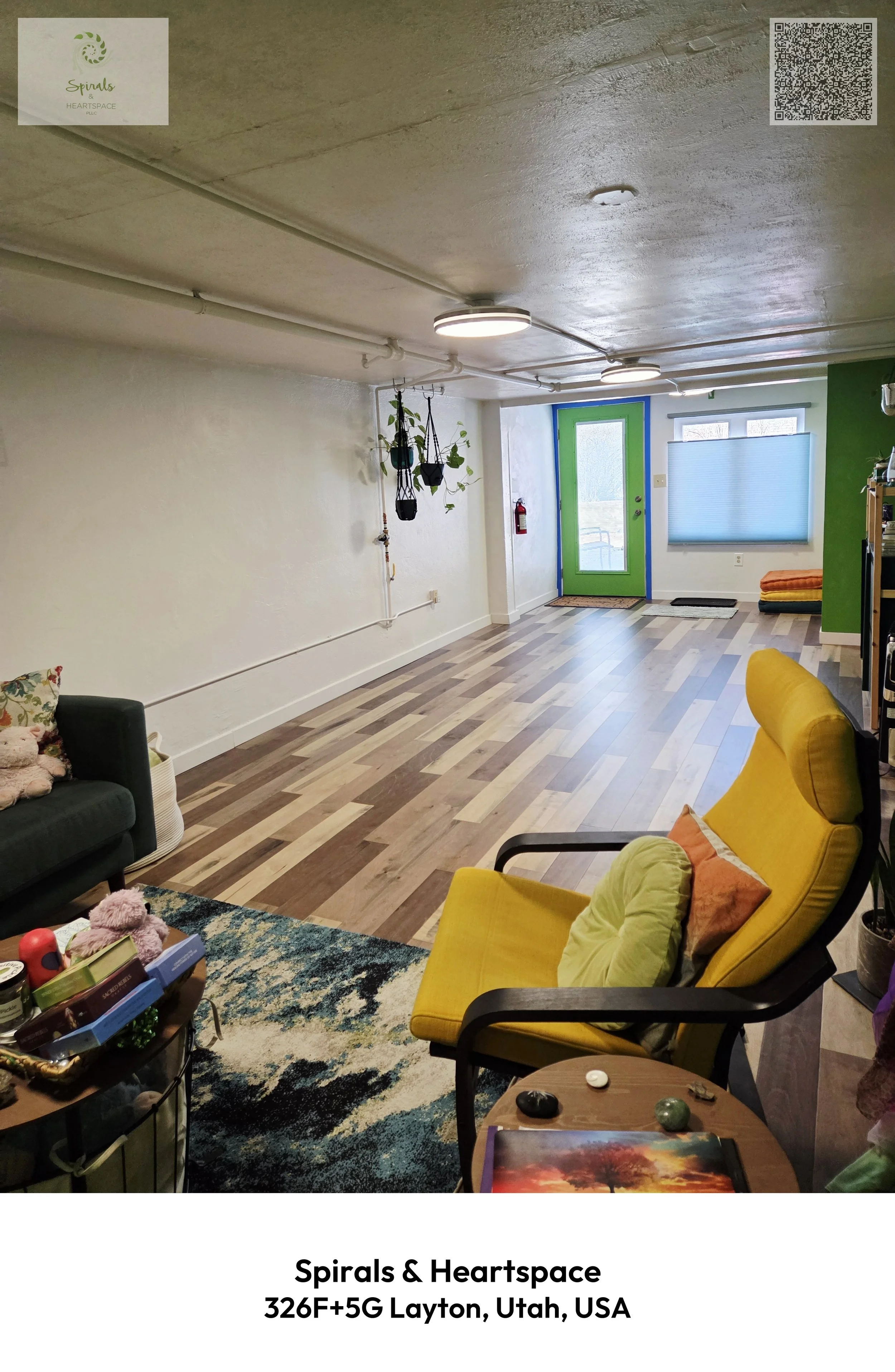
Spirals & Heartspace
Name: Spirals & Heartspace
Address: 534 W Gentile St, Layton, UT 84041
Phone: (385) 301-5252
Website: https://spiralsandheartspacehealing.com/
Hours:
Sunday: Closed
Monday: 9:30 AM – 7:00 PM
Tuesday: 9:30 AM – 7:00 PM
Wednesday: 9:30 AM – 7:00 PM
Thursday: 9:30 AM – 7:00 PM
Friday: 9:30 AM – 7:00 PM
Saturday: Closed
Open-location code / plus code: 326F+5G Layton, Utah, USA
Coordinates: 41.0604503, -111.9762128
Map/listing URL: https://www.google.com/maps/place/Spirals+%26+Heartspace/@41.0604503,-111.9762128,766m/data=!3m2!1e3!4b1!4m6!3m5!1s0x875303311f1d4d1b:0xc6859e5e3fceafe2!8m2!3d41.0604503!4d-111.9762128!16s%2Fg%2F11x781dbvb
Embed iframe:
Socials:
Instagram: https://www.instagram.com/spiralsheartspace/
LinkedIn: https://www.linkedin.com/company/spirals-and-heartspace-pllc
TikTok: https://www.tiktok.com/@spiralsheartspace
X: https://x.com/SpiralsHea61786
YouTube: https://www.youtube.com/@SpiralsHeartspace
The practice is led by Ande Welling, a licensed clinical mental health counselor with training in dance/movement therapy, somatic work, EMDR, trauma care, relational neuroscience, and embodied attachment.
Listed services include therapy, coaching, consultation, authentic movement, trauma therapy, somatic therapy, grief counseling, movement therapy, and attachment therapy.
The practice serves adults who want a deeper body-aware approach to trauma, anxiety, depression, grief, burnout, self-abandonment, family patterns, and relationship wounds.
Spirals & Heartspace offers both in-person sessions in Layton and online therapy for clients in Utah.
The practice is locally positioned for clients in Layton, Kaysville, Farmington, Syracuse, Clearfield, Clinton, Roy, Ogden, Bountiful, Davis County, and nearby northern Utah communities.
The office is listed at 534 W Gentile St in Layton, with public listing hours Monday through Friday from 9:30 AM to 7:00 PM.
Prospective clients can call (385) 301-5252 or visit https://spiralsandheartspacehealing.com/ to ask about consultation options, session fit, and scheduling.
The public map listing for Spirals & Heartspace can help clients verify the Gentile Street office before planning an in-person appointment.
Popular Questions About Spirals & Heartspace
What is Spirals & Heartspace?
Spirals & Heartspace is a Layton, Utah psychotherapy and coaching practice offering somatic, trauma-focused, expressive arts, movement-based, and attachment-informed support for adults.
Who is the therapist at Spirals & Heartspace?
The official site identifies Ande Welling as the therapist, coach, movement facilitator, and guide behind Spirals & Heartspace. Listed credentials include LCMHC, BC-DMT, NCC, GL-CMA, BSE, EMDR Trained, and CCTP-II.
Where is Spirals & Heartspace located?
The matching public listing and LinkedIn profile list the address as 534 W Gentile St, Layton, UT 84041.
Does Spirals & Heartspace offer online therapy?
Yes. The official FAQ states that therapy is available in person or through a HIPAA-compliant telehealth platform for clients who live in Utah.
What services does Spirals & Heartspace provide?
Listed services include therapy, coaching, consultation, authentic movement, trauma therapy, somatic therapy, grief counseling, movement therapy, and attachment therapy.
What makes somatic therapy different from traditional talk therapy?
The official Layton page explains that somatic therapy works with body sensations, movement, and physical experience because trauma and emotional patterns can be held in the nervous system, not only in thoughts.
Do clients need dance experience for movement therapy?
No. The official Layton FAQ says no dance training or special physical ability is required, and that movement therapy uses a client’s natural capacity for movement to access emotions and process experiences.
Does Spirals & Heartspace accept insurance?
The official FAQ says the practice does not take insurance directly, but may provide superbills or bill for out-of-network benefits when applicable. Clients should confirm current reimbursement options directly before scheduling.
What are Spirals & Heartspace’s listed hours?
The matching public listing shows Monday through Friday from 9:30 AM to 7:00 PM, with Saturday and Sunday closed. Appointment availability should be confirmed directly.
How can I contact Spirals & Heartspace?
Call (385) 301-5252, visit https://spiralsandheartspacehealing.com/, or use the listed social profiles: https://www.instagram.com/spiralsheartspace/, https://www.linkedin.com/company/spirals-and-heartspace-pllc, https://www.tiktok.com/@spiralsheartspace, https://x.com/SpiralsHea61786, and https://www.youtube.com/@SpiralsHeartspace.
Landmarks Near Layton, UT
Spirals & Heartspace is located on West Gentile Street in Layton, Utah, with in-person therapy available locally and online therapy available for Utah residents. Clients near these landmarks can call (385) 301-5252 or visit https://spiralsandheartspacehealing.com/ to ask about somatic therapy, trauma therapy, movement therapy, grief counseling, attachment therapy, and consultation options.
- 534 W Gentile St — The listed office address for Spirals & Heartspace; clients can use the map listing to verify the office before visiting.
- West Gentile Street — The local street connected with the practice’s Layton office location.
- Downtown Layton — A practical local reference point for clients navigating central Layton.
- Layton Hills Mall — A major Layton shopping landmark and useful orientation point for clients traveling through the city.
- Interstate 15 near Layton — A major northern Utah route that helps clients reach Layton from nearby Davis County communities.
- Layton FrontRunner Station — A transit landmark for clients traveling by commuter rail through Davis County.
- Ellison Park — A local park and community landmark in Layton.
- Great Salt Lake Shorelands Preserve — A major natural landmark west of Layton and a recognizable Davis County destination.
- Hill Air Force Base — A major regional landmark near Layton and Clearfield.
- Kaysville — A nearby Davis County city listed in the practice’s surrounding service area.
- Farmington — A nearby Davis County community included in the broader local service-area language.
- Ogden — A nearby northern Utah city; clients can ask whether online Utah therapy or in-person Layton sessions are the best fit.