Attachment Therapy for Couples: Creating Secure Connection
Couples rarely argue about what they think they are arguing about. Dishes, text replies, budgets, bedtime, all of it is the surface. Underneath sits the question every attachment therapist listens for: when I reach for you, are you there for me? When the answer feels uncertain or inconsistent, partners protest, shut down, pursue, or numb. Attachment therapy helps couples answer that question differently, not by winning arguments, but by changing the dance.
Why secure connection matters more than winning
Adult attachment is not a soft concept. It shows up in heart rate variability, cortisol rhythms, and the way partners co-regulate each other under stress. Securely attached couples resolve conflict faster, repair more effectively after ruptures, and return to baseline in minutes rather than hours. They disagree, sometimes fiercely, yet they do not fear that disagreement will cost them the relationship.
In clinical rooms, I have watched a partner’s shoulders drop from their ears the moment they hear, I missed you today and felt alone. I snapped because I wanted you. That shift, from accusation to need, often changes more in 10 seconds than a two hour debate ever could. Attachment therapy organizes sessions around those moments of reach and response.
What attachment therapy looks like in the room
First sessions move slowly. We map the pattern rather than the content, because content is endless. One couple, Maya and Luis, arrived with a docket of grievances. The theme, once we slowed the tape, was stark. Maya pursued when she felt alone, Luis shut down when he felt he could not get it right. The more he withdrew, the more she escalated. The more she escalated, the more he withdrew. Their fights had a familiar loop time of about 7 minutes, with a post-fight freeze that sometimes stretched to 48 hours.
Attachment therapy invites partners to press pause inside that loop. Sessions feel different from skills-only approaches. There is less coaching from the sidelines and more guided, in-room conversation known as enactments. I will often say, turn to him and tell him what happens inside you in those 7 minutes, not what he does wrong, but the moment you first feel alone. Then we track the physiology in real time: breath, gaze, micro-movements. We slow the pace until needs can be named cleanly.

A typical arc across early treatment looks like this:
- Identify the cycle, not the villain. Both partners start to say, our pattern grabbed us, rather than you always or you never.
- Build emotional safety. The body must believe the room is safe before deeper material can emerge, so we frequently regulate, pause, and reset.
- Expand emotional vocabulary. Partners learn to articulate cues, needs, and longings without blame.
- Practice repairs. We scaffold short, successful bids and responses and repeat them, precisely because repetition counts.
- Anchor gains at home. Small rituals and brief check-ins carry the gains outside sessions.
This is Attachment therapy in practice, influenced by Emotionally Focused Therapy, contemporary trauma therapy, and systems work. It is less about arguing better, more about re-experiencing each other as safe.
The map: attachment patterns without blame
Attachment patterns, shaped by early relationships and adult experiences, are adaptations to uncertainty. They kept you safe then, and they try to keep you safe now. In couples, the common shapes are predictable:
The pursuer often feels bursts of panic at distance, paired with a sense of urgency. They talk faster, ask more questions, and protest with criticism or sarcasm when needs go unacknowledged. Internally, the story is this will never change, I am alone here.
The withdrawer often feels spikes of shame or failure at conflict, paired with a collapse or freeze. They become quiet, avoid eye contact, and search for the right answer to make things stop. Internally, the story is whatever I say will make it worse, I am not enough.
Neither role is a character flaw. Both are protective. The pursuer protects against abandonment. The withdrawer protects against rejection. The therapy goal is not to erase these instincts, but to build enough trust that the protector can relax. With more safety, the pursuer can ask instead of protest, and the withdrawer can stay and speak instead of bolt or numb.
I often sketch this on a notepad for couples. Two arrows in a loop, with the words alarm and shame near the top, and alone and failure near the bottom. We circle the moment each partner first goes offline. The exercise is simple, but I have seen relief wash over faces when the pen point lands on the true trigger. Ah, it starts right after we get quiet about money, when I tell myself you will leave if I don’t earn more.
Trauma, the body, and why words are not enough
Many couples arrive having already tried to communicate better. They watched videos, even attended a weekend workshop. Talk helps, but it is not sufficient when the nervous system is on red alert. That is where somatic therapy principles become essential inside Attachment therapy. I track a partner’s breath cadence, the flush of the skin, the way a knee starts bouncing. I may invite a hand to the sternum, a lengthening of the exhale, or a softening of the gaze toward the other. These are not tricks, they are cues to the vagus nerve that it is okay to come back online.
When there is trauma in the system, whether from childhood neglect, past abusive relationships, or medical trauma, the body often overrides logic. Trauma therapy woven into couples work respects that pace. We may briefly dip into a memory fragment that hijacks the present, but we titrate carefully and return to the here and now. Safety comes first. For some couples, adding brief movement therapy interventions helps metabolize activation. A two minute synchronized walk outside between segments of a hard session can lower arousal enough to re-engage. I have had partners stand back to back, eyes closed, simply feeling each other’s breath for 30 seconds before speaking again. The room gets quieter after that.
One caveat: not every somatic or movement intervention fits every body. Chronic pain, neurodiversity, and cultural norms shape what feels tolerable. The rule is consent and choice. We offer menus, not mandates.
From disconnection to repair: a structured conversation
Good repairs are less about eloquence than sequence. When the conversation keeps melting down, a clear map reduces the chance of getting lost. Practice this in low-stakes moments before using it during big fights.
- Name the moment. Agree on a brief description of the rupture, for example, we got stuck after the text went unanswered.
- Share the inside story. Each partner names feelings and needs without blame, for example, I felt alarm and told myself I did not matter. I needed reassurance you still wanted me.
- Reflect and validate. Each partner mirrors what they heard and finds something understandable in it, for example, it makes sense that alarm surged when I went quiet.
- Take responsibility. Own actions and impacts, even if intentions were good, for example, I see my silence spiked your alarm. I pulled away because I felt like I could not do it right.
- Offer and request. Make a concrete commitment and ask for a manageable change, for example, next time I will text that I am heads down for an hour. If I forget, please try one gentle nudge before assuming the worst.
Keep it brief. Three to five minutes is plenty. If voices and bodies escalate, pause, regulate for two minutes, and resume only if both nervous systems are back within the window of tolerance.
Grief sits in many couples rooms
Grief counseling intersects with couples therapy more than most expect. A miscarriage, a parent’s death, the closing of a life chapter after a cross-country move, each can tilt the attachment system. Grief often has rhythms that do not match between partners. One may cry daily for weeks, the other numb out for a month and then crumble in the grocery aisle next to the cereal. Both are normal. The dance around grief becomes the work.
In one case, Amir lost his older brother in a sudden accident. For two months, he went quiet. His partner, Tasha, felt abandoned, then angry. Underneath anger was fear that sadness would swallow their life. We named grief as the third in the room and set up small anchors. They created a weekly ritual of coffee with a candle lit, five minutes only, to speak the brother’s name and share one memory. The structure held the grief without letting it flood every conversation. Over time, Amir asked for comfort more directly, and Tasha learned to sit near sorrow without trying to fix it.
Attachment therapy does not rush grief. It teaches partners to stay accessible, responsive, and engaged, even when they have no solutions to offer.
Daily practices that build security
Grand gestures get attention. Micro-interactions build security. Most couples who shift from anxious-avoidant spirals to steadier footing do so through dozens of small, repeatable behaviors that take seconds, not hours.
- A morning check-in that answers two questions: what do you need from me today, and when will we connect next.
- Turn-toward moments when a partner makes a bid, like showing a meme or sharing a random thought. A sentence or a smile is enough.
- A predictable debrief window after work, 10 minutes tops, with a clear start and stop, and permission to defer heavier topics.
- A ritual of repair phrase you both know, like I am here, I messed that up, I want to fix it together.
- A shared movement therapy minute, such as a 60 second stretch together or a slow walk around the block after dinner, to let bodies settle.
You do not need all five. Pick two and practice them for 14 days. Most couples notice a subtle drop in reactivity within a week.
Special situations and judgment calls
No two couples are the same, but certain scenarios recur often enough to merit guidance.
Betrayal or secrecy. After an affair or hidden debt, the injured partner usually needs transparency, while the offending partner needs room to earn trust without indefinite self-flagellation. We set time-limited transparency agreements, for example, full phone access for 90 days with weekly check-ins. We also build a plan for the waves of pain that crash without warning, so the betraying partner has specific responses ready. Both accountability and compassion matter.
Neurodiversity. If one partner is autistic or has ADHD, attachment needs are the same, but the signals differ. Concrete scripts and visual cues outperform hints. Timers, shared calendars, and literal language reduce misfires. Somatic therapy adjustments may involve stimming breaks or specific sensory tools in session.
Cultural and family norms. Attachment styles do not exist in a vacuum. In families or cultures where emotional restraint is a virtue, direct self-disclosure can feel like exposure. We pace accordingly, and sometimes we frame needs in values language, such as loyalty, responsibility, or dignity, which may land better.
High conflict or safety concerns. If there is ongoing violence, coercive control, or stalking, couples therapy takes a back seat to safety planning and individual work. Attachment language can be co-opted by an abusive partner as a cudgel. This is a bright line. The work shifts to protection, legal resources, and trauma therapy outside the couple frame until safety is real and sustained.
Chronic stress and health conditions. Medical issues, https://johnathanjpqs235.theburnward.com/trauma-therapy-for-complex-ptsd-layered-healing sleep deprivation with a new baby, or caretaking a parent thin the margin for empathy. In these cases, we focus on energy budgeting. A five minute repair is more realistic than a 45 minute summit. Movement therapy may be as modest as shoulder rolls together before speaking.
How change unfolds across 12 weeks
Progress is rarely linear, but there is a pattern I see often across the first three months.
Weeks 1 to 3. Assessment and de-escalation. Couples begin to name the cycle and catch it mid-flight once or twice. Fights may still last hours, but there are glimmers of softening. Homework is light and focused on a single ritual.
Weeks 4 to 6. Access and engagement. Withdrawers start staying longer in hard moments, even if they still go quiet. Pursuers experiment with softer starts and ask for touch or reassurance without attack. Somatic regulation becomes more automatic, with one or two shared cues that consistently help.
Weeks 7 to 9. Deeper blocks surface. Past grief, attachment injuries, or trauma memories rise into the room. We titrate. Repairs get more precise. You will hear partners say things like, I know this is not about that text, this is about that feeling I had when my dad left on Sundays.
Weeks 10 to 12. Consolidation. Gains generalize beyond the original hot topics. The couple fights faster and repairs faster. There is a felt sense of being on the same team, even when they disagree about logistics.
I measure progress with concrete markers: time to de-escalate after a fight, frequency of successful bids, number of days with at least one intentional connection, and subjective felt security on a 1 to 10 scale. The numbers help in two ways. They track trends, and they remind couples that small shifts matter.
When individual work supports the couple
Couples therapy can carry a lot, but not everything. I often recommend adjunct individual work when a partner’s nervous system remains on high alert despite relational gains. Trauma therapy, whether EMDR, somatic experiencing, or other evidence-based approaches, can lower baseline arousal and widen the window of tolerance. Grief counseling helps metabolize losses that eclipse the relationship field. For some, a brief course of medication, evaluated by a physician, supports the brain in calming enough to engage relationally.
Coordinated care makes a difference. With consent, I collaborate with individual therapists to align pacing and language. The message stays consistent: you are not the problem, the pattern is. We are working on both the inner landscape and the shared dance.
Finding the right therapist and getting started
Credentials matter, but fit matters more. Look for a therapist trained in Attachment therapy approaches such as Emotionally Focused Therapy or other attachment-based modalities, who also integrates somatic therapy when needed. Ask specific questions: how do you handle high activation in session, what does repair practice look like, how do you incorporate movement therapy if words stall, how do you work with grief inside couples work. You want clear answers, not vague assurances.
Commit to a trial period. Six sessions gives enough time to see if the approach helps. During that window, limit content debates in session, and lean into enactments. Practice the small homework rituals. If after six sessions both of you feel more stuck, say so and adjust. Sometimes the fix is a different therapist. Sometimes it is adding individual trauma therapy or grief counseling. Sometimes it is a schedule change so you are not arriving hungry and flooded at 7 p.m. After hard days.
What partners say when the work is landing
The language in the room changes. You start hearing, I reached and you were there, or, I could feel the panic rise and I caught it, I told you I was scared instead of accusing. Withdrawers say, I stayed and told the truth, even when I felt small. Pursuers say, I asked softly and gave you a minute to answer.
Outside the room, life gets more ordinary in the best way. Meals are easier. Bedtime is less tense. Sex shows up more often, sometimes not because of new techniques, but because safety is erotic. Money conversations become solvable problems rather than existential threats. Not every day is smooth, but the floor is higher.
A brief case vignette
Back to Maya and Luis. By week 4, Maya could name the exact surge that sent her into criticism. It was the three minutes at 6:12 p.m., after she texted and saw no bubbles. She learned to say, I am scared and need a quick sign you are with me. Luis learned that his freeze was not apathy, it was shame. He practiced a one-line text when busy, heads down for 45, back soon. In session, they practiced repairs around small misses. We added a 60 second shoulder-to-shoulder stretch after dinner. By week 10, their fights were both less frequent and shorter. They still disagreed about the early morning gym routine, but they stopped predicting the collapse of the whole relationship over it. They felt like teammates again.
The heart of the matter
Attachment therapy for couples is not magic, and it is not a script you follow word for word. It is a way of paying attention that privileges safety and need over blame and defense. It honors that bodies speak first, that grief changes the terrain, and that movement and breath sometimes open doors words cannot. It is humble about what cannot be done inside a couple when harm or danger is present, and it is hopeful about what can be rebuilt when two people decide to reach and respond.
Security is not a personality trait. It is a set of experiences repeated often enough that your nervous system starts to trust the pattern. Reach, find, settle. Over time, those three verbs change everything.
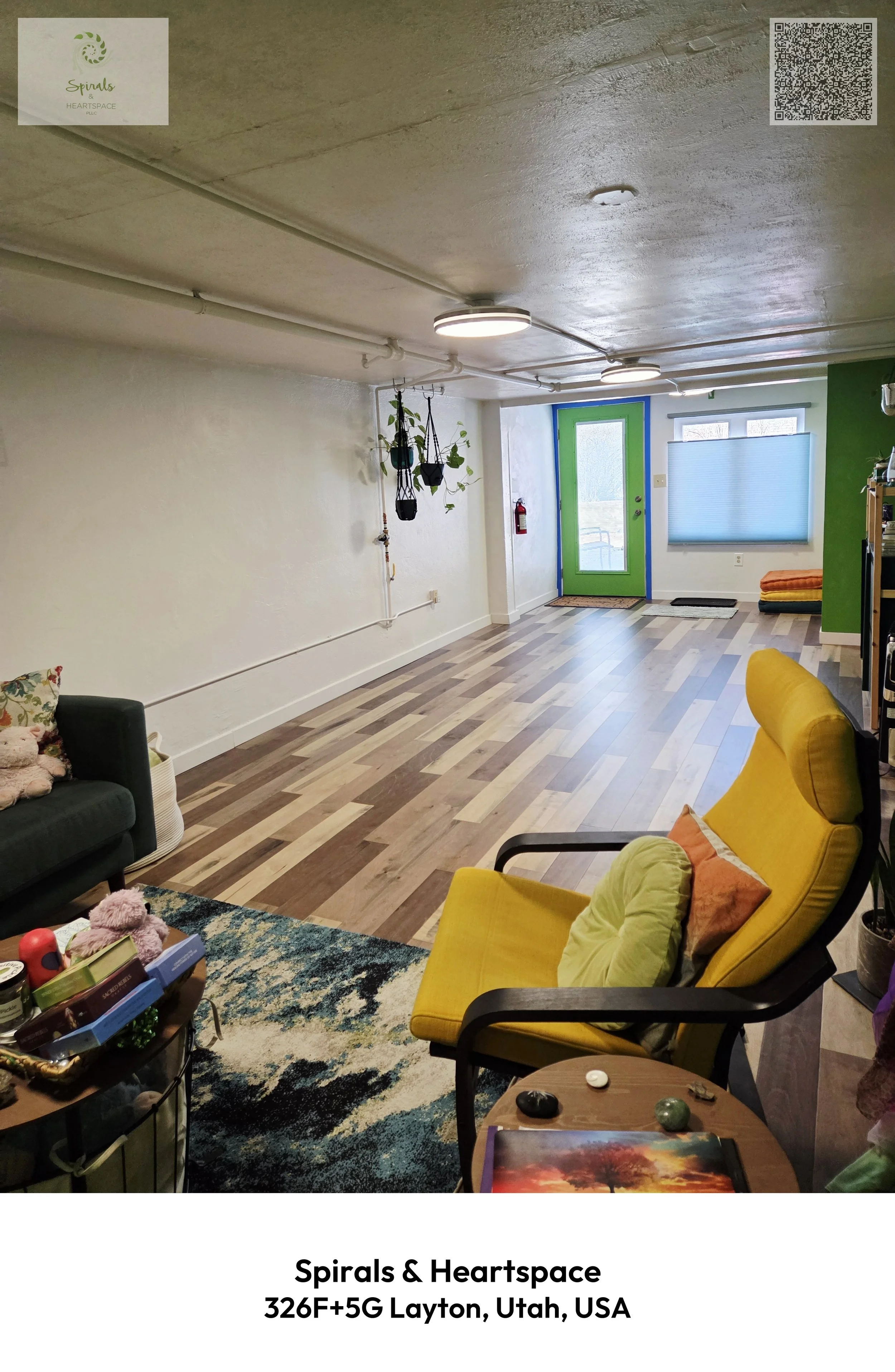
Spirals & Heartspace
Name: Spirals & Heartspace
Address: 534 W Gentile St, Layton, UT 84041
Phone: (385) 301-5252
Website: https://spiralsandheartspacehealing.com/
Hours:
Sunday: Closed
Monday: 9:30 AM – 7:00 PM
Tuesday: 9:30 AM – 7:00 PM
Wednesday: 9:30 AM – 7:00 PM
Thursday: 9:30 AM – 7:00 PM
Friday: 9:30 AM – 7:00 PM
Saturday: Closed
Open-location code / plus code: 326F+5G Layton, Utah, USA
Coordinates: 41.0604503, -111.9762128
Map/listing URL: https://www.google.com/maps/place/Spirals+%26+Heartspace/@41.0604503,-111.9762128,766m/data=!3m2!1e3!4b1!4m6!3m5!1s0x875303311f1d4d1b:0xc6859e5e3fceafe2!8m2!3d41.0604503!4d-111.9762128!16s%2Fg%2F11x781dbvb
Embed iframe:
Socials:
Instagram: https://www.instagram.com/spiralsheartspace/
LinkedIn: https://www.linkedin.com/company/spirals-and-heartspace-pllc
TikTok: https://www.tiktok.com/@spiralsheartspace
X: https://x.com/SpiralsHea61786
YouTube: https://www.youtube.com/@SpiralsHeartspace
The practice is led by Ande Welling, a licensed clinical mental health counselor with training in dance/movement therapy, somatic work, EMDR, trauma care, relational neuroscience, and embodied attachment.
Listed services include therapy, coaching, consultation, authentic movement, trauma therapy, somatic therapy, grief counseling, movement therapy, and attachment therapy.
The practice serves adults who want a deeper body-aware approach to trauma, anxiety, depression, grief, burnout, self-abandonment, family patterns, and relationship wounds.
Spirals & Heartspace offers both in-person sessions in Layton and online therapy for clients in Utah.
The practice is locally positioned for clients in Layton, Kaysville, Farmington, Syracuse, Clearfield, Clinton, Roy, Ogden, Bountiful, Davis County, and nearby northern Utah communities.
The office is listed at 534 W Gentile St in Layton, with public listing hours Monday through Friday from 9:30 AM to 7:00 PM.
Prospective clients can call (385) 301-5252 or visit https://spiralsandheartspacehealing.com/ to ask about consultation options, session fit, and scheduling.
The public map listing for Spirals & Heartspace can help clients verify the Gentile Street office before planning an in-person appointment.
Popular Questions About Spirals & Heartspace
What is Spirals & Heartspace?
Spirals & Heartspace is a Layton, Utah psychotherapy and coaching practice offering somatic, trauma-focused, expressive arts, movement-based, and attachment-informed support for adults.
Who is the therapist at Spirals & Heartspace?
The official site identifies Ande Welling as the therapist, coach, movement facilitator, and guide behind Spirals & Heartspace. Listed credentials include LCMHC, BC-DMT, NCC, GL-CMA, BSE, EMDR Trained, and CCTP-II.
Where is Spirals & Heartspace located?
The matching public listing and LinkedIn profile list the address as 534 W Gentile St, Layton, UT 84041.
Does Spirals & Heartspace offer online therapy?
Yes. The official FAQ states that therapy is available in person or through a HIPAA-compliant telehealth platform for clients who live in Utah.
What services does Spirals & Heartspace provide?
Listed services include therapy, coaching, consultation, authentic movement, trauma therapy, somatic therapy, grief counseling, movement therapy, and attachment therapy.
What makes somatic therapy different from traditional talk therapy?
The official Layton page explains that somatic therapy works with body sensations, movement, and physical experience because trauma and emotional patterns can be held in the nervous system, not only in thoughts.
Do clients need dance experience for movement therapy?
No. The official Layton FAQ says no dance training or special physical ability is required, and that movement therapy uses a client’s natural capacity for movement to access emotions and process experiences.
Does Spirals & Heartspace accept insurance?
The official FAQ says the practice does not take insurance directly, but may provide superbills or bill for out-of-network benefits when applicable. Clients should confirm current reimbursement options directly before scheduling.
What are Spirals & Heartspace’s listed hours?
The matching public listing shows Monday through Friday from 9:30 AM to 7:00 PM, with Saturday and Sunday closed. Appointment availability should be confirmed directly.
How can I contact Spirals & Heartspace?
Call (385) 301-5252, visit https://spiralsandheartspacehealing.com/, or use the listed social profiles: https://www.instagram.com/spiralsheartspace/, https://www.linkedin.com/company/spirals-and-heartspace-pllc, https://www.tiktok.com/@spiralsheartspace, https://x.com/SpiralsHea61786, and https://www.youtube.com/@SpiralsHeartspace.
Landmarks Near Layton, UT
Spirals & Heartspace is located on West Gentile Street in Layton, Utah, with in-person therapy available locally and online therapy available for Utah residents. Clients near these landmarks can call (385) 301-5252 or visit https://spiralsandheartspacehealing.com/ to ask about somatic therapy, trauma therapy, movement therapy, grief counseling, attachment therapy, and consultation options.
- 534 W Gentile St — The listed office address for Spirals & Heartspace; clients can use the map listing to verify the office before visiting.
- West Gentile Street — The local street connected with the practice’s Layton office location.
- Downtown Layton — A practical local reference point for clients navigating central Layton.
- Layton Hills Mall — A major Layton shopping landmark and useful orientation point for clients traveling through the city.
- Interstate 15 near Layton — A major northern Utah route that helps clients reach Layton from nearby Davis County communities.
- Layton FrontRunner Station — A transit landmark for clients traveling by commuter rail through Davis County.
- Ellison Park — A local park and community landmark in Layton.
- Great Salt Lake Shorelands Preserve — A major natural landmark west of Layton and a recognizable Davis County destination.
- Hill Air Force Base — A major regional landmark near Layton and Clearfield.
- Kaysville — A nearby Davis County city listed in the practice’s surrounding service area.
- Farmington — A nearby Davis County community included in the broader local service-area language.
- Ogden — A nearby northern Utah city; clients can ask whether online Utah therapy or in-person Layton sessions are the best fit.