Grief Counseling with Cultural Sensitivity: Honoring Traditions
Grief is not a single road. It zigzags through language, ritual, duty, food, music, and family roles. In one home, a widow is expected to host visitors from sunrise to midnight. In another, friends hold a quiet vigil while the family rests. The therapist who strives to be helpful without this map often stumbles, not from lack of care but from missing context. Cultural sensitivity offers that map. It does not presume sameness, it helps us ask better questions, partner more thoughtfully, and respect grief as both private experience and communal event.
I learned this early with a client I will call Amina, a graduate student from a Somali family, grieving her father. She apologized for missing sessions because of three nights of community prayers, then asked if her tears in front of elders meant she was weak. Where she came from, steadfastness during mourning honored the dead. Where she lived, classmates urged catharsis. She felt caught between two moral worlds. Therapy shifted when we stopped framing her tears against a universal standard and started exploring how her family’s practices held her together. We found ways for her to express private emotion while staying aligned with a collective ethic of dignity. The outcome was not simply less pain, it was a grief that fit her life.
Why cultural sensitivity changes outcomes
What a person believes about death, the body, and continued bonds with the deceased shapes how symptoms show up and how they heal. A parent from a rural Chinese background who maintains an ancestral altar may see ongoing conversation with a deceased child as normal. Labeling that as denial pathologizes love. A Jewish family sitting shiva for seven days may view visits as sacred, not intrusive. Telling them to limit company to protect energy can undermine the structure that contains their sorrow. Sensitivity here is not political correctness, it is clinical precision. It reduces misdiagnosis, improves adherence, and builds trust.
There are also concrete care decisions at stake. Some mourners need time off to journey home for a cremation ceremony that should occur within a day, or to observe a 40 day period before resuming work. Others may be obligated to wear white or avoid certain foods. These details affect scheduling, sleep, appetite, and social connection, the very levers we work with in grief counseling.
The layers of culture that shape grief
Culture is not just national origin or religion. It lives at the intersection of migration history, language proficiency, class, disability, race, gender, sexuality, and family structure. Two siblings raised under the same roof might have different grief needs when one identifies as queer and faces exclusion from certain rituals, or when one is the eldest daughter with caregiving duties while the other is a son praised for stoicism. Therapists who ask only about faith or country miss these crosscurrents.
Tradition also evolves. Diaspora families blend practices from home and host cultures. A Mexican American client might mark Día de los Muertos with an ofrenda while also holding a church memorial months later. A Caribbean family may observe Nine Nights, a community wake with music and food, then adopt a quieter memorial for colleagues. It is common, not contradictory, to hold more than one language of grief.
A brief tour of rituals and what they mean in the room
Knowing a few broad patterns helps, as long as we treat them as starting points, not prescriptions.
Jewish mourning often begins with swift burial, then shiva at home for seven days. Mirrors may be covered, and mourners receive guests who bring food and prayers. The first 30 days, shloshim, may carry additional restrictions, and Kaddish prayers can be recited for 11 months. In the therapy room, this structure can be a strong container. Clients might need help navigating a return to ordinary tasks when the communal focus eases after shiva.
Muslim families typically perform ghusl, a ritual washing, and the Janazah prayer before prompt burial. Community support can be strong in the early days. Grieving openly varies by context, but the focus on prayer, charity in the name of the deceased, and https://cruzuywu198.image-perth.org/somatic-therapy-for-migraines-and-tension-headaches patience can be central. Some clients wrestle with questions about destiny and fairness, others find deep solace in recitation and remembrance gatherings.
Hindu practices often include cremation shortly after death and a structured sequence of rituals, sometimes with a 13 day mourning period. Anniversaries can be marked with shraddha rites. The belief in rebirth and karmic cycles can ease some forms of suffering, while not diminishing attachment. In therapy, we might help with the dissonance of managing complex rituals in a distant country, or with conflicts between family expectations and workplace realities.
In parts of the Caribbean, Nine Night traditions honor the deceased with music, food, and storytelling across multiple evenings. Laughter and tears coexist. Therapists unfamiliar with this might misread the presence of joy as avoidance. Reframing it as communal regulation, a way to metabolize grief together, can protect against shame.
Many Indigenous communities hold ceremonies that foreground connection to land, ancestors, and community leadership. Practices differ widely, so humility and consent are crucial. A client may ask permission from elders to engage in new rituals or to adapt existing ones after moving to a city. Therapy can become a place to plan those conversations with respect.
Māori tangihanga can extend over several days at the marae, with oratory, waiata, and communal decision making. Here, the therapist might become part of a circle of care, not a central figure. Coordination with whānau leaders can matter more than adding individual sessions.
Chinese ancestral rites, whether Buddhist, Taoist, or Confucian influenced, often emphasize ongoing offerings, memorial tablets, and festivals such as Qingming. The living maintain bonds by caring for the dead. In therapy, inviting clients to describe their altar, photos, or incense rituals can normalize a continued relationship that Western grief models once saw as problematic.
Again, these snapshots are motifs, not rules. In every family, practice can be strict, lightly held, or contested.
The stance that earns trust
Cultural sensitivity starts with humility. Not the performative kind that recites a disclaimer, but the kind that shows up in how we handle time, titles, and silence. If a client asks you to address them by a kinship term that translates loosely to auntie or uncle, that might feel unusual, but for them it signals respect. If an elder enters with a younger relative who speaks English more confidently, you do not assume the younger person is the client or the decision maker. You ask. You clarify consent. You slow down.

I have found that curiosity lands best when it is concrete. Instead of asking, What does your culture think about death, try, When someone dies in your family, what usually happens in the first day or two. Who takes charge. Are there foods or prayers you expect. Which parts feel meaningful, which feel heavy. Precision shows care. Vague questions can sound like a quiz.
Working with interpreters and bilingual families
Language mediates grief. When a client can grieve in their mother tongue, metaphors surface that do not appear in a second language. If an interpreter joins, plan together first. Agree on first person translation, not editorial summaries. Review confidentiality and seating so that eye contact stays between client and therapist, not client and interpreter alone. Pause more often to allow full expression. If a family member volunteers to interpret, weigh the benefits of comfort against the risks of filtering or role strain. Ask the client in private whether they prefer a professional interpreter for hard topics.
Be mindful of dialect differences and honorifics. The word for an older brother in one language might change depending on maternal or paternal lines. Welcome correction. It signals that the room is safe for accuracy.
Grief counseling, attachment, and family roles
Attachment patterns color how we seek comfort, how we avoid it, and how we tolerate separation. In some cultures, secure attachment looks more interdependent than Western models assume. An adult child sleeping near a grieving parent for a month may be an act of health, not enmeshment. On the other hand, a client with an avoidant stance might hide behind culturally sanctioned stoicism to avoid feeling. The task is to discern when a pattern serves the person and when it becomes a shield that isolates them.
Attachment therapy techniques help here. Naming and normalizing protest, despair, and detachment states can free a client from shame. In a session with a Filipino family after a grandfather’s death, coaching them to speak directly to each other about who felt burdened, who felt shut out, and who feared being judged unfilial opened a path to redistribute tasks. We did not break tradition, we brought attention to bonds within it.
Somatic and movement based approaches across cultures
The body carries grief. Chest pressure, throat tightness, a heavy belly, restless legs, headaches that arrive at sundown. Somatic therapy offers a language for these sensations that does not pathologize them. Many cultural rituals already use the body to regulate, through rocking, keening, bowing, swaying, drumming, or prostration. When we introduce breath work or grounding, we can anchor it to something familiar. A client who prays with prostrations may resonate with a gentle child’s pose during sessions. A person who grew up with communal singing may benefit from a low hum that vibrates the chest.
Movement therapy fits naturally in grief when we scale it to the person and context. I have guided clients in simple sequences that mirror mourning gestures from their tradition, without copying sacred forms. A West African client described the healing pulse of a funeral drum. In our work, we used a metronome and thigh tapping to recreate that steady rhythm during flashbacks. A Caribbean client who missed night gatherings in her neighborhood found solace marching in place to a favorite hymn for five minutes each morning, then writing one memory. The point is not choreography, it is titrating regulation through the body with cultural anchors.
Be careful not to appropriate. Ask what movements feel meaningful, what is reserved for clergy or elders, what should remain in the home or community hall. Invite the client to lead. Err on the side of gentle, slow, and reversible practices, especially after traumatic loss.
Trauma therapy when loss is violent or displaced
When death involves violence, accident, suicide, or war, trauma therapy principles apply alongside grief counseling. Cultural sensitivity remains vital but cannot override safety and stabilization. A refugee father who lost a sibling in conflict may need to process intrusive images and guilt while also navigating asylum hearings and remittance pressures. Sometimes the nervous system needs simple orientation exercises before any ritual talk. Five sights in the room, four sounds in the hallway, three points of contact on the chair. Then, when steadier, we can explore how to honor the dead within the constraints of resettlement.
Be explicit about triggers embedded in rituals. For some, washing a body or seeing an open casket is healing. For others, it overwhelms. If a client fears fainting at the cemetery, design a plan. Position near an exit, bring a water bottle with lemon, agree on a hand signal with a cousin. Link these to the cultural script of caring for one another, not personal weakness. Frame traumatic responses as the body’s attempt to protect, then slowly widen capacity.
Negotiating tradition and modern life
Many clients live between elders who hold ritual tightly and workplaces that grant two bereavement days. I often help people write scripts for supervisors, clergy, and relatives. A software engineer asked how to explain to his manager that he needed four Friday afternoons to complete memorial activities. We drafted a clear, respectful message with minimal personal detail, offered coverage plans, and tied the request to reliable performance. He got the time.
In other cases, I help families loosen rigid expectations. An adult daughter in a small apartment could not host overnight visitors for shiva. We found a community center that allowed a daily two hour window, then coordinated meal deliveries. She upheld the spirit of the practice without collapsing under logistics.
Children, elders, and the politics of inclusion
Who gets to attend funerals and how we speak to children about death varies widely. Some communities protect children from the sight of a body, others include them to normalize life cycles. My bias is to include children in honest, age appropriate ways unless there is clear harm. But I do not bulldoze. I ask families to describe their reasons, then we explore middle ways. Perhaps a child does not view the body but helps set flowers. Perhaps an elder who fears being a burden agrees to a private family viewing. The goal is to widen the circle of meaning while respecting rank and role.
LGBTQ+ mourners sometimes face exclusion from ritual spaces. Here, the therapist can become a bridge, helping the client weigh the cost of attending, the cost of absenting, and the options for parallel rites with chosen family. Shame grows in the dark. A backyard gathering with candles, photos, and a shared song can be profoundly mending when a formal service shuts someone out.
Measuring progress without imposing a clock
Western timelines for grief do not fit every context. A year of formal mourning is common across traditions. Rather than pushing for closure, I track function and flexibility. Is the client eating, sleeping, and working within a reasonable range. Can they tell the story with less physiological overwhelm. Are they able to remember and plan. Do they find some moments of connection or purpose. If yes, we may be on a good path even if sadness remains as a lifelong thread.
Ethical pitfalls and how to avoid them
Two mistakes recur. First, reducing a person to a stereotype and overemphasizing ritual at the expense of listening. Second, erasing culture in the name of individuality and imposing preferences that match the therapist’s background. The remedy is a steady rhythm of curiosity, consent, and collaboration. Ask what matters, mirror it back, and check your understanding. If you propose an intervention, place it next to the client’s own practices and invite critique. When in doubt, consult with cultural brokers, chaplains, or community leaders, with the client’s permission.
Licensure and law also matter. Some spiritual or herbal practices may intersect with medical concerns. If a client plans prolonged fasting or use of substances during mourning, encourage medical guidance and safety planning without shaming tradition. It is possible to protect health and honor meaning.
A practical intake for culturally attuned grief work
- When someone dies in your family, what usually happens in the first day, first week, and first month.
- Who holds decision making power. Who cooks, who hosts, who speaks, who stays quiet.
- Are there prayers, songs, clothing, or foods that matter. What would feel wrong to skip.
- What challenges do you face doing these practices here and now, with work, space, money, and immigration status.
- What role do you want me to play, quiet witness, coach, organizer, advocate, or a mix.
These questions open doors without presuming knowledge. They also surface logistics early, which reduces downstream crises.
Working together to adapt or create ritual
- Identify the core value to honor, remembrance, service, purity, continuity, or community.
- Name the available resources, time, space, budget, people, and any gatekeepers to consult.
- Design a small, repeatable act that fits the value, lighting a candle at sundown, reciting a verse, cooking a favorite dish on Fridays, donating monthly in the person’s name.
- Decide how to include others, a group text at the memorial hour, a shared playlist, rotating hosts.
- Review after two weeks, keep what soothes, discard what strains, adjust for the next phase.
Clients gain confidence when rituals are right sized and aligned with their own understanding of respect.
Three vignettes from the field
A widower in his 70s, from a rural Hindu background, lived alone after his adult children moved out of state. He missed the 13 day stream of visitors he expected after his wife’s death. Silence made him doubt his worth. In session, we mapped his network, then scheduled three short visits each week for a month, rotating neighbors and temple friends. We arranged a small memorial meal that fit his budget. His sleep improved. He later attended community events again. The therapy did not change his core sadness, it changed his isolation.
A Black American mother whose teenage son was killed by gun violence arrived with rage and numbness. Her church family showed up with meals and prayer, but the sight of casseroles enraged her. We used trauma therapy to reduce reactivity, grounding through breath and sound, then explored a grief practice that matched her power. She started a Saturday morning walk in his honor, inviting friends to join. This movement therapy element gave her a way to feel her body safely, and to connect without words. At six months, she reported fewer panic attacks and more mornings with purpose.
A Chinese immigrant engineer lost her father overseas during a travel ban year. She could not attend the funeral. Guilt swallowed her. In therapy, we created a home altar with a photo, a small bowl, and a weekly tea offering. We arranged a video call with her aunt during the first Qingming after his death, during which she read a letter aloud. Attachment work focused on her internal dialogue with her father, naming the bond, the unfinished arguments, and the enduring pride. She still cried most Sundays, but she no longer called herself a bad daughter.
When grief counseling, trauma therapy, and systems advocacy meet
Individual work is only part of the picture. Many clients need letters to employers, coordination with clergy, or referrals to community groups. Sometimes what looks like complicated grief is complicated life, too many jobs, too little child care, no days off for ritual duties. Advocacy is not mission drift, it is compassionate realism. A call that secures two extra bereavement days can do more for symptoms than another session.
In clinics that serve diverse populations, build a directory of cultural and spiritual resources with phone numbers and contact persons. Update it quarterly. Invite chaplains and community leaders to train staff, and ask them what therapists often get wrong. Create quiet spaces where clients can pray, sit on the floor, light battery candles, or place photos during the first session after a death. Small signals of welcome matter.
Respecting difference without freezing it
Cultural sensitivity does not mean treating clients as representatives of a monolith. People critique and reinvent their traditions all the time. A young Sikh man might cut his hair in grief as a private act, even if not prescribed. An atheist from a religious family might host a ritual for relatives while holding different beliefs. The therapist’s job is to help the client identify what heals and what harms, then to act with integrity.
When you get it wrong, repair openly. I once suggested a mindfulness script that asked a Muslim client to picture herself as a mountain. She later told me that mountain imagery evoked idolatry for her. I apologized, learned, and we found a language grounded in breath and gratitude that felt aligned. Trust deepened.
Bringing it together
Culturally sensitive grief counseling is less about mastering a catalog of customs and more about attending to meaning, power, and embodiment. It draws on attachment therapy to understand bonds, on trauma therapy to stabilize and process pain when loss is violent, and on somatic and movement therapy to help the body carry what the heart cannot carry alone. It moves between the therapy room and the larger systems that support or strain mourning. Above all, it honors that traditions are living things, they hold us up, argue with us, and, when tended with respect, guide us through the longest nights.
The work is exacting and tender. It asks for curiosity that does not pry, authority that does not dominate, and creativity that does not appropriate. When we meet clients where they are, grief becomes less a problem to fix and more a human passage to accompany, with rituals old and new lighting the way.
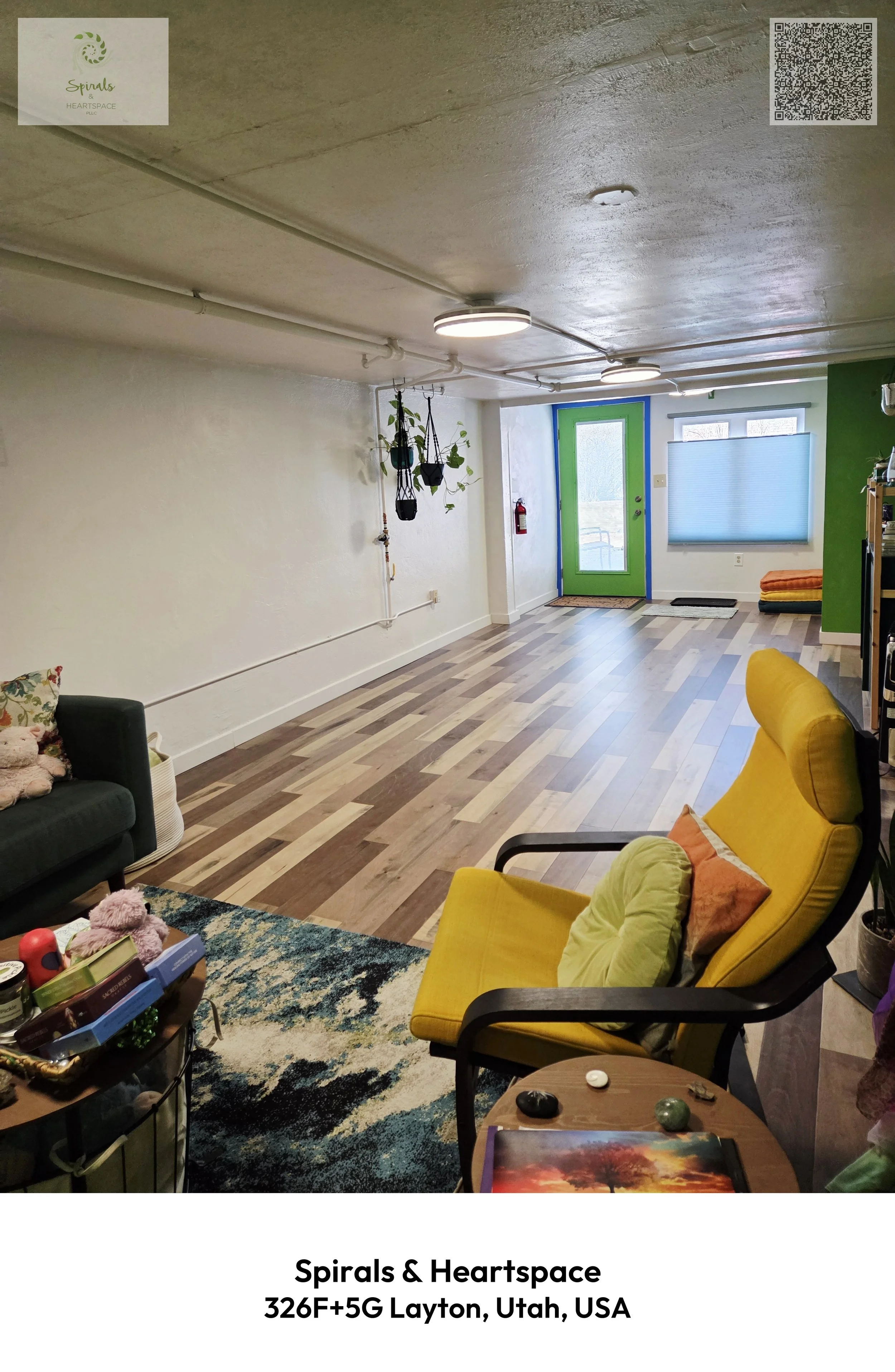
Spirals & Heartspace
Name: Spirals & Heartspace
Address: 534 W Gentile St, Layton, UT 84041
Phone: (385) 301-5252
Website: https://spiralsandheartspacehealing.com/
Hours:
Sunday: Closed
Monday: 9:30 AM – 7:00 PM
Tuesday: 9:30 AM – 7:00 PM
Wednesday: 9:30 AM – 7:00 PM
Thursday: 9:30 AM – 7:00 PM
Friday: 9:30 AM – 7:00 PM
Saturday: Closed
Open-location code / plus code: 326F+5G Layton, Utah, USA
Coordinates: 41.0604503, -111.9762128
Map/listing URL: https://www.google.com/maps/place/Spirals+%26+Heartspace/@41.0604503,-111.9762128,766m/data=!3m2!1e3!4b1!4m6!3m5!1s0x875303311f1d4d1b:0xc6859e5e3fceafe2!8m2!3d41.0604503!4d-111.9762128!16s%2Fg%2F11x781dbvb
Embed iframe:
Socials:
Instagram: https://www.instagram.com/spiralsheartspace/
LinkedIn: https://www.linkedin.com/company/spirals-and-heartspace-pllc
TikTok: https://www.tiktok.com/@spiralsheartspace
X: https://x.com/SpiralsHea61786
YouTube: https://www.youtube.com/@SpiralsHeartspace
The practice is led by Ande Welling, a licensed clinical mental health counselor with training in dance/movement therapy, somatic work, EMDR, trauma care, relational neuroscience, and embodied attachment.
Listed services include therapy, coaching, consultation, authentic movement, trauma therapy, somatic therapy, grief counseling, movement therapy, and attachment therapy.
The practice serves adults who want a deeper body-aware approach to trauma, anxiety, depression, grief, burnout, self-abandonment, family patterns, and relationship wounds.
Spirals & Heartspace offers both in-person sessions in Layton and online therapy for clients in Utah.
The practice is locally positioned for clients in Layton, Kaysville, Farmington, Syracuse, Clearfield, Clinton, Roy, Ogden, Bountiful, Davis County, and nearby northern Utah communities.
The office is listed at 534 W Gentile St in Layton, with public listing hours Monday through Friday from 9:30 AM to 7:00 PM.
Prospective clients can call (385) 301-5252 or visit https://spiralsandheartspacehealing.com/ to ask about consultation options, session fit, and scheduling.
The public map listing for Spirals & Heartspace can help clients verify the Gentile Street office before planning an in-person appointment.
Popular Questions About Spirals & Heartspace
What is Spirals & Heartspace?
Spirals & Heartspace is a Layton, Utah psychotherapy and coaching practice offering somatic, trauma-focused, expressive arts, movement-based, and attachment-informed support for adults.
Who is the therapist at Spirals & Heartspace?
The official site identifies Ande Welling as the therapist, coach, movement facilitator, and guide behind Spirals & Heartspace. Listed credentials include LCMHC, BC-DMT, NCC, GL-CMA, BSE, EMDR Trained, and CCTP-II.
Where is Spirals & Heartspace located?
The matching public listing and LinkedIn profile list the address as 534 W Gentile St, Layton, UT 84041.
Does Spirals & Heartspace offer online therapy?
Yes. The official FAQ states that therapy is available in person or through a HIPAA-compliant telehealth platform for clients who live in Utah.
What services does Spirals & Heartspace provide?
Listed services include therapy, coaching, consultation, authentic movement, trauma therapy, somatic therapy, grief counseling, movement therapy, and attachment therapy.
What makes somatic therapy different from traditional talk therapy?
The official Layton page explains that somatic therapy works with body sensations, movement, and physical experience because trauma and emotional patterns can be held in the nervous system, not only in thoughts.
Do clients need dance experience for movement therapy?
No. The official Layton FAQ says no dance training or special physical ability is required, and that movement therapy uses a client’s natural capacity for movement to access emotions and process experiences.
Does Spirals & Heartspace accept insurance?
The official FAQ says the practice does not take insurance directly, but may provide superbills or bill for out-of-network benefits when applicable. Clients should confirm current reimbursement options directly before scheduling.
What are Spirals & Heartspace’s listed hours?
The matching public listing shows Monday through Friday from 9:30 AM to 7:00 PM, with Saturday and Sunday closed. Appointment availability should be confirmed directly.
How can I contact Spirals & Heartspace?
Call (385) 301-5252, visit https://spiralsandheartspacehealing.com/, or use the listed social profiles: https://www.instagram.com/spiralsheartspace/, https://www.linkedin.com/company/spirals-and-heartspace-pllc, https://www.tiktok.com/@spiralsheartspace, https://x.com/SpiralsHea61786, and https://www.youtube.com/@SpiralsHeartspace.
Landmarks Near Layton, UT
Spirals & Heartspace is located on West Gentile Street in Layton, Utah, with in-person therapy available locally and online therapy available for Utah residents. Clients near these landmarks can call (385) 301-5252 or visit https://spiralsandheartspacehealing.com/ to ask about somatic therapy, trauma therapy, movement therapy, grief counseling, attachment therapy, and consultation options.
- 534 W Gentile St — The listed office address for Spirals & Heartspace; clients can use the map listing to verify the office before visiting.
- West Gentile Street — The local street connected with the practice’s Layton office location.
- Downtown Layton — A practical local reference point for clients navigating central Layton.
- Layton Hills Mall — A major Layton shopping landmark and useful orientation point for clients traveling through the city.
- Interstate 15 near Layton — A major northern Utah route that helps clients reach Layton from nearby Davis County communities.
- Layton FrontRunner Station — A transit landmark for clients traveling by commuter rail through Davis County.
- Ellison Park — A local park and community landmark in Layton.
- Great Salt Lake Shorelands Preserve — A major natural landmark west of Layton and a recognizable Davis County destination.
- Hill Air Force Base — A major regional landmark near Layton and Clearfield.
- Kaysville — A nearby Davis County city listed in the practice’s surrounding service area.
- Farmington — A nearby Davis County community included in the broader local service-area language.
- Ogden — A nearby northern Utah city; clients can ask whether online Utah therapy or in-person Layton sessions are the best fit.