Movement Therapy and Breath: Inhale Calm, Exhale Tension
Breath holds the body’s stories. Some of them are loud, like a gasp, a sob, or a sigh that rattles the ribs. Some are quiet, like a subtle clench in the belly or a shoulder hitch that never lets go. In clinical rooms and studio spaces, I have watched the smallest shift in breathing unspool tightness that talk had circled for months. I have also seen clients try to breathe their way out of pain only to feel more anxious, lightheaded, or stuck. Breath is potent, not magic. When we pair it with movement that respects the body’s rhythms, the results often become steadier and more durable.
Movement therapy and breathwork sit at the crossroads of several disciplines. Somatic therapy invites us to notice sensation and regulation inside the body. Trauma therapy adds guardrails and pacing so that change does not flood the nervous system. Grief counseling honors the shape of loss and how it moves through posture, breath, and voice. Attachment therapy helps people feel safer in their bodies with others, not just alone on a mat. Each lens offers a piece of the puzzle, and together they turn inhale and exhale into a path for reclaiming calm.
What the breath actually changes
A calm breath does not mean a perfect life. It does mean certain physiological gears are meshing differently. The diaphragm descends as you inhale and rises as you exhale, massaging the vagus nerve branches that skirt the esophagus and thread through the abdomen. That movement signals the brain that you are not in immediate danger. The heart speeds slightly on inhalation and slows on exhalation, a beat-to-breath dance called respiratory sinus arrhythmia. When that dance grows more robust, measured as higher heart rate variability, people tend to feel steadier and recover from stress faster.
Slow breathing in the neighborhood of 5 to 7 breaths per minute often boosts this variability. If you count, that means 5 to 6 seconds in and 5 to 6 seconds out, or variations like a slightly longer exhale. The precise tempo is personal. Some bodies prefer a 4 second inhale and 6 second exhale. Others lean toward even pacing. For clients with high anxiety or trauma histories, a long breath hold between inhale and exhale can feel like drowning. The rule I teach is simple: comfort first, then consistency, then length.
The trap is to treat breath like a lever you yank hard. Too intense, too fast, or too much focus on airflow can tip certain systems into hyperventilation or dissociation. People with a history of panic, asthma, or POTS often do better with small adjustments, like softening the shoulders or humming gently on the out-breath, before aiming for big changes in rate.
Movement therapy turns breath into behavior
Movement therapy in this context is not choreography. It is planned exploration of posture, coordination, and tension patterns that maps to how a person copes. A client who clenches their jaw through conflict often locks their hips standing at a crosswalk. Someone who minimises feelings may collapse their chest and tuck their tailbone, making a deep inhale nearly impossible. When movement therapy meets breath work, the task is to find ways of moving that make room for easier breathing, then practice them in everyday settings until they become options under pressure.
In practical terms, that might look like learning to roll your rib cage over your pelvis while seated so your diaphragm does not fight a rigid spine. It might be gentle spinal rotation to help the intercostal muscles release so breath can widen the back. For a person who startles easily, it can be as specific as rehearsing a half-turn and orienting gaze to the left and right while keeping breath smooth. Daily motions like reaching the top shelf, lifting a bag of groceries, or rising from a chair become laboratories for noticing where your breath blocks and where you can soften.
I keep an eye on asymmetries. Most people have one side more guarded than the other. That shows up as a rib cage that twitches up on the right or a pelvis that tips forward on the left. It shows in gait, too. If the exhale always shortens on the same side of your stride, tension rarely resolves. Linking breath to a symmetrical weight shift during walking can create an off-ramp from chronic bracing.
Somatic therapy’s pace and precision
Somatic therapy contributes the stance of curiosity. Rather than forcing change, we invite it. Rather than ignoring discomfort, we titrate it. I might ask a client to take three slow breaths while simply feeling their feet. Then we pause and describe what happened. Warmth? Tingling? A desire to stop? Naming those sensations builds interoceptive literacy, the ability to feel and make sense of the body’s signals.
There is a rhythm to the work. First, orient to safety by looking around the room and noticing what feels supportive. Second, approach sensation without trying to fix it. Third, expand or contract the intensity like a dial, not a switch. People with trauma histories often need especially careful pacing. A single deep sigh can flood them with memories or numbness. In those cases, I will often work near the breath, not with it initially. That might mean rhythmic pressing of the feet into the floor, a low hum that vibrates the chest, or gentle shaking of the hands to discharge activation before we add breath lengthening.
Small experiments matter. A client once discovered that exhaling while pressing her palms together for exactly two seconds stopped her urge to snap at her partner mid-argument. Another found that three slow inhales with elbows wide gave him the posture needed to set a boundary at work without apologizing. These are not abstract changes. They are micro-skills stacked into habits.
Trauma therapy: titration, safety, and choice
Trauma therapy’s first allegiance is to safety and choice. Breath and movement can open doors that words keep closed, which is powerful and risky. If a client shifts into a trauma memory during a breathing exercise, the priority is not to complete the technique. It is to re-establish present-moment orientation. I might have them press their heels into the floor, name five blue objects in the room, or hold a cool object while taking gentle sips of air.
There is a reason many trauma protocols favor a longer exhale. The out-breath encourages parasympathetic settling. But for someone whose system already trends toward freeze or collapse, too much emphasis on exhale can deepen shutdown. In those cases, brief, buoyant inhales paired with small upright movements can restore balance. Think of a buoy bobbing, not a weight sinking.
I also track capacity over time. On week one, a client might manage one minute of paced breathing without dissociating. By week four, they can do three minutes while keeping their gaze engaged and shoulders free. That change tells me their nervous system is learning to ride activation waves without drowning. It also sets the stage for trauma memory processing, if and when appropriate, because the body now has skills for self-regulation during harder work.
Grief counseling: ribs that understand sorrow
Grief teaches a very particular breath. It can come as a heaving sob that empties the lungs and leaves a hollow ache. It can come as a tight, shallow pattern that holds tears behind the eyes. In grief counseling, I do not try to reprogram those breaths into pretty symmetry. Instead, I help clients move enough for the body to express what it already knows.
That might look like a supported kneeling position with the chest resting over a bolster so the back ribs can expand on inhale and soften on exhale. It might look like a rocking motion that matches the cadence of the client’s cry, allowing the diaphragm to travel without locking. Sometimes it is walking, slow and repetitive, breathing in for three steps and out for three steps, not to control emotion but to be with it in a steady frame.
Ritual matters in grief. Lighting a candle, placing a hand on a photo, or sitting in a specific chair can turn breath and movement into a container for mourning. I have worked with parents who take 10 minutes each evening to stand by a window, inhale while naming a memory, exhale while acknowledging the pain. Over weeks, the breath grows less jagged. The memories do not fade, but the body stops treating them as an immediate emergency.
Attachment therapy: co-regulation in motion
Attachment therapy reminds us that calm spreads through contact. A caregiver’s regulated breath can downshift a child’s heart rate. Partners who sit back to back and breathe together often find language easier afterward. I have couples start with synchronized exhale rather than matching inhale, since it tends to be simpler and more soothing. Each person lets out a breath and listens for the other’s release, like two people setting down heavy bags at the same time.
In parent work, I coach caregivers to narrate their own regulation. A father might say, “I am going to put my feet on the floor, breathe out slow, and then answer you.” Children learn not just the technique but the permission https://pastelink.net/9kbfr7qt to pause. In adult attachment repair, movement becomes a bridge. Gentle mirroring exercises build nonverbal trust. One partner lifts a shoulder on inhale, the other follows. Over a few minutes, breath and rhythm align, and resentment can give way to noticing. The argument still matters, but the bodies are no longer opponents.
There is also the delicate issue of touch. For some, touch settles breath immediately. For others, especially those with trauma histories, touch can be dysregulating. We test it in micro-doses: a hand placed on a forearm for one breath, removed, then checked in verbally. Choice stays with the client at all times.
A 12 minute practice that travels well
The most useful practices fit inside a lunch break, a parked car, or a quiet room before bed. Here is a compact sequence I give to clients who want something reliable that touches movement and breath without stirring up too much intensity.
- Orient and arrive, 60 seconds: Look around, name three colors and three sounds. Place both feet on the floor, notice where you feel supported. Let the breath be natural.
- Back-body breath, 2 minutes: Place hands on lower ribs, inhale toward your thumbs as if widening the back, exhale with a soft sigh. Keep the jaw loose. If sighing feels edgy, exhale through pursed lips like you are fogging a mirror.
- Gentle rotation, 3 minutes: Seated or standing, turn the rib cage slowly right and left, small range. Keep your pelvis quiet. Let inhale accompany the turn, exhale back to center. Notice if one side feels stuck, do 10 percent less on that side.
- Step and sway, 4 minutes: Stand with feet hip-width. Shift weight to the right foot on inhale, center and soften knees on exhale. Then left. Add small arm swings. If balance allows, take tiny steps forward and back, matching breath to weight shift.
- Downshift, 2 minutes: Sit or lie down. Count a 4 second inhale and 6 second exhale for six to eight breaths. If this feels strained, shorten both counts equally. End with one normal breath, eyes open.
If any step spikes anxiety, shave the range of motion down or return to simple orienting. The goal is not to finish the sequence at all costs. It is to teach your system that small, predictable changes are safe.
When to pause and seek guidance
Breath and movement are powerful tools, but they are not one-size-fits-all. Use this brief checklist to decide if you should consult a licensed professional before or during practice.

- History of trauma with flashbacks, dissociation, or strong body memories during breathwork or yoga.
- Respiratory issues like moderate to severe asthma or COPD, or cardiovascular conditions where breath holds may be unsafe.
- Pregnancy after the first trimester, or postpartum pelvic pain or instability.
- Dizziness, fainting, or pronounced panic symptoms triggered by slow or focused breathing.
- Complex grief with suicidal thoughts, or substance use that complicates regulation.
A trauma-informed therapist familiar with Movement therapy and Somatic therapy can tailor the pace. If your concerns center on loss, a clinician trained in Grief counseling can help the practice honor your mourning instead of suppressing it. For patterns that repeat in relationships, Attachment therapy offers ways to build safety with the people who matter most.
The small biomechanics that matter
People often think breathing happens only in the chest. In practice, several mechanical details influence comfort.
The rib cage is not a barrel that just goes up and down. It also widens sideways and opens in the back. Many of us live our days in front of screens, with shoulder blades stuck to the ribs. That glue limits back-body expansion and can make each inhale feel like pushing uphill. Mobilizing the thoracic spine with small rotations and side-bending gives back ribs room to move. I teach clients to imagine a hand between their shoulder blades that they inflate into on each inhale, just a millimeter more than usual.
The diaphragm attaches to the lower ribs and the front of the spine. If the psoas, a deep hip flexor, is on constant alert from too much sitting or stress, it can tug on the front of the spine and reduce the diaphragm’s glide. That is one reason gentle hip opening and walking rhythm can make breathing feel easier. None of this requires extreme flexibility. Two minutes of standing hip pendulum swings per side, kept small and smooth, can be enough.
Jaw and tongue position also play a role. A clenched jaw often pairs with a high, shallow breath. Allowing the tongue to rest on the roof of the mouth with lips closed but soft often lowers the breath into the ribs and belly. Humming, chanting on a comfortable vowel, or even a quiet “mmm” on exhale can stimulate vagal pathways through the throat and create a soothing resonance that the body recognizes as safe.
What progress looks like in numbers and in life
I ask clients to track two sets of metrics. One is concrete physiology. Over a month, can you extend your comfortable exhale by one second without strain? Does your resting breath rate drift from, say, 14 to 10 breaths per minute while seated quietly? Do you notice fewer breath holds during daily tasks like email or driving?
The other is functional. On a scale of 0 to 10, how quickly can you find a breath that steadies you during a tough call? How many nights per week does your body release into sleep within 20 minutes of lights out? Does your partner report fewer snapped replies at dinner? Data need not be clinical to be valid. If your shoulders creep toward your ears at work only three days this week instead of five, that is movement in the right direction.
Improvement rarely shows as a straight line. Some weeks, breath lengthens easily. Others, life crowds in, and the practice feels clunky. That variability is normal. What matters is the trend and your capacity to restart without self-judgment.
Edge cases and smart modifications
Not every body wants the same recipe. A few patterns I see often:
- Panic-prone breathers sometimes do better with movement first, then breath lengthening. A brisk two-minute walk, followed by one minute of 4 in, 4 out, can feel safer than sitting still to “work on breathing.”
- People with asthma may benefit from exhaling through pursed lips to prevent airway collapse and from avoiding long breath holds. Short nasal inhales and longer, gentle mouth exhales often work well.
- For clients with chronic pain or hypermobility, small ranges prevent joint irritation. Instead of big spinal twists, micro-rotations with active muscular control build stability while still enhancing rib mobility.
- Those with osteoporosis should avoid loaded spinal flexion. Seated side-bending and gentle extension over a firm pillow can support rib movement without compromising bone safety.
- In pregnancy, supine positions can become uncomfortable after mid-second trimester. Left side-lying with a pillow between the knees, or seated positions with ample back support, usually allow comfortable back-body breathing.
Adjustment is not failure. It is the work.
Making breath and movement stick in daily life
A single weekly session helps, but daily micro-practice cements change. I help clients pick anchor moments, small events they already do, and tie a breath or movement to them. After sending a difficult email, three back-body breaths. Before entering a meeting, roll the shoulders and exhale longer than you inhale once. During a red light, feel your feet and widen your side ribs. Repetition teaches the nervous system that these actions are normal, not special.
Language choices matter here too. Swapping “I need to calm down” for “I can make a little more room in my breath” reduces pressure. Bodies respond better to invitations than commands. Over time, these invitations create a new baseline. The spikes of stress are still there, but the floor sits higher and the valleys less steep.
Working with a professional: what to expect
If you decide to work with a clinician, ask about training and approach. Some therapists blend Movement therapy and Somatic therapy seamlessly. Others might collaborate with a yoga therapist or physical therapist. In early sessions, expect a thorough history that includes injuries, surgeries, sleep, digestion, and daily stressors. A good assessment looks at posture and breath from multiple angles and asks clear consent before using touch.
The plan should include specific practices to try between sessions, with clear signals for when to stop. Good clinicians adjust on the fly. If a technique spikes symptoms, they do not push you through it. They scale it back, swap it, or park it. Evidence-based does not mean one-size-fits-all. It means using methods with strong rationale, tracking outcomes, and changing course based on your response.
The quiet payoff
I once worked with a nurse who lived in a near-constant state of urgency. During her 12 hour shifts, she barely noticed her breath at all. What changed her life was not mastering a perfect cadence. It was catching three tiny moments per shift to sway on her feet and let her ribs widen against her scrub top. She started sleeping better. She stopped grinding her teeth. When a crisis hit, she still moved fast, but her shoulders stayed down and her voice steady. She told me, “I didn’t become a different person. I just have a spine and a breath that show up when I need them.”
That is the heart of this work. Breath and movement are not decorations you add when life is tidy. They are tools for all the messy minutes. You inhale to gather yourself, exhale to release what can be let go, and move enough that your body remembers it has options. When calm becomes something you can practice, not pray for, tension loses its monopoly on your day.

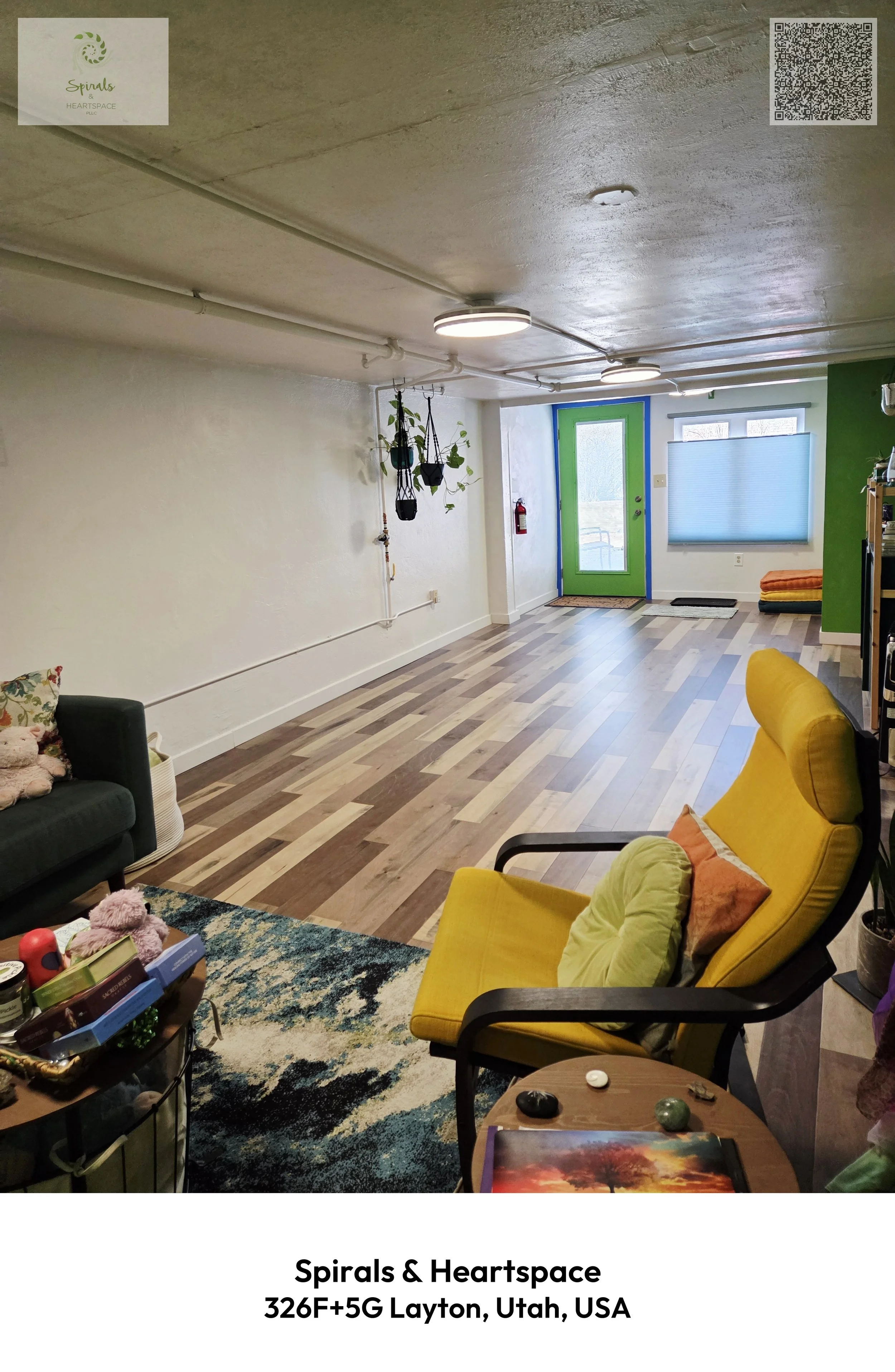
Spirals & Heartspace
Name: Spirals & Heartspace
Address: 534 W Gentile St, Layton, UT 84041
Phone: (385) 301-5252
Website: https://spiralsandheartspacehealing.com/
Hours:
Sunday: Closed
Monday: 9:30 AM – 7:00 PM
Tuesday: 9:30 AM – 7:00 PM
Wednesday: 9:30 AM – 7:00 PM
Thursday: 9:30 AM – 7:00 PM
Friday: 9:30 AM – 7:00 PM
Saturday: Closed
Open-location code / plus code: 326F+5G Layton, Utah, USA
Coordinates: 41.0604503, -111.9762128
Map/listing URL: https://www.google.com/maps/place/Spirals+%26+Heartspace/@41.0604503,-111.9762128,766m/data=!3m2!1e3!4b1!4m6!3m5!1s0x875303311f1d4d1b:0xc6859e5e3fceafe2!8m2!3d41.0604503!4d-111.9762128!16s%2Fg%2F11x781dbvb
Embed iframe:
Socials:
Instagram: https://www.instagram.com/spiralsheartspace/
LinkedIn: https://www.linkedin.com/company/spirals-and-heartspace-pllc
TikTok: https://www.tiktok.com/@spiralsheartspace
X: https://x.com/SpiralsHea61786
YouTube: https://www.youtube.com/@SpiralsHeartspace
The practice is led by Ande Welling, a licensed clinical mental health counselor with training in dance/movement therapy, somatic work, EMDR, trauma care, relational neuroscience, and embodied attachment.
Listed services include therapy, coaching, consultation, authentic movement, trauma therapy, somatic therapy, grief counseling, movement therapy, and attachment therapy.
The practice serves adults who want a deeper body-aware approach to trauma, anxiety, depression, grief, burnout, self-abandonment, family patterns, and relationship wounds.
Spirals & Heartspace offers both in-person sessions in Layton and online therapy for clients in Utah.
The practice is locally positioned for clients in Layton, Kaysville, Farmington, Syracuse, Clearfield, Clinton, Roy, Ogden, Bountiful, Davis County, and nearby northern Utah communities.
The office is listed at 534 W Gentile St in Layton, with public listing hours Monday through Friday from 9:30 AM to 7:00 PM.
Prospective clients can call (385) 301-5252 or visit https://spiralsandheartspacehealing.com/ to ask about consultation options, session fit, and scheduling.
The public map listing for Spirals & Heartspace can help clients verify the Gentile Street office before planning an in-person appointment.
Popular Questions About Spirals & Heartspace
What is Spirals & Heartspace?
Spirals & Heartspace is a Layton, Utah psychotherapy and coaching practice offering somatic, trauma-focused, expressive arts, movement-based, and attachment-informed support for adults.
Who is the therapist at Spirals & Heartspace?
The official site identifies Ande Welling as the therapist, coach, movement facilitator, and guide behind Spirals & Heartspace. Listed credentials include LCMHC, BC-DMT, NCC, GL-CMA, BSE, EMDR Trained, and CCTP-II.
Where is Spirals & Heartspace located?
The matching public listing and LinkedIn profile list the address as 534 W Gentile St, Layton, UT 84041.
Does Spirals & Heartspace offer online therapy?
Yes. The official FAQ states that therapy is available in person or through a HIPAA-compliant telehealth platform for clients who live in Utah.
What services does Spirals & Heartspace provide?
Listed services include therapy, coaching, consultation, authentic movement, trauma therapy, somatic therapy, grief counseling, movement therapy, and attachment therapy.
What makes somatic therapy different from traditional talk therapy?
The official Layton page explains that somatic therapy works with body sensations, movement, and physical experience because trauma and emotional patterns can be held in the nervous system, not only in thoughts.
Do clients need dance experience for movement therapy?
No. The official Layton FAQ says no dance training or special physical ability is required, and that movement therapy uses a client’s natural capacity for movement to access emotions and process experiences.
Does Spirals & Heartspace accept insurance?
The official FAQ says the practice does not take insurance directly, but may provide superbills or bill for out-of-network benefits when applicable. Clients should confirm current reimbursement options directly before scheduling.
What are Spirals & Heartspace’s listed hours?
The matching public listing shows Monday through Friday from 9:30 AM to 7:00 PM, with Saturday and Sunday closed. Appointment availability should be confirmed directly.
How can I contact Spirals & Heartspace?
Call (385) 301-5252, visit https://spiralsandheartspacehealing.com/, or use the listed social profiles: https://www.instagram.com/spiralsheartspace/, https://www.linkedin.com/company/spirals-and-heartspace-pllc, https://www.tiktok.com/@spiralsheartspace, https://x.com/SpiralsHea61786, and https://www.youtube.com/@SpiralsHeartspace.
Landmarks Near Layton, UT
Spirals & Heartspace is located on West Gentile Street in Layton, Utah, with in-person therapy available locally and online therapy available for Utah residents. Clients near these landmarks can call (385) 301-5252 or visit https://spiralsandheartspacehealing.com/ to ask about somatic therapy, trauma therapy, movement therapy, grief counseling, attachment therapy, and consultation options.
- 534 W Gentile St — The listed office address for Spirals & Heartspace; clients can use the map listing to verify the office before visiting.
- West Gentile Street — The local street connected with the practice’s Layton office location.
- Downtown Layton — A practical local reference point for clients navigating central Layton.
- Layton Hills Mall — A major Layton shopping landmark and useful orientation point for clients traveling through the city.
- Interstate 15 near Layton — A major northern Utah route that helps clients reach Layton from nearby Davis County communities.
- Layton FrontRunner Station — A transit landmark for clients traveling by commuter rail through Davis County.
- Ellison Park — A local park and community landmark in Layton.
- Great Salt Lake Shorelands Preserve — A major natural landmark west of Layton and a recognizable Davis County destination.
- Hill Air Force Base — A major regional landmark near Layton and Clearfield.
- Kaysville — A nearby Davis County city listed in the practice’s surrounding service area.
- Farmington — A nearby Davis County community included in the broader local service-area language.
- Ogden — A nearby northern Utah city; clients can ask whether online Utah therapy or in-person Layton sessions are the best fit.