Movement Therapy for Emotional Regulation: Move to Soothe
Emotions live in the body. Anyone who has felt a lump in the throat during grief, a buzzing in the limbs during panic, or a heavy stillness during depression knows this firsthand. Talking helps, yes, but when the nervous system is churning, words can skim the surface. Movement therapy gives the body a channel to participate in healing, turning motion into medicine. Over time, people learn not only how to discharge stress in the moment, but how to build steadier regulation, deeper presence, and a kinder relationship with themselves.
I came to this work after years of seeing people try to push through overwhelming feelings with logic alone. In sessions, I watched what changed when we added a little movement. Shoulders softened. Breathing returned. Thoughts untangled. The conversation opened in a new way. Movement therapy is not a performance or a workout, it is a way to court calm and coherence in a body that wants to help.
What movement offers that words alone cannot
Speech is a top-down tool. It asks the prefrontal cortex to organize meaning, then send that understanding downward to the limbic and autonomic systems. When stress is high, the body often flips the chain of command. Heart rate spikes, muscles brace, breath shortens, and the thinking mind goes dim. In that state, more talking can feel like swimming upstream. Movement flips the flow. It speaks to the autonomic system first, then allows the thinking mind to come back online.
A few physiological levers make this work:
- Rhythm entrains the nervous system. Steady, repetitive motion can nudge erratic heart rate variability toward steadier patterns. Simple walking at an even cadence, for five to ten minutes, often shifts people from agitation to workable alertness.
- Proprioception provides “edges” where none are felt. When emotions flood, people often describe feeling unmoored or unreal. Gentle pressure through the joints, like wall push-ups or pressing the feet into the floor, gives the brain concrete feedback. This helps reassembly when dissociation or numbing is present.
- Breath rides on movement. It is easier to lengthen an exhale while swaying or rocking than sitting stiff. Changes in exhalation length - even by one or two seconds - influence vagal tone, which calms the system.
- Orientation widens the frame. Turning the head and eyes to slowly scan a room, while shifting weight through the feet, communicates safety. The nervous system evolved to downshift when the environment appears nonthreatening and moveable.
These are small hinges that swing big doors. You do not have to run, dance wildly, or touch your toes to change how you feel. In many cases, less is more, especially at the start.
Where movement therapy fits within the broader field
Movement therapy sits under the umbrella of somatic therapy. Somatic approaches look at how thoughts, emotions, and physiology interact, and they invite the body in as an equal partner. Movement therapy uses posture, gesture, gait, rhythm, and breath to work with that interplay, often in real time.
- In trauma therapy, movement is a way to titrate activation without re-traumatizing. When memories or triggers spark fight, flight, or freeze, guided movements help complete protective responses that were once interrupted, or restore a sense of agency where helplessness set in.
- In grief counseling, movement creates a space to carry the weight of loss without collapsing under it. Swaying, walking, or rocking can hold the ache that language can only skirt, allowing the mourner to weep, sigh, and release without feeling lost at sea.
- In attachment therapy, movement refines the dance of closeness and distance. Mirroring, pacing, and reach-and-withdraw sequences let people try safer rhythms with a therapist or a partner, then translate those to everyday interactions.
Clinically, I tend to blend movement therapy with other modalities. A twenty minute dialogue might be followed by a five minute seated flow, then a return to reflection. On some days, a client spends most of the hour moving, with brief check-ins to track what shifts. On others, we talk through a difficult story, then use two minutes of shaking to downshift before leaving. Flexibility matters more than doctrine.
Safety, consent, and workable intensity
A session might look gentle, but it is not casual. Safety and consent are nonnegotiable. I never move a client’s body without explicit permission, and most of the time I coach verbally so the person can explore at their own pace. Intensity should be right-sized. If a movement spikes symptoms, we stop or shrink it. The goal is a window of tolerance that slowly widens, not heroics.
Before starting, I ask about pain, injuries, dizziness, blood pressure, POTS, pregnancy, seizures, or any conditions that might influence movement choices. Medications that affect heart rate or balance require extra care. Religious or cultural norms around posture, touch, or music should guide the frame. What feels grounding to one person may feel provocative to another. The map is always the person in front of us.

A simple sequence to settle the nervous system
When clients come in revved up or shut down, I often teach a short practice they can use between sessions. It takes about four minutes and can be done in a chair. Try it only if it feels safe, and stop if symptoms worsen.
- Plant both feet on the floor. Press down evenly for three breaths, noticing the support under your heels and the balls of your feet.
- Place one hand on your chest, one on your belly. Inhale gently, then lengthen the exhale by one count. Repeat six times, without strain.
- Rock your weight side to side, one inch each way, for about thirty seconds. Let your head and eyes softly follow the motion.
- Roll your shoulders forward and back, slowly, five times. Imagine warmth spreading across your upper back as the blades slide.
- Pause. Look around the room. Name three colors you see, then feel your feet again. Notice any shift, even if small.
People report that this tiny arc feels surprisingly effective. Not every time, not like a switch, but often enough to matter. The structure is intentional. It uses pressure, breath, low-amplitude rhythmic motion, mobilization of the shoulder girdle where many brace, and a final orienting step. It takes you from the center of the body outward, then back in.
Working with trauma without re-living it
Trauma therapy is not an archaeological dig. The point is not to unearth every shard, but to help the nervous system regain range. With movement, we can touch the edges of activation and return to safety repeatedly, which teaches resilience rather than reactivity.

Here is one example. A client who survived a car accident felt a surge of panic at intersections. Rather than retell the crash in detail, we practiced tiny accelerations and decelerations of the torso while seated, paired with long exhales. We then stood and took two steps forward and one back, coordinating breath with motion. The client learned how their body tensed before imagined impact, and how to soften the bracing in small bites. Over several weeks, we practiced in the studio, then near a quiet street, then as a passenger in a slow drive around the block. The person’s body learned a new outcome. This is the essence of titration and pacing.
Not every trauma responds the same. If someone shuts down quickly, micro-movements work better than large gestures. If someone floods with energy, we create structured outlets, like marching in place for sixty seconds, then pausing to track sensations. The art lies in reading the signs. Skin pallor, faraway eyes, jerky breath, or sudden stillness tell me to pause. Warmth in the limbs, deeper breaths, clear eyes, and easier shoulders tell me to continue.
Grief needs room, not fixing
I have worked with mourners whose bodies barely moved when they spoke of loss. Their chests looked cinched, breath high and tight. Rather than coax words, I often begin with rocking, the most ancient human movement. Sit, wrap the arms loosely around yourself, and sway small and slow. Sometimes, tears come. Other times, no tears, just a softer face. Grief is heavy, and heavy objects prefer small arcs. Simple loading, like a folded blanket over the lap or a weighted scarf over the shoulders, adds containment without words. Gentle walking outdoors helps too. Nature gives scale that reminds a body it belongs somewhere.
People in grief often ask how long it will last. There is no fixed number, but I watch for signs that movement is shifting the shape of the sorrow. In the early weeks, a person might tolerate thirty seconds of rocking before feeling overwhelmed. By month two, it is three minutes. Small progress matters. We also mark stamina for ordinary tasks. Twenty minutes of light housework without a crash may be victory enough that week.
Attachment patterns and the choreography of closeness
Attachment therapy looks at how early relational patterns echo in adult life. Movement gives a clean way to explore those echoes. Here is one exercise. The client stands on one side of the room, I on the other. We agree on a simple cue: the client walks toward me until they notice the first hint of discomfort, then stops, breathes, and steps back. I mirror their pace and posture at a comfortable distance. We repeat, sometimes adding a hand gesture, like reaching and receiving, always with consent and permission to stop. Over time, clients learn how to notice, name, and negotiate boundaries within their own bodies. This translates into conversations at home and work: “I want to talk, and I need to slow the pace,” or “I can come closer if we pause every few minutes.”
For people with disorganized attachment or a history of relational trauma, the room can feel dangerous even in silence. We widen the window very slowly. Parallel movement, where we both walk the perimeter without facing each other, often feels safer at first. Chairs placed at angles rather than straight on can reduce threat. Eye contact can be dosed in seconds, with breaks to look away and orient. The point is not to harden against closeness, but to build a body that can choose closeness without panic.
Somatic literacy, one sensation at a time
Somatic therapy builds literacy. That means learning to notice sensations with accuracy and compassion. “Tight” becomes “a string pulling from collarbone to jaw.” “Numb” becomes “the right thigh feels thick and far away.” Granular language helps brains regulate. The more specific the internal map, the easier it is to steer.
In sessions, I will often ask, “Where do you feel that in your body, and what is its shape?” If a client shrugs, we get curious together. We might place a palm on the area, hum softly to create vibration, or change posture to see what shifts. Curiosity is the tool, judgment the trap. Shame tightens everything. If someone says they feel nothing, we work with nothing. Numbness is a sensation, and it can change.
Two stories from practice
A nurse in her thirties came in burned out, anxious, and sleepless. She lived on adrenaline during twelve hour shifts, then crashed hard at home. Traditional talk therapy gave her insight but little relief. We built a two minute routine she could do in a storage room at work: press the palms into a wall for ten slow breaths, roll the shoulders while counting down from ten, look out a window and name five distant objects, then return. She tracked her sleep over six weeks. Nights with the routine led to twenty to forty minutes more rest, on average. Not a miracle, but enough to brighten her days. The routine later grew into a small pre-shift warmup and a post-shift cooldown, which helped her sustain the pace without the same costs.
A retired teacher grieving her spouse felt collapsed in posture and spirit. She feared that moving would dishonor her loss. We reframed movement as a way to carry the love differently. She chose a daily walk to a nearby bench, two blocks away. On the bench, she placed a hand on her heart for five breaths, then rocked slightly. The first week, she made it once. By week four, she went four times, and began to talk about her spouse during the walk. The movement gave shape to memory. Pain stayed, but became more bearable.
Making movement your own, with wise guardrails
You do not need a studio or special gear. That said, a few practices keep things safer and more effective.
- Start smaller than you think. If you believe you can handle ten minutes, try two. End while still feeling capable rather than depleted.
- Favor repetition over variety at first. A simple, consistent routine teaches the body what to expect, which builds trust.
- Track a few metrics. Use a one to ten scale for anxiety before and after, or note heart rate and sleep quality. Look for trends over two to four weeks, not day to day perfection.
- Pair movement with orientation. Always close with looking around the room, feeling your feet, and naming something pleasant in your environment.
- Seek professional support if symptoms spike. If movement worsens flashbacks, dissociation, or self harm urges, pause and consult a licensed provider experienced in trauma or somatic therapy.
These are not rules, they are rails that keep you on a sturdy path. Most people find that brief, frequent practice beats longer, occasional effort. Three to five minutes, one to three times a day, adds up.
Special considerations, edge cases, and thoughtful adjustments
Chronic pain changes the calculus. Pain is not just a signal, it is a state that reshapes the nervous system. Pushing through often backfires. For clients with fibromyalgia or persistent low back pain, I plan micro-doses of movement: ankle circles, seated cat-cow, supported twists with pillows, gentle foot presses. The measure is not range of motion but quality of breath and ease of face. If pain flares after a session, we shrink the practice next time.
Neurodivergent clients may prefer clear structure and predictable sensory input. Metronomes, timers, and weighted items can help. Stimming movements are not the enemy. They can be harnessed as regulation tools when chosen rather than suppressed. A client who flapped their hands when anxious learned to channel that impulse into wrist circles and finger flicks paired with a longer exhale. The goal was not to erase stimming, but to grow options.
Panic disorders carry a catch, since elevated heart rate from movement can mimic panic. We break the association by introducing tiny spikes in heart rate in safe conditions. Ten seconds of brisk marching, then a long exhale and orienting, repeated a few times, teaches the brain that faster heartbeats can be safe. Over weeks, we layer slightly longer intervals, always in dialogue with symptoms.
Religious practice matters. Some clients prefer not to use music or to avoid certain postures. Others thrive with sacred songs or prayers woven into movement. Therapists must follow the client’s lead. The most powerful medicine is the one the person will actually take.
What progress looks like and how to know you are on track
Progress in movement therapy is often subtle at first. The obvious signs are fewer meltdowns, less panic, easier sleep, and steadier energy. The quieter signs include a softer jaw, quicker recovery after a scare, or the ability to notice sensations without flipping into alarm. I ask clients to keep a one page log they can scan in under a minute:
- What did you practice today, for how long, and when
- Pre and post numbers for anxiety, pain, or mood on a one to ten scale
- One observation about breath, posture, or ease
- Any ripple effects later in the day
- A note on tomorrow’s intention
Over two to eight weeks, patterns emerge. Maybe evenings feel safer than mornings. Maybe shoulder rolls help but shaking is too much. We trim and tune. People who stick with small daily practice usually report that their body begins to ask for movement on its own, a sign that regulation is internalizing.
Group work and the power of shared rhythm
Group movement sessions offer something individual work cannot - co-regulation. Humans synchronize. Shared breath, shared sway, a circle walking in step, all of this tells the animal brain that it is not alone. Group classes must honor diversity of bodies and histories. Clear consent language, opt-out options, and no-touch norms without permission protect participants. Short check-ins, like naming how your body feels in one word before and after, keep focus on the somatic. I have seen rooms shift from scattered and guarded to warm and connected within twenty minutes of simple mirroring games and collective rocking. That feeling lingers.
How movement complements other therapies and medical care
Movement is not a cure-all. It complements medication, psychotherapy, and medical treatment. A client on an SSRI may find that movement reduces residual anxiety spikes. Someone in cognitive behavioral therapy can use movement to regulate before exposure exercises. Clients in grief counseling can lean on movement when words thin out. Attachment therapy benefits when new relational patterns are rehearsed not just in conversation but in how bodies approach and retreat.
Coordination matters. With permission, I collaborate with physicians, psychiatrists, physical therapists, and nutritionists. For example, clients on beta blockers may notice different heart rate responses, so we use breath and proprioception as primary levers. Clients with vestibular issues may need seated practices to avoid dizziness. If a person has a history of fainting, we move from floor to stand in stages and keep a chair close.
Starting where you are, not where you wish you were
Many people hesitate because they imagine movement therapy requires grace, strength, or a yoga background. None of that is required. Start where you are. If you have two minutes, use two minutes. If you can only move your hands today, move your hands. If you dread it, make the practice so small it feels silly to avoid - one shoulder roll, one long exhale, one look around the room. The body appreciates even tiny nods of care.
I often say, let movement earn your trust. Give it a week of brief, consistent practice, then decide whether it helps. If it does, keep going. If it does not, change the ingredients. Trade shaking for rocking, standing for seated, silence for a favorite song, morning for evening. You are not failing if one form does not fit. You are learning your body’s language.
Finding qualified support
If your history includes complex trauma, dissociation, eating disorders, or severe anxiety, seek a professional trained in somatic approaches. Look for licensure in mental health fields alongside specialized training or certification in movement or body-based modalities. Ask prospective therapists how they handle flashbacks, what consent looks like in their sessions, and how they collaborate with your other providers. If something feels off, honor that and keep looking. A good therapeutic fit https://titusljnr966.almoheet-travel.com/grief-counseling-for-parents-navigating-grief-as-a-family feels steady, transparent, and responsive.
A closing thought to carry forward
Bodies want to move toward regulation. You can feel that truth in the yawn after a good sigh, the softening shoulders after a walk, the steadier gaze after gentle rocking. Movement therapy takes these everyday truths and turns them into a practice. Whether you are working through trauma, walking with grief, or reshaping attachment patterns, motion can be the thread that helps you stitch scattered states into a more coherent whole. Start small, stay curious, and let your body have a say in how you heal.
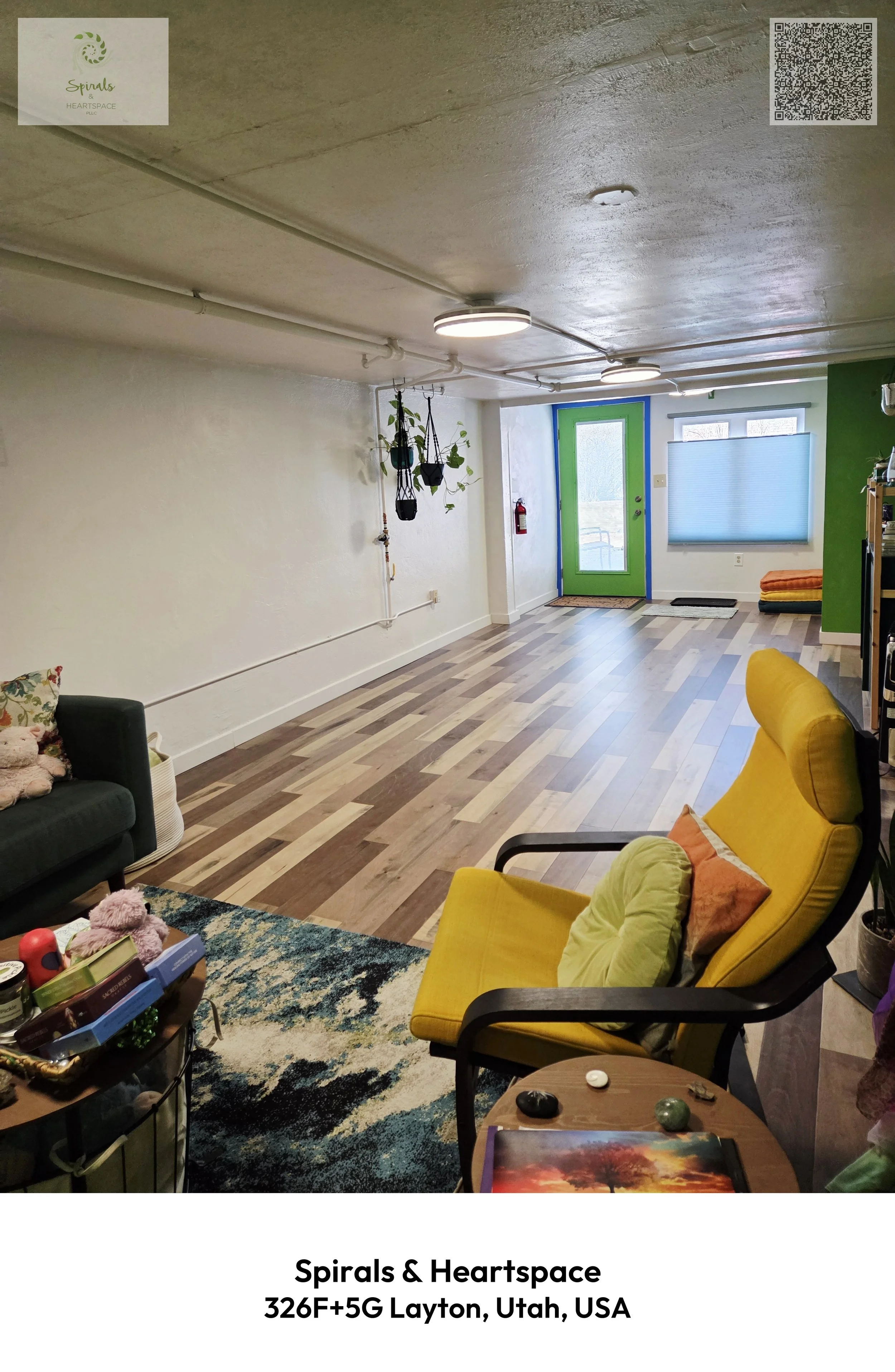
Spirals & Heartspace
Name: Spirals & Heartspace
Address: 534 W Gentile St, Layton, UT 84041
Phone: (385) 301-5252
Website: https://spiralsandheartspacehealing.com/
Hours:
Sunday: Closed
Monday: 9:30 AM – 7:00 PM
Tuesday: 9:30 AM – 7:00 PM
Wednesday: 9:30 AM – 7:00 PM
Thursday: 9:30 AM – 7:00 PM
Friday: 9:30 AM – 7:00 PM
Saturday: Closed
Open-location code / plus code: 326F+5G Layton, Utah, USA
Coordinates: 41.0604503, -111.9762128
Map/listing URL: https://www.google.com/maps/place/Spirals+%26+Heartspace/@41.0604503,-111.9762128,766m/data=!3m2!1e3!4b1!4m6!3m5!1s0x875303311f1d4d1b:0xc6859e5e3fceafe2!8m2!3d41.0604503!4d-111.9762128!16s%2Fg%2F11x781dbvb
Embed iframe:
Socials:
Instagram: https://www.instagram.com/spiralsheartspace/
LinkedIn: https://www.linkedin.com/company/spirals-and-heartspace-pllc
TikTok: https://www.tiktok.com/@spiralsheartspace
X: https://x.com/SpiralsHea61786
YouTube: https://www.youtube.com/@SpiralsHeartspace
The practice is led by Ande Welling, a licensed clinical mental health counselor with training in dance/movement therapy, somatic work, EMDR, trauma care, relational neuroscience, and embodied attachment.
Listed services include therapy, coaching, consultation, authentic movement, trauma therapy, somatic therapy, grief counseling, movement therapy, and attachment therapy.
The practice serves adults who want a deeper body-aware approach to trauma, anxiety, depression, grief, burnout, self-abandonment, family patterns, and relationship wounds.
Spirals & Heartspace offers both in-person sessions in Layton and online therapy for clients in Utah.
The practice is locally positioned for clients in Layton, Kaysville, Farmington, Syracuse, Clearfield, Clinton, Roy, Ogden, Bountiful, Davis County, and nearby northern Utah communities.
The office is listed at 534 W Gentile St in Layton, with public listing hours Monday through Friday from 9:30 AM to 7:00 PM.
Prospective clients can call (385) 301-5252 or visit https://spiralsandheartspacehealing.com/ to ask about consultation options, session fit, and scheduling.
The public map listing for Spirals & Heartspace can help clients verify the Gentile Street office before planning an in-person appointment.
Popular Questions About Spirals & Heartspace
What is Spirals & Heartspace?
Spirals & Heartspace is a Layton, Utah psychotherapy and coaching practice offering somatic, trauma-focused, expressive arts, movement-based, and attachment-informed support for adults.
Who is the therapist at Spirals & Heartspace?
The official site identifies Ande Welling as the therapist, coach, movement facilitator, and guide behind Spirals & Heartspace. Listed credentials include LCMHC, BC-DMT, NCC, GL-CMA, BSE, EMDR Trained, and CCTP-II.
Where is Spirals & Heartspace located?
The matching public listing and LinkedIn profile list the address as 534 W Gentile St, Layton, UT 84041.
Does Spirals & Heartspace offer online therapy?
Yes. The official FAQ states that therapy is available in person or through a HIPAA-compliant telehealth platform for clients who live in Utah.
What services does Spirals & Heartspace provide?
Listed services include therapy, coaching, consultation, authentic movement, trauma therapy, somatic therapy, grief counseling, movement therapy, and attachment therapy.
What makes somatic therapy different from traditional talk therapy?
The official Layton page explains that somatic therapy works with body sensations, movement, and physical experience because trauma and emotional patterns can be held in the nervous system, not only in thoughts.
Do clients need dance experience for movement therapy?
No. The official Layton FAQ says no dance training or special physical ability is required, and that movement therapy uses a client’s natural capacity for movement to access emotions and process experiences.
Does Spirals & Heartspace accept insurance?
The official FAQ says the practice does not take insurance directly, but may provide superbills or bill for out-of-network benefits when applicable. Clients should confirm current reimbursement options directly before scheduling.
What are Spirals & Heartspace’s listed hours?
The matching public listing shows Monday through Friday from 9:30 AM to 7:00 PM, with Saturday and Sunday closed. Appointment availability should be confirmed directly.
How can I contact Spirals & Heartspace?
Call (385) 301-5252, visit https://spiralsandheartspacehealing.com/, or use the listed social profiles: https://www.instagram.com/spiralsheartspace/, https://www.linkedin.com/company/spirals-and-heartspace-pllc, https://www.tiktok.com/@spiralsheartspace, https://x.com/SpiralsHea61786, and https://www.youtube.com/@SpiralsHeartspace.
Landmarks Near Layton, UT
Spirals & Heartspace is located on West Gentile Street in Layton, Utah, with in-person therapy available locally and online therapy available for Utah residents. Clients near these landmarks can call (385) 301-5252 or visit https://spiralsandheartspacehealing.com/ to ask about somatic therapy, trauma therapy, movement therapy, grief counseling, attachment therapy, and consultation options.
- 534 W Gentile St — The listed office address for Spirals & Heartspace; clients can use the map listing to verify the office before visiting.
- West Gentile Street — The local street connected with the practice’s Layton office location.
- Downtown Layton — A practical local reference point for clients navigating central Layton.
- Layton Hills Mall — A major Layton shopping landmark and useful orientation point for clients traveling through the city.
- Interstate 15 near Layton — A major northern Utah route that helps clients reach Layton from nearby Davis County communities.
- Layton FrontRunner Station — A transit landmark for clients traveling by commuter rail through Davis County.
- Ellison Park — A local park and community landmark in Layton.
- Great Salt Lake Shorelands Preserve — A major natural landmark west of Layton and a recognizable Davis County destination.
- Hill Air Force Base — A major regional landmark near Layton and Clearfield.
- Kaysville — A nearby Davis County city listed in the practice’s surrounding service area.
- Farmington — A nearby Davis County community included in the broader local service-area language.
- Ogden — A nearby northern Utah city; clients can ask whether online Utah therapy or in-person Layton sessions are the best fit.