Somatic Therapy and Polyvagal Theory: Tuning the Nervous System
I often tell clients that we are not only talking about your story, we are listening to your nervous system tell its story in real time. When we combine somatic therapy with polyvagal theory, we gain a working map for how the body protects, connects, and recovers. It lets us trade guesswork for attunement, especially in trauma therapy, grief counseling, movement therapy, and attachment therapy. The work looks quiet on the outside. On the inside, gears are shifting.
The instrument we play all day
Think of your nervous system as a sensitive instrument that keeps you alive and keeps you in relationship. It tunes itself constantly. Sometimes it gets stuck a little sharp or a little flat, and sometimes it throws the bow across the room to avoid the music altogether. In clinical language, we are talking about autonomic states. In everyday life, we are talking about whether you can breathe, focus, and feel like yourself.
I once worked with a paramedic who could not enter a grocery store without scanning exits and gripping his cart until his fingers ached. He was courteous and competent, but his system had lost the ability to downshift after years of sirens and sudden losses. He did not need long speeches from me. He needed a way back to tone, to flexibility, to a body that could return to baseline after a surge. Polyvagal-informed somatic work gave us that path.
A practical map of polyvagal states
Stephen Porges’ polyvagal theory describes three broad states of the autonomic nervous system, a ladder that we climb up and down all day.
- Ventral vagal state is the platform for social engagement. The face softens. The voice gains melody. Curiosity and play become available. You still handle stress, but with access to perspective and connection.
- Sympathetic mobilization readies you to fight or run. Heart rate increases. Vision narrows. Muscles prime. Mobilization is not the enemy, it is a tool. The harm comes when you cannot climb back down.
- Dorsal vagal shutdown is conservation mode. The system goes dim to survive overwhelm. People describe it as numbness, fog, or a dropping elevator in the chest. In extreme forms, the body can faint or freeze.
This is not a rigid hierarchy. Most of us blend states. A parent can be in ventral connection with a child while mobilized just enough to keep dinner moving on a tight schedule. Polyvagal theory gives us a way to notice these blends and to recruit ventral tone when we need it. That is the heart of somatic therapy rooted in this model.
Why felt safety beats logic
Clients arrive saying, I know I am safe, but I do not feel safe. Cognition is not the same as neuroception, the nervous system’s unconscious detection of safety and threat through posture, voice, gesture, and environment. You cannot out-argue a neuroceptive response. You can, however, shift the inputs it listens to.
Felt safety is built by dozens of micro-interactions. The angle of my chair matters. My voice prosody matters. Whether a door is in your line of sight matters. If we are doing grief counseling, we might move between upright attention while speaking about the person who died, and a reclined posture with a weighted blanket when the wave hits. Therapy becomes a lab for notice and influence rather than a lecture hall of insight.
How somatic therapy translates the map into movement
Somatic therapy speaks in the body’s grammar: breath, eyes, face, neck, pelvic floor, spine. We test and retest. If your system tolerates it, we use small movements to renegotiate stuck states. If not, we work at the edges until it does.
I use a simple sequence that many clients memorize: orient, exhale, lengthen, connect. Orienting means letting your eyes move with your neck and shoulders to scan the room. The exhale is long and easy, nostrils or pursed lips, often twice as long as the inhale. Lengthening usually involves the back line of the body, standing or seated, to give a sense of vertical support. Connection comes from a social cue, sometimes as basic as my warm hello, sometimes a memory of a friend’s face. These four levers often create just enough ventral tone to make the next five minutes workable.
In movement therapy contexts, we harness gait, reach, and rotation. Rotation is particularly valuable, because many freeze responses lock the body https://simonxhhl031.huicopper.com/trauma-therapy-and-shame-resilience-reclaiming-worth in the sagittal plane. A client who cannot turn their head often becomes a client who cannot turn the page on old fear. A few minutes of gentle torso twist, eyes tracking the opposite direction, can unlock options that an hour of analysis cannot touch.
Working edges rather than blasting through
The edge is the precise place where activation becomes noticeable, but agency and curiosity are still intact. Push past it, and you get reactivity or collapse. Stay far from it, and nothing changes. I teach clients to track micro-signals: the moment pupils sharpen, the tongue tenses against the palate, or humor becomes brittle. We slow down there. Often we shrink an exposure by half. Instead of, Let’s tell the whole story of the accident, we start with, Can you say the date without holding your breath. People are surprised by the potency of such small steps. That surprise is useful, it rebuilds trust in the system’s capacity to shift.
A case vignette from trauma therapy
A 34-year-old firefighter, call him Luis, came in three months after a highway pileup. Nightmares every other night, day spikes of panic on bridges, a new habit of snapping at his kids when they played loudly. The standard intake looked typical for acute stress. What stood out in the room was his posture, ribs high, neck forward, hands splayed as if bracing a fall.
We did not begin by recounting the crash. We started with his feet. I asked him to gently press his heels into the floor for two breaths, then release. We alternated that with letting his jaw dangle while humming an almost-silent note. Within five minutes, his shoulders dropped a centimeter. When I asked him to look around the office and count the light sources, he found six. He said, I feel like I am here, not back there.
Over six sessions, we layered these pieces with targeted imaginal work. He learned a bridge routine for his commute: left shoulder check with a long exhale, eyes on the horizon, then a glance in the rearview with a softer face, then a low hum during the last third of the crossing. The nightmares decreased from every other night to once in a two-week stretch. His kids noticed first. Dad is nicer at dinner. The story of the crash mattered, but the levers changed in the body.
Grief needs movement too
Grief counseling benefits from the same attunement, but the goals differ. We are not trying to erase pain. We are trying to make it possible to feel love and ache without the body mistaking sorrow for danger. A woman in her late 50s, after the death of her sister, described her grief as a stone on her sternum. When the stone rose, she stopped breathing, then scolded herself into control. That pattern, repeated daily, left her exhausted and detached.
We worked with a small ritual. When the stone arrived, she placed a palm on her chest, then let her elbows move away from her ribs by two inches, opening the armpits. She paired that with a silent count on the exhale, usually to six. That arm angle sounds trivial, but it changed her breathing mechanics and gave her a posture of receiving rather than bracing. She cried more fully in shorter waves. Over two months, her energy stabilized enough to resume volunteer work she loved. Movement therapy here was not calisthenics. It was permission to let the body complete its own arcs.
Attachment therapy through a polyvagal lens
Attachment patterns show up in the body before they show up in words. Anxious systems seek, then protest. Avoidant systems detach, then ration energy. Disorganized systems shift rapidly between mobilization and shutdown, especially in intimate relationships. The polyvagal lens helps couples and individuals see this choreography without blame.
With one couple, we skipped the debate about who was right and moved to a practice called micro-repair. They sat facing each other, feet grounded, hands loosely on thighs, and practiced three-second bids for connection. He would offer a tiny cue, Thank you for cooking, with a soft face. She would nod and exhale audibly, then look away to rest. That last step was essential. If she stared back trying to prove she was engaged, both systems spiked. By naming and practicing the off-ramps, they found a middle gear that neither had growing up. Attachment therapy became nervous system choreography rather than court argument.
The voice as a tuning fork
The vagus nerve touches the larynx and inner ear. How we speak and how we listen feed back into autonomic state. Monotone, clipped speech tends to sustain mobilization. Warm prosody invites ventral tone. I often ask clients to read a paragraph of neutral text in three voices: robotic, broadcast, and bedtime. Most notice their heart rate and breath change with each. When they find a voice that settles them, we use it for hard conversations at home and for self-talk in spikes of anxiety. It is not cosmetic. It is neuromodulation.
Singing also has a place. Not performance-level singing, but simple vowel toning or a favorite chorus. Thirty to sixty seconds can soften the palate, lengthen exhalation, and nudge heart rate variability in a favorable direction. In session, I watch color return to cheeks and hands. People feel silly for about two tries. Then they feel relief.
Measuring progress without obsessing over metrics
You can measure autonomic flexibility formally, with heart rate variability, startle tests, or acoustic analysis of voice. Those can be helpful when available. In everyday practice, we use functional anchors: more complete breaths per hour, a quicker return to baseline after a jolt, the ability to interrupt a spiral with a cue you trust. I ask clients to rate their recovery time after activation. If a traffic scare used to derail the afternoon, can you now recover in fifteen minutes with a walk and a glass of water. That number shrinking over weeks tells us the system is learning.
We also look at relational markers. Does your dog choose your lap again. Do you call your sister back. Do you find food tastes like something other than cardboard. Polyvagal shifts are lived, not only graphed.
A practical self-regulation toolkit
The following compact set of practices fits in a pocket. None require special equipment, and each targets known levers of autonomic state.
- Orienting scan: turn your head slowly to look for three shades of a color in the room, then let your eyes rest on the farthest object for two breaths.
- Ratio breathing: inhale for a count of four, exhale for a count of six to eight, for two minutes. Stop if you feel lightheaded.
- Contact and counterpressure: place one palm on your chest and the other on your mid-back, press gently toward each other for three breaths, then release.
- Vowel toning: hum or vocalize a soft “voo” or “mmm” for three extended exhalations, feeling the vibration in the lips and chest.
- Grounded push: standing with knees soft, push your hands into a doorframe for five seconds, release for ten, repeat three times.
Clients who use two of these daily for three to six weeks often report a noticeable change in baseline tension. The key is not heroic effort, but consistency at a tolerable edge. If any practice spikes discomfort, we modify posture, shorten duration, or switch to orienting only.
When not to push the gas
There are times when somatic activation is contraindicated or needs careful titration. Dissociative states can deepen if we rush. Chronic pain conditions sometimes flare with breath or posture changes, particularly if the pelvic floor is recruited abruptly. Asthma and POTS bring unique parameters. A history of vocal trauma can make toning distressing. In these scenarios, we keep the body in positions of comfort and use micro-movements. We collaborate with medical providers, especially when medication side effects complicate autonomic tone. A beta-blocker that flattens heart rate can mask progress, but it can also offer safety needed to attempt new regulation skills. The judgment calls are real, and nuance matters.
Remote work, real signals
Somatic therapy is not limited to in-person sessions. On video, I watch for breath in the lower ribs, collarbone motion, facial expressivity, micro-swallows, and gaze patterns. I narrate my observations sparingly, because calling out every twitch heightens self-consciousness. Clients can adjust their camera to include upper torso and hands, which gives us enough data to work. A client in a rural area who could not travel learned to regulate panic episodes during calving season by pairing doorframe pushes with an audio recording of her friend’s voice. Over three months, her episodes decreased in frequency and duration without a single office visit.
Integrating with other modalities
Polyvagal-informed somatic work integrates smoothly with many approaches. In EMDR, we front-load resourcing with breath and gaze so bilateral stimulation does not tip the system into overwhelm. In parts work, we invite the posture and voice of a part to appear for a moment, then we adjust one feature and notice the shift. In cognitive therapy, we time Socratic questions to exhalation and ask for the thought to be spoken in a warmer prosody. Small changes carve a channel for the rest of the work to flow.
Medication and bodywork also have a place. SSRIs can widen the window of tolerance, chiropractic or physical therapy can free a neck so orientation becomes possible again, and massage can invite a system out of dorsal collapse. None of these replace deliberate practice of regulation, but they can open doors that practice alone might not.
What progress feels like from the inside
People expect big fireworks. The change is often quiet. You notice you can sit through your child’s band concert without memorizing exit signs. You can make eye contact with your boss long enough to ask a question. The body remembers how to laugh, sometimes startlingly. You wake up and your first thought is not about bracing. These are not miracles. They are the signatures of ventral tone returning, the system trusting itself enough to move.
Slip-backs still happen. A single night of bad sleep can narrow the window. Travel can stir old patterns, so can illness. The difference is recoverability. The system becomes more rubber than glass. You catch it earlier and you know what to do next.
A brief protocol for clinicians
If you are a clinician looking to bring polyvagal principles into sessions, this simple scaffold helps organize attention without turning therapy into a checklist.
- Establish safety cues: room setup, chair angle, visible exits, water available, your voice prosody.
- Map state in the first five minutes: observe breath, posture, gaze, and facial tone without commentary unless needed.
- Choose one body-based lever: orienting, exhale lengthening, contact pressure, or gentle rotation. Test and retest.
- Layer narrative carefully: add bits of story only when the system shows signs of ventral access, then pause to integrate.
- Close with consolidation: name what shifted, assign a tiny home practice, and preview the first 60 seconds of next session.
Each step can live inside any model you already use. The power lies in your tracking and pacing, not in adopting a new brand.
Trade-offs and honest limits
A polyvagal frame can tempt overconfidence. Not every symptom is a nervous system state problem. Thyroid disease, anemia, concussion, sleep apnea, and medication effects can mimic or amplify autonomic dysregulation. I ask new clients about snoring, morning headaches, fainting history, and caffeine use because these confounders matter. If someone drinks 400 mg of caffeine by noon, their sympathetic system will be louder. If their ferritin is low, breath interventions may feel unhelpful until iron stores recover.
There is also a risk of bypass. Some clients become expert regulators and avoid the grief or fear the regulation makes bearable. The work is not to feel good all the time, it is to be able to feel fully without being swallowed. We check for that by asking, What becomes possible when you settle, and what do you avoid. When avoidance shows up, we name it gently and steer toward it with the skills on board.
Why movement matters in memory reconsolidation
Trauma memory is not only images and words. It is posture, muscle readiness, and visceral tone. When we pair new movements and breaths with old cues, we open the door to reconsolidation, the brain’s ability to update a memory trace with new information. A client once froze whenever someone trotted down stairs behind her. We practiced stepping down two stairs while I followed at a safe distance, pairing each step with a quiet hum and a head turn to orient. After several rounds, she could feel her legs under her again. The trigger lost its total grip because the body learned an alternate script. This is movement therapy in its most practical form.
Building a life that keeps the gains
Therapy hours add up to maybe 50 minutes a week. Life writes the rest. The people who hold their gains best build small habits into daily routines. They park at the far edge of the lot and let the first 30 seconds of walking be an orienting scan rather than a phone check. They put a sticky note on the kettle that reads Exhale longer. They cue their partner to use a softer voice when conflicts rise. They ask for warm light at work and sit with their back near a wall. These are environmental design choices, not willpower feats.
For grief, they schedule contact with people who can tolerate tears and silence, then leave 15 minutes afterwards for a walk before diving back into tasks. For attachment injuries, they practice micro-repairs twice a day for a month, no exceptions, to make it muscle memory. For trauma therapy, they align exposures with days they slept well and ate adequately, and they cancel when the base is thin. Judicious timing is not avoidance. It is strategy.
A final note on dignity
The nervous system protects. Even the patterns that exhaust you were born of care, not defect. Somatic therapy and polyvagal theory do not offer hacks to overpower your biology. They offer a way to listen and to respond with respect. I have watched people who considered themselves broken discover that their system was wise and tired. Once that truth lands, the pace of change shifts. Curiosity returns. The instrument can be tuned again, and the music sounds like a life you recognize.
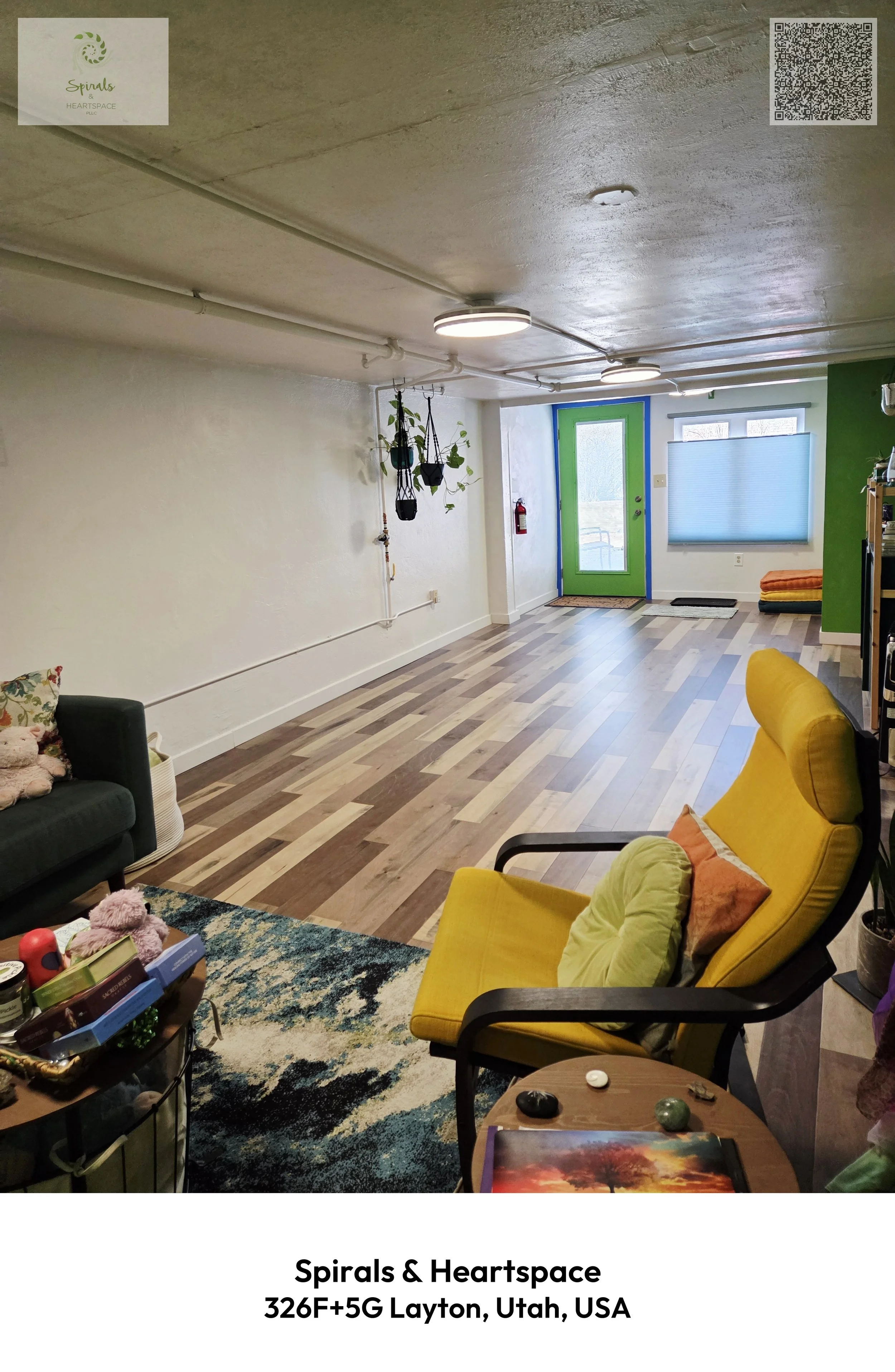
Spirals & Heartspace
Name: Spirals & Heartspace
Address: 534 W Gentile St, Layton, UT 84041
Phone: (385) 301-5252
Website: https://spiralsandheartspacehealing.com/
Hours:
Sunday: Closed
Monday: 9:30 AM – 7:00 PM
Tuesday: 9:30 AM – 7:00 PM
Wednesday: 9:30 AM – 7:00 PM
Thursday: 9:30 AM – 7:00 PM
Friday: 9:30 AM – 7:00 PM
Saturday: Closed
Open-location code / plus code: 326F+5G Layton, Utah, USA
Coordinates: 41.0604503, -111.9762128
Map/listing URL: https://www.google.com/maps/place/Spirals+%26+Heartspace/@41.0604503,-111.9762128,766m/data=!3m2!1e3!4b1!4m6!3m5!1s0x875303311f1d4d1b:0xc6859e5e3fceafe2!8m2!3d41.0604503!4d-111.9762128!16s%2Fg%2F11x781dbvb
Embed iframe:
Socials:
Instagram: https://www.instagram.com/spiralsheartspace/
LinkedIn: https://www.linkedin.com/company/spirals-and-heartspace-pllc
TikTok: https://www.tiktok.com/@spiralsheartspace
X: https://x.com/SpiralsHea61786
YouTube: https://www.youtube.com/@SpiralsHeartspace
The practice is led by Ande Welling, a licensed clinical mental health counselor with training in dance/movement therapy, somatic work, EMDR, trauma care, relational neuroscience, and embodied attachment.
Listed services include therapy, coaching, consultation, authentic movement, trauma therapy, somatic therapy, grief counseling, movement therapy, and attachment therapy.
The practice serves adults who want a deeper body-aware approach to trauma, anxiety, depression, grief, burnout, self-abandonment, family patterns, and relationship wounds.
Spirals & Heartspace offers both in-person sessions in Layton and online therapy for clients in Utah.
The practice is locally positioned for clients in Layton, Kaysville, Farmington, Syracuse, Clearfield, Clinton, Roy, Ogden, Bountiful, Davis County, and nearby northern Utah communities.
The office is listed at 534 W Gentile St in Layton, with public listing hours Monday through Friday from 9:30 AM to 7:00 PM.
Prospective clients can call (385) 301-5252 or visit https://spiralsandheartspacehealing.com/ to ask about consultation options, session fit, and scheduling.
The public map listing for Spirals & Heartspace can help clients verify the Gentile Street office before planning an in-person appointment.
Popular Questions About Spirals & Heartspace
What is Spirals & Heartspace?
Spirals & Heartspace is a Layton, Utah psychotherapy and coaching practice offering somatic, trauma-focused, expressive arts, movement-based, and attachment-informed support for adults.
Who is the therapist at Spirals & Heartspace?
The official site identifies Ande Welling as the therapist, coach, movement facilitator, and guide behind Spirals & Heartspace. Listed credentials include LCMHC, BC-DMT, NCC, GL-CMA, BSE, EMDR Trained, and CCTP-II.
Where is Spirals & Heartspace located?
The matching public listing and LinkedIn profile list the address as 534 W Gentile St, Layton, UT 84041.
Does Spirals & Heartspace offer online therapy?
Yes. The official FAQ states that therapy is available in person or through a HIPAA-compliant telehealth platform for clients who live in Utah.
What services does Spirals & Heartspace provide?
Listed services include therapy, coaching, consultation, authentic movement, trauma therapy, somatic therapy, grief counseling, movement therapy, and attachment therapy.
What makes somatic therapy different from traditional talk therapy?
The official Layton page explains that somatic therapy works with body sensations, movement, and physical experience because trauma and emotional patterns can be held in the nervous system, not only in thoughts.
Do clients need dance experience for movement therapy?
No. The official Layton FAQ says no dance training or special physical ability is required, and that movement therapy uses a client’s natural capacity for movement to access emotions and process experiences.
Does Spirals & Heartspace accept insurance?
The official FAQ says the practice does not take insurance directly, but may provide superbills or bill for out-of-network benefits when applicable. Clients should confirm current reimbursement options directly before scheduling.
What are Spirals & Heartspace’s listed hours?
The matching public listing shows Monday through Friday from 9:30 AM to 7:00 PM, with Saturday and Sunday closed. Appointment availability should be confirmed directly.
How can I contact Spirals & Heartspace?
Call (385) 301-5252, visit https://spiralsandheartspacehealing.com/, or use the listed social profiles: https://www.instagram.com/spiralsheartspace/, https://www.linkedin.com/company/spirals-and-heartspace-pllc, https://www.tiktok.com/@spiralsheartspace, https://x.com/SpiralsHea61786, and https://www.youtube.com/@SpiralsHeartspace.
Landmarks Near Layton, UT
Spirals & Heartspace is located on West Gentile Street in Layton, Utah, with in-person therapy available locally and online therapy available for Utah residents. Clients near these landmarks can call (385) 301-5252 or visit https://spiralsandheartspacehealing.com/ to ask about somatic therapy, trauma therapy, movement therapy, grief counseling, attachment therapy, and consultation options.
- 534 W Gentile St — The listed office address for Spirals & Heartspace; clients can use the map listing to verify the office before visiting.
- West Gentile Street — The local street connected with the practice’s Layton office location.
- Downtown Layton — A practical local reference point for clients navigating central Layton.
- Layton Hills Mall — A major Layton shopping landmark and useful orientation point for clients traveling through the city.
- Interstate 15 near Layton — A major northern Utah route that helps clients reach Layton from nearby Davis County communities.
- Layton FrontRunner Station — A transit landmark for clients traveling by commuter rail through Davis County.
- Ellison Park — A local park and community landmark in Layton.
- Great Salt Lake Shorelands Preserve — A major natural landmark west of Layton and a recognizable Davis County destination.
- Hill Air Force Base — A major regional landmark near Layton and Clearfield.
- Kaysville — A nearby Davis County city listed in the practice’s surrounding service area.
- Farmington — A nearby Davis County community included in the broader local service-area language.
- Ogden — A nearby northern Utah city; clients can ask whether online Utah therapy or in-person Layton sessions are the best fit.