Somatic Therapy and Yoga: Aligning Mind, Body, and Breath
I learned early in my clinical work that minds do not heal in isolation. The body remembers, sometimes quietly, sometimes with a clang. Clients would sit across from me with articulate stories about their history, then freeze when we touched their fear or grief. Breath would stop mid-chest. Shoulders would lock as if braced for impact. Talk therapy gave us understanding, yet their nervous systems kept broadcasting the old emergency. Integrating somatic therapy with yoga did not replace narrative work, it gave the body a language to finish what it had started long ago.
This work is not performative yoga. It is not about advanced postures or the aesthetics of a practice. In clinical settings, yoga functions as a precise toolkit for regulation, interoception, and choice. When combined with trauma therapy, grief counseling, movement therapy, and attachment therapy principles, it becomes a thoughtful map for helping people come home to themselves.
Why the body remembers
Trauma is an event, and it is a set of patterns that remain long after the event ends. In the brain, subcortical circuits dedicated to survival learn quickly and conserve those lessons. In the body, muscles adopt bracing patterns, breath narrows, and organs shift their baseline tone. Over time, these compensations feel like “me,” so much so that stillness can feel unsafe.
Somatic therapy respects that memory is not just a storyline. It shows up in startle responses, gut motility, skin temperature, and subtle micro-movements in the feet. The language here is sensation, rhythm, and orientation. Yoga, especially when taught through a trauma-informed lens, offers structured ways to notice sensation and modulate it without force. Slow, accessible movement combined with breath and attention creates conditions where the nervous system can downshift from defense to curiosity.
This is not mystical. It is mechanical and relational. When a client lengthens an exhale by two counts and their shoulders drop an inch, we are watching the vagal brake engage. When their gaze widens to include the room, we are seeing dorsal withdrawal relent. Small, repeatable choices at the level of breath, posture, and pacing accumulate into a different baseline.
Breath as the bridge
If talk is the currency of prefrontal understanding, breath is the currency of state. I often start with simple respiratory assessments: where does the breath move, how long is a natural exhale, what happens to the jaw when a client inhales. I am less interested in a perfect “diaphragmatic breath” than in adaptability. Can the breath change shape without panic? Can it slow without a sense of suffocation?
Two reliable levers tend to help across presentations:
- Titrated lengthening of the exhale by 1 to 2 counts, which often improves heart rate variability within a few minutes. People frequently report “more space” in the chest or a quieting behind the eyes.
- Nasal inhalation with a soft mouth, sometimes paired with a simple hum on the exhale. The vibration is grounding and can soften the throat, a common bottleneck in those who hold back tears or words.
I avoid rigid prescriptions. Some clients with a history of panic find breath practices triggering if introduced abruptly. With them, we might begin with movement-led breath, like cat-cow or a slow chair-assisted squat, letting the body nudge the breath rather than the mind commanding it.
Movement therapy with a yogic spine
Movement therapy in a clinical context aims to restore options. Yoga asana, stripped of performance goals, is an elegant way to map those options. In early sessions I often use shapes that emphasize yielding before pushing: constructive rest on the back with legs elevated, supported child’s pose, or a side-lying twist with bolsters. The intention is to let the floor show the client they are held, then introduce gentle load or rotation to test the edges of safety.
Over a month, a client might progress from five minutes of breath work and gentle pelvic rocking to a 25-minute sequence that includes standing, balance, and short holds. The measure of success is not depth of a forward fold, it is the ability to sense early signs of overwhelm and adjust. When someone says, “My chest is tight, I am going to switch to hands on thighs and slow down,” that is the win.
Yoga also brings cultural baggage. Some clients have had shaming experiences in classes or feel alienated by spiritual language. In clinical settings I translate. Mountain pose becomes “steady stance, feet hip width, feel the floor.” Savasana becomes “comfort rest, choose the position that lets you breathe.” The spine does not care what we call it, it cares that we move it with respect.
A day in the studio
A vivid memory from my early years involves a client in grief counseling after the death of her partner. She could talk about logistics and estate tasks with stoic clarity, then would go mute when we approached the moment she found him. Her breath caught high in the chest, eyes fixed on the rug’s edge. We slowed everything. I invited her to feel the weight of her back against the mat and named three colors in the room while keeping my own breath audible, slow, and steady. After a long minute, she placed her hand on her sternum and whispered that it felt like glass. We did not push for a cry, we built a container: hums on the exhale, rolling to the side, a supported squat to bring legs online. She trembled for twenty seconds, then sighed, “It moved.” Over the next two months, those micro-movements allowed language to return. The story did not get less tragic, but her body stopped reliving the freeze each time she https://privatebin.net/?8d498cb4ffce49f3#DWGJwfFDD7RSrz8U8RtpLd3Rz1mBAWsrKBLTy1xjzcoH spoke of it.
That is the texture of this work. Words and movement braided, titration over catharsis, consent ahead of ambition.
Trauma therapy, carefully paced
Trauma therapy benefits from the incremental nature of yoga. The mat creates boundaries, the sequence offers predictability, and the breath coaches timing. We use those structures to revisit stored survival impulses at doses the system can metabolize.
I prefer to anchor sessions around three variables: load, novelty, and speed. For a client with complex trauma and hypervigilance, we keep load light, novelty low, and speed slow, so their system can sample ease. For someone who dissociates under stress, low novelty and slow speed can actually promote drifting. In that case, we may add mild load and brief spurts of quicker movement, like three rounds of a simple half sun salute, to invite presence without flooding.
Attachment therapy overlays naturally here. Safety is not only internal, it is co-created. My voice tone, the cadence of my instructions, and my willingness to adjust the plan convey reliability. Repair moments matter, such as when a posture I suggested spikes anxiety and we scrap it with no fuss. Over time, these micro-repairs teach that connection can flex and hold.
Working with grief in the body
Grief demands both stillness and movement. The ache in the throat, the hollow under the ribs, the heavy limbs after a sleepless night - these are somatic facts. Grief counseling that includes yoga tends to alternate between two poles: being with the sensation and gently mobilizing it.
Breath work that opens the back of the lungs can help when sorrow caves the chest. Supported prone positions, like resting the torso over a bolster, allow tears to fall without an audience. Gentle heart opening, such as a rolled blanket along the thoracic spine, is best introduced with escape routes, like bent knees and arms free, so a client can exit easily if the surge is too much.
Ritual matters. Ending a session with a hand to heart and a short, personal dedication - “for him,” “for her,” sometimes just a name - gives shape to what can feel formless. I have watched the smallest bows of the head reorient a person toward their loss with dignity rather than collapse.
The role of interoception
Interoception, the perception of inner body signals, is the backbone of effective somatic therapy. Many clients arrive with blunted or mistrustful interoception. They either cannot feel the early cues or interpret every flutter as danger. Yoga facilitates interoceptive accuracy in a graded manner. Holding a gentle lunge for three breaths while scanning for the first sign of shaking, then exiting before it escalates, trains a precision that generalizes to daily life. They start to notice when a meeting tightens their jaw and can pause to sip water, widen their gaze, and drop their shoulders by five millimeters. These minute adjustments, repeated dozens of times, change outcomes more reliably than one cathartic release.
A simple session arc you can adapt
- Arrive and orient: five slow breaths, name three colors or textures in the space, feet on the floor.
- Map the breath: notice natural rhythm, optionally add a 1 to 2 count longer exhale.
- Gentle mobilization: spine in six directions, cat-cow, side bend, twist, extension and flexion with support.
- Load and balance in small doses: wall-supported chair pose, heel raises, simple standing flow, then downshift.
- Close and integrate: comfortable rest in any position, three cycles of humming or silent exhale, one intention for the next 24 hours.
This arc takes 15 to 30 minutes depending on pacing. For clients with high activation, I often shorten the middle and expand the arrive and orient phase. For those with hypoarousal, I add a brisker standing section, staying curious about when energy rises enough to support attention without spinning out.
Attachment, co-regulation, and teaching style
Attachment therapy reminds us that regulation is contagious. My body is part of the intervention. I practice what I ask clients to do. If I cue a longer exhale, I take it with them. If I ask them to say no to a shape that feels wrong, I praise the refusal. Choice builds trust.
Language matters. Instead of “relax your shoulders,” which presumes and commands, I might offer, “Notice your shoulders, and if you like, see what happens if they move one inch away from your ears.” This signals respect for autonomy and reduces the risk of shame when someone cannot produce the desired change.
Hands-on adjustments are rare in this setting. When used, they are slow, announced, and optional. Many clients with trauma histories prefer props to touch - a folded blanket under the head, a strap around the thighs. The goal is agency, not compliance.
When not to use certain practices
There are edge cases where a standard yoga tool is not the right first move. Breath retention can backfire in panic-prone clients. Prolonged supine rest can trigger flashbacks in those with medical trauma. Intense hip openers sometimes unleash more charge than a session can hold if there are unprocessed boundary violations. People with hypermobile joints may need less range and more strength, even if “stretching” feels familiar.
I screen for positional blood pressure changes, dizziness, and history of fainting. For clients with cardiovascular conditions, the plan includes medical clearance and avoids aggressive breath practices. For those in acute grief within the first two weeks of a loss, I scale way back and focus on sleep hygiene, hydration, and micro-movements to keep joints from stiffening. Yoga can meet the moment without asking the impossible.
Concrete measures of progress
I like numbers that are meaningful but not tyrannical. In the first session, we record a baseline of:
- Average breath cycle length over one minute without coaching.
- Subjective Units of Distress (SUDS) before and after a 5-minute sequence.
- Ability to name three body sensations in neutral language.
After four to six sessions, most clients report a 20 to 40 percent increase in breath cycle length during practice and a consistent drop in SUDS by 2 to 3 points post-sequence. More importantly, they can identify early body cues and choose a regulation tool in under a minute. If these markers do not shift, we reassess the protocol, slow down, or change the modality.
Objective metrics do not capture everything. A sentence like, “I went to a crowded store and did not leave,” or, “I slept four hours straight for the first time in months,” carries weight. The nervous system cares about lived outcomes.
What changes at home
Home practice glues the gains. I assign short, precise rituals rather than open-ended goals. Two minutes of humming in the car before walking into work. Ten cat-cow cycles before bed. A 3 to 5 minute standing flow between Zoom calls. Clients who tie practices to existing routines adhere better. One executive kept a yoga block by the coffee maker and did supported calf raises every morning while the espresso pulled. Another kept a travel mat in her living room and used it only for 90-second resets, never long flows, so the threshold for beginning stayed low.
Consistency beats intensity. People who practice five days a week for 6 to 10 minutes often overtake those who practice once for an hour then skip a week. The brain learns what we repeat.
Integrating with talk therapy
Alignment does not mean collapse of boundaries. There are times for chair work and times for the mat. The sequence I find most productive:
- Open with brief check-in to locate the day’s terrain.
- Move when words become circular or the affect goes flat.
- Return to words to harvest insights from the body.
Clients learn to decenter content and recenter process. “When I talk about my father I hold my breath,” becomes, “I can stay with the story if I widen my gaze and soften my jaw.” That shift is the essence of somatic literacy.
For complex trauma, I coordinate with a primary therapist if I am not the one providing the talk therapy. Shared language helps - a quick email after a breakthrough or a red flag can prevent mixed messages and support pacing.
Training your eye: small cues, big meaning
Experienced clinicians learn to see the tells. A flicker in the eyelids that predicts dissociation. Toes gripping inside shoes. The way a client swallows at the end of a sentence when we near a charged image. These are invitations to slow down, shorten the breath cycle, or change orientation.
Props are diagnostic. If a client grabs a bolster tightly across the belly when reclining, I note that pressure calms their system, and we may use weighted blankets or self-hold positions in talk sessions. If balance work provokes anger rather than fear, it might point to a history of environments that punished wobble. We do not pathologize these responses, we map them.
When to pause or refer
- Persistent dissociation that does not respond to grounding and makes consent unreliable.
- Active substance withdrawal, unstable medical conditions, or recent head injury.
- Emergent suicidality or self-harm urges that increase with interoceptive focus.
- Eating disorders in acute phase where interoceptive work around fullness triggers spirals.
- Unresolved legal or safety issues at home that demand case management before deeper body work.
Referral is not failure. It is adherence to the ethics of trauma therapy and good care in general. Clients usually appreciate clarity: “Your system is doing something wise, and right now another layer of support would serve you best.”
Cultural sensitivity and accessibility
Yoga’s global spread sits alongside cultural appropriation and commercialization. In therapy, we ground practices in function, not branding. We can honor the roots by teaching with humility, avoiding spiritual claims we are not trained to hold, and naming our sources where appropriate. Accessibility shows up in bodies too. Chairs, walls, straps, and cushions make this work available to elders, people with disabilities, and those managing pain. More than once, a client told me their first felt sense of safety came while sitting in a chair, pressing their feet into the floor, breathing with me for thirty seconds.
Language access matters. If English is not a client’s first language, using fewer words and more demonstration helps. Some of the best sessions I have led were quiet, the room punctuated only by breath and the soft thud of a block.
The long arc
Change arrives in layers. Clients often report a first wave of relief in four to six sessions, then plateau. That plateau is not failure, it is consolidation. We use it to expand choice under mild stress, then moderate stress. Over months, the nervous system learns it can move through gear shifts without getting stuck in fight, flight, or freeze. A person who once braced at every unexpected sound learns to orient and choose. Someone who could not cry without crumbling learns to weep and stay present, then make dinner.
The integration of somatic therapy and yoga does not promise a life without pain. It offers a way to move with pain that preserves dignity and connection. For many, that is the difference between surviving and living.
A note to practitioners
If you are incorporating yoga into psychotherapy, invest in supervision with someone fluent in both worlds. Learn to dose. Practice the shapes yourself, especially the ones that bring up your edges. Track outcomes with humility. Read the emerging research on breath mechanics, heart rate variability, and interoception, and hold it lightly against the uniqueness of each body in front of you. If you work with couples or families, consider how attachment patterns play out on the mat - who takes space, who yields, who looks away. Simple co-regulation practices, like synchronized exhale counts, can sometimes shift conversations that were stuck for years.
Good work here is quiet. It rarely looks dramatic. The bow we take at the end is not performance, it is acknowledgment - we touched the living system that carries history and possibility, and we did so with care.
Somatic therapy and yoga, aligned with the ethics of trauma therapy, the tenderness of grief counseling, the pragmatism of movement therapy, and the wisdom of attachment therapy, create an ecosystem where healing has room to happen. Breath by breath, shape by shape, word by word, people find that their bodies can be allies again. That knowledge reorders a life.
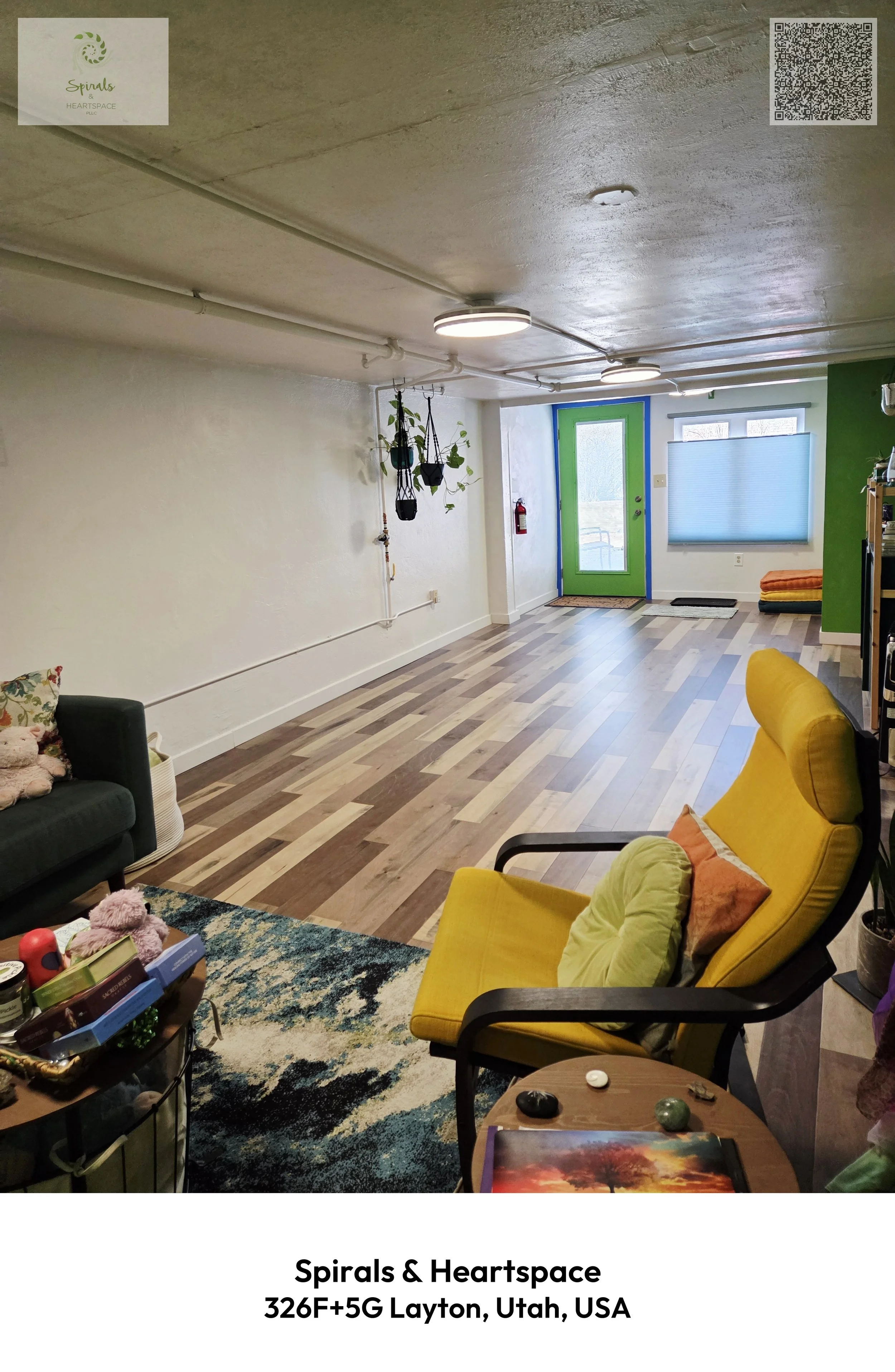
Spirals & Heartspace
Name: Spirals & Heartspace
Address: 534 W Gentile St, Layton, UT 84041
Phone: (385) 301-5252
Website: https://spiralsandheartspacehealing.com/
Hours:
Sunday: Closed
Monday: 9:30 AM – 7:00 PM
Tuesday: 9:30 AM – 7:00 PM
Wednesday: 9:30 AM – 7:00 PM
Thursday: 9:30 AM – 7:00 PM
Friday: 9:30 AM – 7:00 PM
Saturday: Closed
Open-location code / plus code: 326F+5G Layton, Utah, USA
Coordinates: 41.0604503, -111.9762128
Map/listing URL: https://www.google.com/maps/place/Spirals+%26+Heartspace/@41.0604503,-111.9762128,766m/data=!3m2!1e3!4b1!4m6!3m5!1s0x875303311f1d4d1b:0xc6859e5e3fceafe2!8m2!3d41.0604503!4d-111.9762128!16s%2Fg%2F11x781dbvb
Embed iframe:
Socials:
Instagram: https://www.instagram.com/spiralsheartspace/
LinkedIn: https://www.linkedin.com/company/spirals-and-heartspace-pllc
TikTok: https://www.tiktok.com/@spiralsheartspace
X: https://x.com/SpiralsHea61786
YouTube: https://www.youtube.com/@SpiralsHeartspace
The practice is led by Ande Welling, a licensed clinical mental health counselor with training in dance/movement therapy, somatic work, EMDR, trauma care, relational neuroscience, and embodied attachment.
Listed services include therapy, coaching, consultation, authentic movement, trauma therapy, somatic therapy, grief counseling, movement therapy, and attachment therapy.
The practice serves adults who want a deeper body-aware approach to trauma, anxiety, depression, grief, burnout, self-abandonment, family patterns, and relationship wounds.
Spirals & Heartspace offers both in-person sessions in Layton and online therapy for clients in Utah.
The practice is locally positioned for clients in Layton, Kaysville, Farmington, Syracuse, Clearfield, Clinton, Roy, Ogden, Bountiful, Davis County, and nearby northern Utah communities.
The office is listed at 534 W Gentile St in Layton, with public listing hours Monday through Friday from 9:30 AM to 7:00 PM.
Prospective clients can call (385) 301-5252 or visit https://spiralsandheartspacehealing.com/ to ask about consultation options, session fit, and scheduling.
The public map listing for Spirals & Heartspace can help clients verify the Gentile Street office before planning an in-person appointment.
Popular Questions About Spirals & Heartspace
What is Spirals & Heartspace?
Spirals & Heartspace is a Layton, Utah psychotherapy and coaching practice offering somatic, trauma-focused, expressive arts, movement-based, and attachment-informed support for adults.
Who is the therapist at Spirals & Heartspace?
The official site identifies Ande Welling as the therapist, coach, movement facilitator, and guide behind Spirals & Heartspace. Listed credentials include LCMHC, BC-DMT, NCC, GL-CMA, BSE, EMDR Trained, and CCTP-II.
Where is Spirals & Heartspace located?
The matching public listing and LinkedIn profile list the address as 534 W Gentile St, Layton, UT 84041.
Does Spirals & Heartspace offer online therapy?
Yes. The official FAQ states that therapy is available in person or through a HIPAA-compliant telehealth platform for clients who live in Utah.
What services does Spirals & Heartspace provide?
Listed services include therapy, coaching, consultation, authentic movement, trauma therapy, somatic therapy, grief counseling, movement therapy, and attachment therapy.
What makes somatic therapy different from traditional talk therapy?
The official Layton page explains that somatic therapy works with body sensations, movement, and physical experience because trauma and emotional patterns can be held in the nervous system, not only in thoughts.
Do clients need dance experience for movement therapy?
No. The official Layton FAQ says no dance training or special physical ability is required, and that movement therapy uses a client’s natural capacity for movement to access emotions and process experiences.
Does Spirals & Heartspace accept insurance?
The official FAQ says the practice does not take insurance directly, but may provide superbills or bill for out-of-network benefits when applicable. Clients should confirm current reimbursement options directly before scheduling.
What are Spirals & Heartspace’s listed hours?
The matching public listing shows Monday through Friday from 9:30 AM to 7:00 PM, with Saturday and Sunday closed. Appointment availability should be confirmed directly.
How can I contact Spirals & Heartspace?
Call (385) 301-5252, visit https://spiralsandheartspacehealing.com/, or use the listed social profiles: https://www.instagram.com/spiralsheartspace/, https://www.linkedin.com/company/spirals-and-heartspace-pllc, https://www.tiktok.com/@spiralsheartspace, https://x.com/SpiralsHea61786, and https://www.youtube.com/@SpiralsHeartspace.
Landmarks Near Layton, UT
Spirals & Heartspace is located on West Gentile Street in Layton, Utah, with in-person therapy available locally and online therapy available for Utah residents. Clients near these landmarks can call (385) 301-5252 or visit https://spiralsandheartspacehealing.com/ to ask about somatic therapy, trauma therapy, movement therapy, grief counseling, attachment therapy, and consultation options.
- 534 W Gentile St — The listed office address for Spirals & Heartspace; clients can use the map listing to verify the office before visiting.
- West Gentile Street — The local street connected with the practice’s Layton office location.
- Downtown Layton — A practical local reference point for clients navigating central Layton.
- Layton Hills Mall — A major Layton shopping landmark and useful orientation point for clients traveling through the city.
- Interstate 15 near Layton — A major northern Utah route that helps clients reach Layton from nearby Davis County communities.
- Layton FrontRunner Station — A transit landmark for clients traveling by commuter rail through Davis County.
- Ellison Park — A local park and community landmark in Layton.
- Great Salt Lake Shorelands Preserve — A major natural landmark west of Layton and a recognizable Davis County destination.
- Hill Air Force Base — A major regional landmark near Layton and Clearfield.
- Kaysville — A nearby Davis County city listed in the practice’s surrounding service area.
- Farmington — A nearby Davis County community included in the broader local service-area language.
- Ogden — A nearby northern Utah city; clients can ask whether online Utah therapy or in-person Layton sessions are the best fit.