Somatic Therapy for Panic and Anxiety Disorders
Panic and anxiety live in the body. Anyone who has bolted awake at 3 a.m. With a racing heart, or who has gripped a steering wheel through a wave of dizziness and dread, knows that the problem is not just thoughts. The nervous system accelerates, muscles brace, breath shortens, the gut twists. Somatic therapy starts here, with the physiology that drives the experience. It does not ignore thoughts or history, it simply acknowledges that you cannot outthink a nervous system that believes you are https://edgaratrq936.capitaljays.com/posts/attachment-therapy-for-relationship-repair-from-rupture-to-repair in danger.
I have sat with clients who can recite cognitive reframes and still shake, sweat, and feel their vision narrow. I have also watched those same clients learn to sense, modulate, and eventually trust their bodies again. That shift does not happen overnight. It happens in careful increments, with grounded skills and a steady therapeutic relationship.
What panic and anxiety feel like from the inside
People often describe panic attacks as a sudden electric surge across the chest, tingling in their fingers, and a feeling that they might pass out or lose control. Some call it a fear of the fear itself. Anxiety disorders stretch that physiology across hours or days, with a baseline of internal pressure, shallow breathing, and a constant readiness to react. The body is not malfunctioning, it is overprotecting.
Two details matter here. First, panic physiology is intense but time limited. An uncued panic wave often peaks within minutes and can subside within 10 to 30 minutes, even though the aftershocks may linger. Second, anxious states are highly sensitive to interoception, the way we perceive internal signals. When interoception is distorted, the brain mislabels normal sensations as threats, like noticing a flutter and hearing it as danger.
Somatic therapy respects this biology. It trains people to map their own signals and widen their window of tolerance, the range of arousal their body can hold without spinning into collapse or chaos.
How the nervous system fuels symptoms
The autonomic nervous system runs in the background. Under stress, the sympathetic branch prepares you to fight or flee. That is adaptive when you need to jump away from a bicyclist, not so helpful at a quiet desk. When the sympathetic system dominates unchecked, you get the classic adrenaline picture: fast heart, constricted vessels, tighter muscles, tunnel vision. If those surges overwhelm you repeatedly, the system may rebound into parasympathetic shutdown, a heavy fog of dizziness, detachment, or numbness.
None of this is a character flaw. It is conditioning. Bodies that have lived through chronic stress, medical scares, or unresolved trauma learn to see threat in neutral cues. Somatic therapy, a branch of trauma therapy, updates that learning through direct experience in the body, not just logic.
What somatic therapy is and what it is not
Somatic therapy is an umbrella term. It includes modalities like Somatic Experiencing, Sensorimotor Psychotherapy, Hakomi, and others that focus on body sensations, movement, and autonomic regulation. In practice, it looks like guided attention to physical cues, small experiments with breath or posture, and coordinated shifts between activation and settling. There is usually little homework at first, because the most important work happens in session when the therapist can help keep your system within a tolerable range.
It is not exposure therapy in the classic sense, though it might include gentle exposure to body sensations as you gain stability. It is not a quick fix or a hack. Many clients notice early changes in the first three to six sessions, but deeper rewiring unfolds over months. When panic is fueled by long-standing attachment injuries, grief, or medical trauma, the work often benefits from integration with attachment therapy or grief counseling.
A typical session, from the inside
A first session starts with consent and collaboration. You set goals, define what panic symptoms look like for you, and name what has helped or not helped before. Then the therapist will invite a short experiment, perhaps tracking breath at 60 percent of your awareness while also noticing the support of the chair. It sounds simple, yet it is a big shift from analyzing your anxiety to being with it in bite-size pieces.
I might ask, where does the anxiety live today if it had a zipcode in your body. A client points to their throat and chest. We get curious. Is it hot or cool, thick or thin, still or pulsing. Curiosity is not a trick, it is a nervous system state. When curiosity rises, fear eases. If intensity climbs, we pendulate, that is, we swing our attention from the hot zone to a place of relative ease, like the contact of your feet on the floor, or the feeling of your hands warming. We move back and forth until the body learns that activation can crest and resolve without catastrophe.
Some sessions involve micro-movements. The shoulders want to round forward, so we let them, a little, and sense what impulse follows. The jaw holds. We bring softness to the tongue and notice if the breath drops into the belly by one or two millimeters. These may sound minor, yet a two millimeter shift repeated across a dozen sessions builds a capacity that words alone seldom reach.
Safety, pacing, and the myth of catharsis
People sometimes believe that they need to release everything at once to heal. In my experience, that approach often backfires with panic and anxiety. Flooding the system can retraumatize and make you more avoidant. The nervous system learns by titration, small doses of activation matched with equal or greater doses of settling.
Pacing is not avoidance. It is targeted stress inoculation. We choose a sensation or image that evokes a manageable level of arousal, say a 3 or 4 out of 10, stay with it until it shifts, then rest. Over time, that 3 becomes a 2, and the floor of calm rises under you.
Ethics also matter. Touch sometimes plays a role in somatic therapy, but it is never required. If touch is used, it is with explicit consent, clear boundaries, and a collaborative purpose, such as supporting a diaphragm release or helping a startle reflex complete. Many clients do equally well with no touch at all.
Specific techniques that help calm panic physiology
Interoceptive tracking is the backbone. You learn to notice the first 10 percent of a wave, not just the top 90 percent. Early signals like a micro tightness in the throat or a twitch in the left calf become actionable cues, not mysteries.
Slow exhale breathing biases the vagus nerve and can lower heart rate variability in helpful ways. I do not mean forcing giant belly breaths. For panic-prone people, big inhalations can be destabilizing. Instead, we pick a pace like a 3-second inhale, 5-second exhale, and keep it gentle. People with a history of asthma or POTS need tailored protocols, and medical consultation.
Orienting is simple and often overlooked. We let the eyes move across the present room, track edges, textures, and light, and allow the head to turn slightly. This innocuous act tells the body that danger is not here. It often drops arousal by a full point within a minute.
Grounding through weight and contact works when dizziness and unreality creep in. Feeling the pressure of thighs on the chair or the pull of gravity through the heels gives the vestibular system a reference point. Sometimes I place a 2 to 5 pound sandbag across the lap if the client consents, which can calm a floating torso.
Pendulation and titration, borrowing terms from trauma therapy, build tolerance slowly. We let activation surface in small sips and then pendulate to ease. Over repeated cycles, the body learns completion, not collapse.
Where movement therapy fits
Movement therapy is not a separate silo. It often blends well with somatic therapy. With some clients, seated tracking is too still. They settle better when we stand, sway, and let the ankles and knees micro bend. People who freeze under stress may benefit from contralateral movement, like slow marching in place while swinging opposite arm and leg. The patterning recruits the cerebellum and can thaw rigidity.
I have worked with a marathoner who could not tolerate sitting practices. We started with 5-minute recovery walks where he focused only on the sensation of heel strike and toe off. Once that lane felt safe, we practiced brief pauses mid-walk, felt the urge to run through panic, and let it crest while standing with soft knees. Within six weeks his fear of stopping during a flare dropped from a 9 to a 3.
The link with trauma therapy and why it matters
Not all panic and anxiety come from trauma, but many do. A car crash that did not seem serious at the time, a childhood home where anger ricocheted nightly, a medical procedure that went sideways, each can prime the body to overreact to neutral cues. Trauma therapy brings context. It helps you recognize triggers, discharge stuck survival energy, and reframe what your body did to protect you.
Somatic therapy is a form of trauma therapy when it targets the physiology of those memories, not just the narrative. When a client notices a sudden shoulder curl and a flinch in the face as they remember a loud voice, we can slow the moment and let the body test a different outcome, like orienting, softening the jaw, or feeling the support of the chair. This completes an interrupted defensive response and reduces future arousal in similar contexts.
Attachment therapy and panic rooted in relationships
For some people, panic spikes in relational moments, like waiting for a text back or hearing a partner sigh. The physiology is real, and the origin often sits in early attachment patterns. If a child had to scan for micro shifts in a caregiver’s mood, the adult nervous system may default to hypervigilance under ambiguity.
Attachment therapy can pair with somatic work to update those templates. In session, the therapeutic relationship becomes a living lab. We watch what happens in your body when you ask for a slower pace, when you hold eye contact for three seconds longer, when you voice a need without apologizing. The goal is not just insight, it is the felt experience of safety and reciprocity. Over months, panic softens because uncertainty no longer equals danger in your nervous system.
Grief counseling when anxiety hides loss
Unresolved grief often masquerades as anxiety. People report restlessness, irritability, and insomnia long after a death, divorce, or illness, then wonder why panic flares when they drive past a hospital or see a particular brand of shampoo. Grief counseling gives the loss a place to land. When we name the person, the date, the unfinished conversations, the body stops fighting the truth and can feel what it has avoided.
Somatically, grief and anxiety can look similar at first. Both can tighten the chest and quicken the breath. One difference is that grief tends to move in waves that carry an ache or heaviness, while anxiety carries a more electric, jumpy edge. In practice, we let the grief wave move with support, then notice how much of the anxiety was scaffolding around what felt unbearable to feel. As grief metabolizes, baseline arousal often drops by one to two points.
A brief vignette
M was a 34-year-old nurse who had three emergency room visits for chest pain, all negative for cardiac events. She avoided elevators after a stuck incident eight months prior. The first sessions focused on mapping early signals, which for her were a surge in the throat and a right shoulder hitch. We practiced orienting in the office hallway, then slowly standing in the elevator lobby. When her throat surged, she placed two fingers at the sternum, softened the tongue, and let a slow exhale out with a whisper sound that suited her. Within five sessions, M could ride two floors with a coworker, holding a gentle focus on her feet. By session ten, she rode to the sixth floor solo, with spikes present but manageable. She also started grief counseling about a colleague’s sudden death, which had quietly haunted her. The combination changed her day to day life more than either approach would have alone.
Where medication and CBT fit with somatic work
Medications can save lives when panic attacks lead to ER visits or when baseline anxiety blocks any learning. SSRIs and SNRIs are often helpful, sometimes within 2 to 6 weeks at therapeutic doses. Benzodiazepines reduce acute spikes but can reinforce avoidance and carry dependency risks. In my practice, I coordinate with prescribers to find the lightest lift that opens a window for learning.
Cognitive Behavioral Therapy remains a strong option for anxiety disorders, especially generalized anxiety and phobias. The best outcomes I see combine CBT’s structured experiments with somatic skills. For example, we pair interoceptive exposure with pendulation. If spinning in a chair triggers panic, we do it for five seconds, then orient and ground, and repeat. The body learns that activation can complete without catastrophe, while the mind collects new data.
Measuring progress without obsessing over it
Quantifying anxiety can itself become an anxious ritual. Still, having a few simple measures helps. I often track:
- Average weekly panic frequency and duration, recorded in ranges rather than exact minutes to avoid perfectionism.
- Ability to perform specific tasks, like riding an elevator to the third floor, with a 0 to 10 distress rating.
- Baseline sleep hours per night over two weeks.
- Resting breath pattern, such as average exhale length in calm moments.
- Recovery time after a spike, how long it takes to return within one point of your baseline.
These metrics ground the work and help us celebrate small wins, like shaving two minutes off a surge recovery or adding one floor to an elevator ride.
What you can practice between sessions
Between-session work should be short and doable, not heroic. Two minutes of orienting after your morning coffee is enough. A gentle walk where you feel heel strike and toe off for five consecutive steps counts. Many clients benefit from a micro reset at predictable times, such as after parking the car before heading into the office. The aim is not to eradicate symptoms but to build trust that your body can shift states on purpose.
Some people want elaborate routines. I steer them away at first. When panic is high, complexity feeds failure. A simple rule helps: one breath cue, one body cue, one room cue. For example, lengthen the exhale slightly, soften the tongue, and name three wall colors. Repeat twice. If it helps, keep it. If it does not, we adjust.
A brief step-by-step for the moment panic spikes
- Pause and let your eyes orient to the actual room. Name three objects and their colors out loud or silently.
- Soften your tongue and jaw, then let a 3-second inhale and 5-second exhale flow for four breaths.
- Sense the weight of your feet or seat. If standing, gently bend your knees a few millimeters.
- Place a hand lightly on the sternum or belly if that feels supportive. Track the first sign of settling, even if it is 5 percent.
- When you can, shift your attention outward for 10 seconds, then inward for 10 seconds, pendulating twice.
People often notice a 10 to 30 percent reduction in intensity after one round. If not, we focus on safety and ride it out while minimizing spirals like catastrophic self-talk. With practice, the steps take under a minute.
Choosing a therapist who understands the body
Licensure matters, but so does fit. Ask how they integrate somatic work with anxiety treatment. Look for someone who can explain their pacing and how they avoid flooding. A therapist who respects attachment patterns and grief will see more than symptoms.
A short checklist can help you vet options during consultations:
- Training in somatic modalities and experience with panic or medical trauma.
- A clear plan for early skills and safety, not just history taking.
- Willingness to coordinate with your prescriber or primary care if needed.
- Comfort integrating movement therapy when sitting is too much.
- A stance that is collaborative and curious rather than directive or dismissive.
Trust your body’s response in the consultation. If your chest tightens and you feel rushed, name it and watch how the therapist responds. That moment reveals a lot.
Edge cases and judgment calls
Not everyone benefits from the same techniques. People with dissociative tendencies can get dizzy with prolonged breath focus, so we emphasize vision and contact. Clients with cardiac arrhythmias may fear long exhales. We start with tiny changes, like a half-second elongation, and clear guidance from a physician. Those with chronic pain may brace unconsciously. We work with micro movements to find ease without provoking flares.
Triggers are not always psychological. Caffeine, dehydration, heat, and sleep debt all lower the threshold for panic. I have seen clients drop their weekly attacks from five to one by cutting afternoon caffeine and adding regular meals. None of that replaces therapy, it simply steadies the platform for change.

What progress tends to look like over time
In the early phase, weeks 1 to 4, people usually gain language for their bodily states and two or three reliable downshift cues. Panic frequency may not change much, but intensity or recovery time often improves. The middle phase, months 2 to 4, brings bolder experiments. You test feared situations with somatic tools and celebrate specific wins. By months 4 to 6, the nervous system has often relearned enough that the old default alarms do not trip as easily. Relapses still happen, usually during high stress or illness. We treat those as rehearsals for mastery rather than failures.
A note on numbers. Some clients see major relief within six sessions, others take a year to unwind chronic patterns, especially when attachment injuries or grief are in the mix. The most consistent predictor of progress is not severity, it is steady practice of small, well chosen skills and a solid therapeutic alliance.
Final thoughts grounded in practice
Somatic therapy does not ask you to love your anxiety. It asks you to partner with your body so that fear does not run the show. When panic rises, you do not have to pick between white-knuckling and avoidance. There is a third path, a set of micro choices that tell your nervous system the present is livable.
Over the years I have learned to respect how idiosyncratic this work is. One person settles when they feel the cool of air on their upper lip. Another finds the exact weight of their heels that unlocks a breath. These are not tricks, they are entries to safety. With time, the body recognizes them faster than language can. That is when anxiety loosens its grip, not because the world became certain, but because your nervous system did.
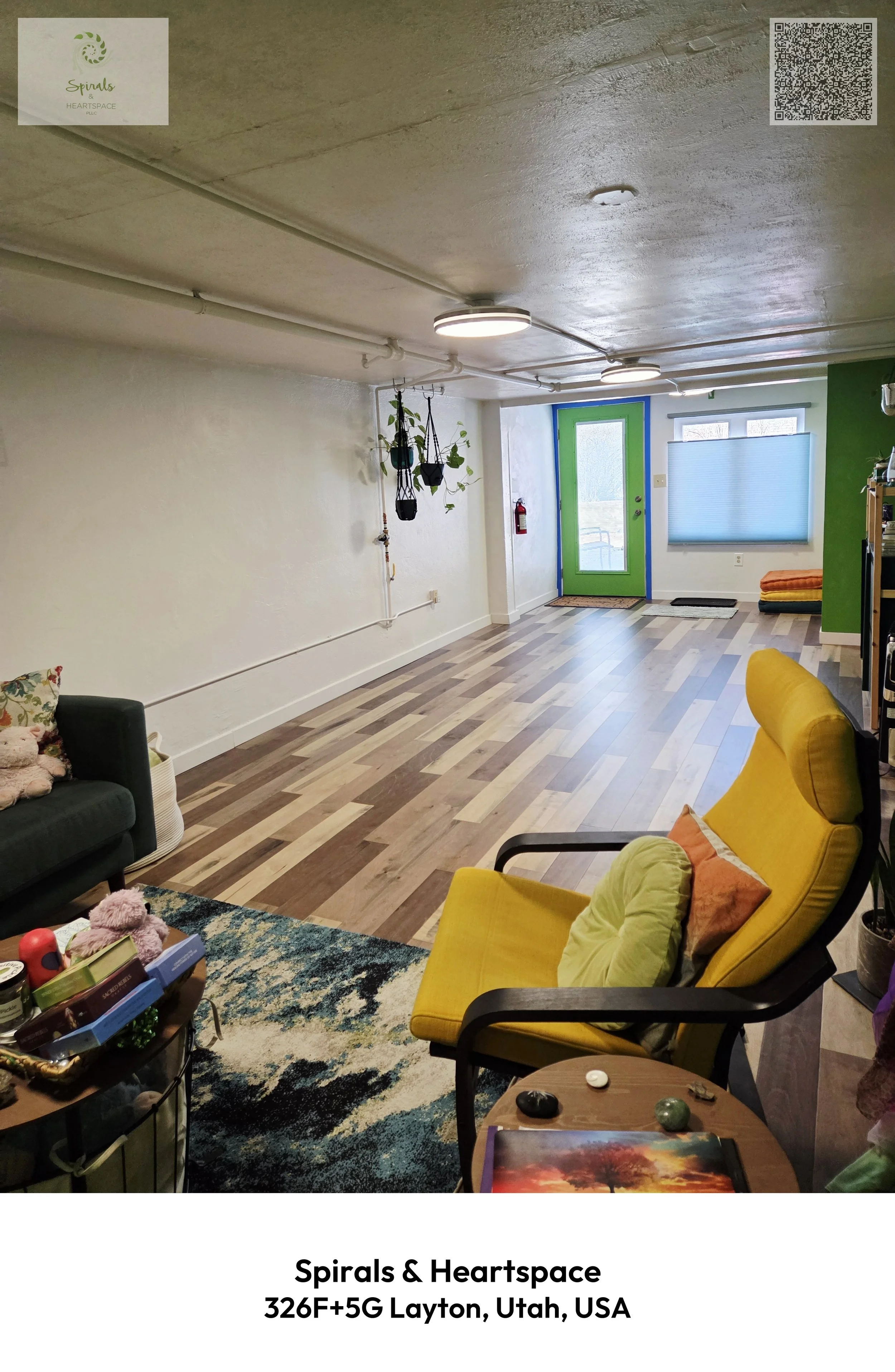
Spirals & Heartspace
Name: Spirals & Heartspace
Address: 534 W Gentile St, Layton, UT 84041
Phone: (385) 301-5252
Website: https://spiralsandheartspacehealing.com/
Hours:
Sunday: Closed
Monday: 9:30 AM – 7:00 PM
Tuesday: 9:30 AM – 7:00 PM
Wednesday: 9:30 AM – 7:00 PM
Thursday: 9:30 AM – 7:00 PM
Friday: 9:30 AM – 7:00 PM
Saturday: Closed
Open-location code / plus code: 326F+5G Layton, Utah, USA
Coordinates: 41.0604503, -111.9762128
Map/listing URL: https://www.google.com/maps/place/Spirals+%26+Heartspace/@41.0604503,-111.9762128,766m/data=!3m2!1e3!4b1!4m6!3m5!1s0x875303311f1d4d1b:0xc6859e5e3fceafe2!8m2!3d41.0604503!4d-111.9762128!16s%2Fg%2F11x781dbvb
Embed iframe:
Socials:
Instagram: https://www.instagram.com/spiralsheartspace/
LinkedIn: https://www.linkedin.com/company/spirals-and-heartspace-pllc
TikTok: https://www.tiktok.com/@spiralsheartspace
X: https://x.com/SpiralsHea61786
YouTube: https://www.youtube.com/@SpiralsHeartspace
The practice is led by Ande Welling, a licensed clinical mental health counselor with training in dance/movement therapy, somatic work, EMDR, trauma care, relational neuroscience, and embodied attachment.
Listed services include therapy, coaching, consultation, authentic movement, trauma therapy, somatic therapy, grief counseling, movement therapy, and attachment therapy.
The practice serves adults who want a deeper body-aware approach to trauma, anxiety, depression, grief, burnout, self-abandonment, family patterns, and relationship wounds.
Spirals & Heartspace offers both in-person sessions in Layton and online therapy for clients in Utah.
The practice is locally positioned for clients in Layton, Kaysville, Farmington, Syracuse, Clearfield, Clinton, Roy, Ogden, Bountiful, Davis County, and nearby northern Utah communities.
The office is listed at 534 W Gentile St in Layton, with public listing hours Monday through Friday from 9:30 AM to 7:00 PM.
Prospective clients can call (385) 301-5252 or visit https://spiralsandheartspacehealing.com/ to ask about consultation options, session fit, and scheduling.
The public map listing for Spirals & Heartspace can help clients verify the Gentile Street office before planning an in-person appointment.
Popular Questions About Spirals & Heartspace
What is Spirals & Heartspace?
Spirals & Heartspace is a Layton, Utah psychotherapy and coaching practice offering somatic, trauma-focused, expressive arts, movement-based, and attachment-informed support for adults.
Who is the therapist at Spirals & Heartspace?
The official site identifies Ande Welling as the therapist, coach, movement facilitator, and guide behind Spirals & Heartspace. Listed credentials include LCMHC, BC-DMT, NCC, GL-CMA, BSE, EMDR Trained, and CCTP-II.
Where is Spirals & Heartspace located?
The matching public listing and LinkedIn profile list the address as 534 W Gentile St, Layton, UT 84041.
Does Spirals & Heartspace offer online therapy?
Yes. The official FAQ states that therapy is available in person or through a HIPAA-compliant telehealth platform for clients who live in Utah.
What services does Spirals & Heartspace provide?
Listed services include therapy, coaching, consultation, authentic movement, trauma therapy, somatic therapy, grief counseling, movement therapy, and attachment therapy.
What makes somatic therapy different from traditional talk therapy?
The official Layton page explains that somatic therapy works with body sensations, movement, and physical experience because trauma and emotional patterns can be held in the nervous system, not only in thoughts.
Do clients need dance experience for movement therapy?
No. The official Layton FAQ says no dance training or special physical ability is required, and that movement therapy uses a client’s natural capacity for movement to access emotions and process experiences.
Does Spirals & Heartspace accept insurance?
The official FAQ says the practice does not take insurance directly, but may provide superbills or bill for out-of-network benefits when applicable. Clients should confirm current reimbursement options directly before scheduling.
What are Spirals & Heartspace’s listed hours?
The matching public listing shows Monday through Friday from 9:30 AM to 7:00 PM, with Saturday and Sunday closed. Appointment availability should be confirmed directly.
How can I contact Spirals & Heartspace?
Call (385) 301-5252, visit https://spiralsandheartspacehealing.com/, or use the listed social profiles: https://www.instagram.com/spiralsheartspace/, https://www.linkedin.com/company/spirals-and-heartspace-pllc, https://www.tiktok.com/@spiralsheartspace, https://x.com/SpiralsHea61786, and https://www.youtube.com/@SpiralsHeartspace.
Landmarks Near Layton, UT
Spirals & Heartspace is located on West Gentile Street in Layton, Utah, with in-person therapy available locally and online therapy available for Utah residents. Clients near these landmarks can call (385) 301-5252 or visit https://spiralsandheartspacehealing.com/ to ask about somatic therapy, trauma therapy, movement therapy, grief counseling, attachment therapy, and consultation options.
- 534 W Gentile St — The listed office address for Spirals & Heartspace; clients can use the map listing to verify the office before visiting.
- West Gentile Street — The local street connected with the practice’s Layton office location.
- Downtown Layton — A practical local reference point for clients navigating central Layton.
- Layton Hills Mall — A major Layton shopping landmark and useful orientation point for clients traveling through the city.
- Interstate 15 near Layton — A major northern Utah route that helps clients reach Layton from nearby Davis County communities.
- Layton FrontRunner Station — A transit landmark for clients traveling by commuter rail through Davis County.
- Ellison Park — A local park and community landmark in Layton.
- Great Salt Lake Shorelands Preserve — A major natural landmark west of Layton and a recognizable Davis County destination.
- Hill Air Force Base — A major regional landmark near Layton and Clearfield.
- Kaysville — A nearby Davis County city listed in the practice’s surrounding service area.
- Farmington — A nearby Davis County community included in the broader local service-area language.
- Ogden — A nearby northern Utah city; clients can ask whether online Utah therapy or in-person Layton sessions are the best fit.